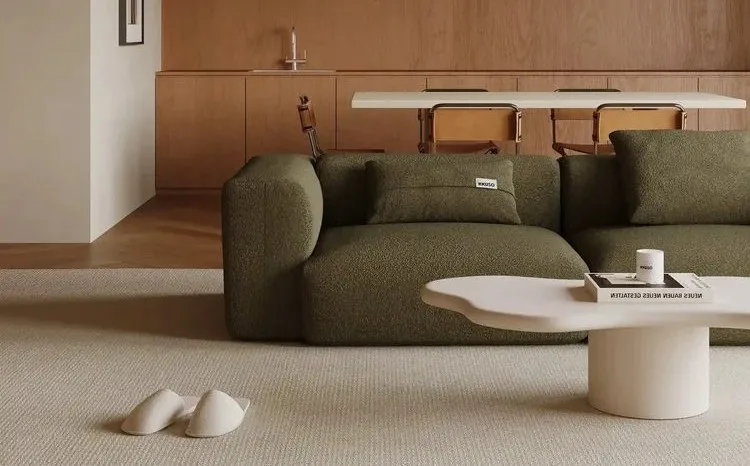
Modular sofas get talked about a lot, but the actual mechanics of how they go together often get skipped over. If you've stood in a showroom or scrolled a product page wondering what a "corner unit" actually does versus a "lounger," you're not alone. Here's what each piece is for and how they combine into a layout that suits your room.
The Building Blocks
A modular sofa is made up of a handful of individual pieces rather than one fixed frame. Once you know what each piece does, planning a layout gets a lot easier.
- Armless seats are the straightforward middle sections. They're what you add when you need more seating length without changing the shape.
- Corner units turn a straight run of seating into an L-shape. This is the piece that lets a sofa wrap around a room rather than sitting flat against one wall.
- Loungers (sometimes called chaise ends) are the extended pieces you stretch out on. They're usually the first upgrade people make once they've lived with a basic set-up for a while.
- Ottomans are the loose, moveable pieces. Use one as a footrest, extra seating for guests, or push it up against a lounger to widen it.
How They Combine
The reason modular systems are popular is that the same pieces can be arranged more than one way. A set that works as a straight three-seater against a wall can become an L-shape with a corner added, or a U-shape if you've got two corners and enough armless seats in between.
This matters most when you're not sure what your room needs yet. Renting, moving between properties, or simply not knowing how a space will feel until furniture is in it are all good reasons to start smaller and build out. Brands that sell modules separately, KKUSO's MOMO range among them, are set up specifically for this, so a corner and a lounger bought now can have an ottoman or an extra seat added later without replacing anything.
Planning Your Layout
A few practical points make the planning stage easier:
- Measure the room, not just the sofa. An L-shape needs clearance on two sides, not one, so check both walls before committing to a corner unit.
- Think about traffic flow. A U-shape looks great in a large room but can box in a smaller one, leaving no easy path through.
- Start with the pieces you'll use daily. Loungers and ottomans are easy additions later, so there's no need to buy the full configuration on day one if budget or space is tight.
Getting It Right
Modular sofas reward a bit of planning, mostly because the flexibility that makes them useful only pays off if you understand what each piece contributes to the layout. Once you know the difference between a corner, a lounger and an ottoman, choosing (and later expanding) a set-up becomes a much simpler decision.