Introduction
Indoor play spaces have become a practical option for schools, preschools, daycare centres, activity centres, and other child-focused environments. They provide children with opportunities to stay active and explore different activities even when outdoor conditions are unsuitable. A well-planned indoor play environment can combine physical movement, imaginative play, and social interaction within a controlled space. The choice of equipment, available floor area, age group, layout, and quality of construction all influence how effectively children can use an indoor play area.
Indoor Play Encourages Active Learning
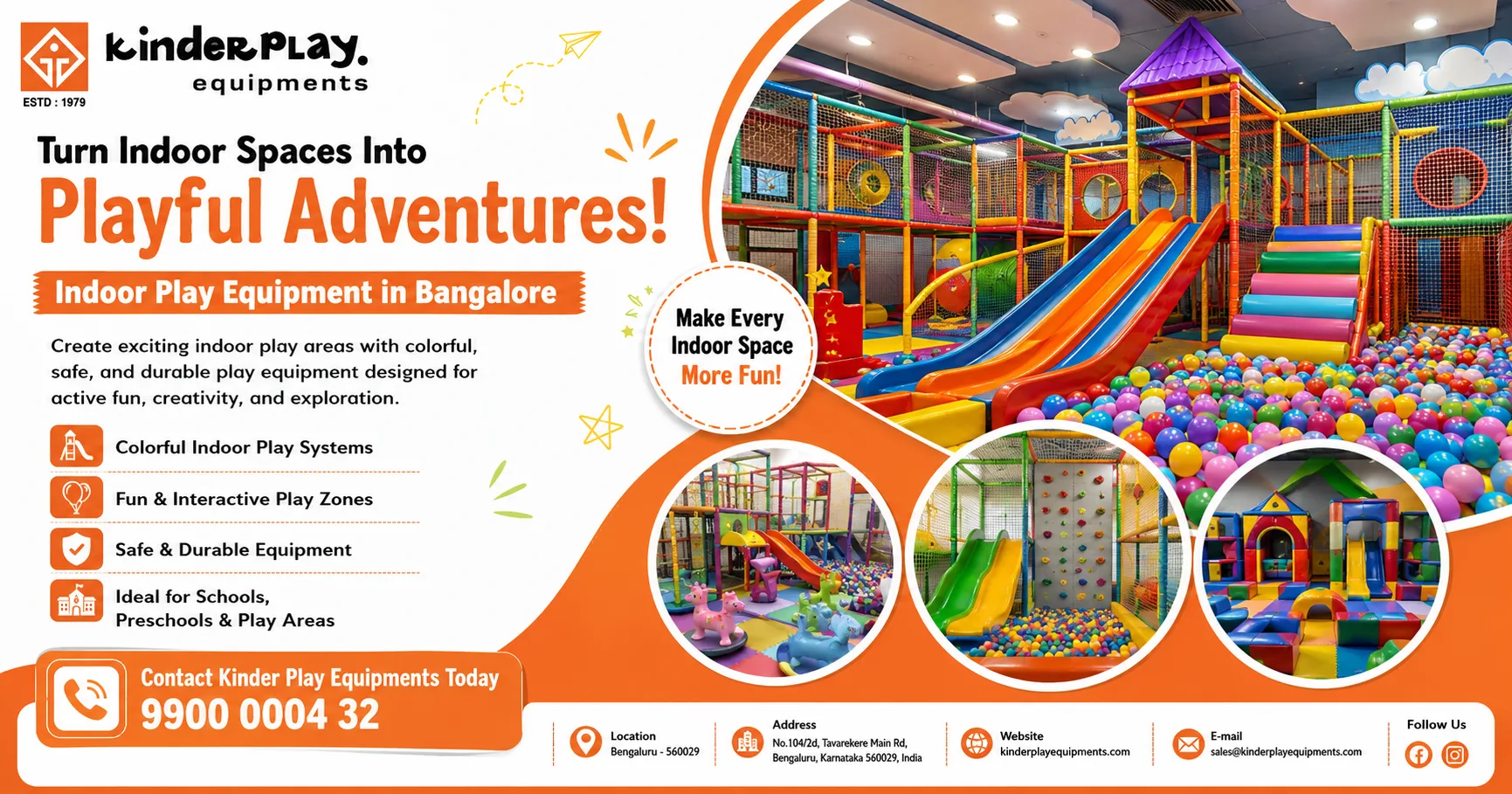
Children need opportunities to move and explore as part of their everyday routine. Indoor play equipment can provide activities such as climbing, crawling, sliding, balancing, and interactive play without depending entirely on outdoor space. When schools and activity centres explore Indoor Play Equipment in Bangalore, they can select different structures according to the children's ages, available space, and type of activities they want to encourage.
Indoor activities can support:
- Physical movement
- Balance and coordination
- Exploration
- Imaginative play
- Social interaction
Indoor Spaces Can Make Better Use of Available Areas
Not every school or preschool has access to a large outdoor playground. An indoor play area can make use of available rooms, halls, activity zones, or dedicated recreational spaces. Properly selected equipment can create multiple activities within one location while keeping the environment organised.
When evaluating Indoor Play Equipment Manufacturers in Bangalore, organisations can look at equipment dimensions, configurations, construction quality, age suitability, and how different structures can work together within the available space.
Different Equipment Creates Different Play Opportunities
An engaging indoor play environment does not need to rely on one type of structure. Combining movement-based equipment with interactive and imaginative activities can give children more ways to use the space.
Common indoor equipment can include:
- Soft play structures
- Slides
- Ball pools
- Climbing structures
- Crawl tunnels
- Interactive play units
- Multi-level play systems
The right combination depends on the age group, room dimensions, expected number of children, and intended use.
Age-Appropriate Design Matters
Children at different ages have different physical abilities and interests. Younger children may need softer, simpler structures, while older children may enjoy more challenging climbing and movement activities. When planning a Kids Indoor Play Area setup in Bangalore, schools and activity centres can consider children's ages, physical development, available space, supervision, and the level of challenge offered by each activity.
Age-appropriate equipment can help children participate comfortably while encouraging them to explore new activities.
Quality Is Important for Frequently Used Indoor Equipment
Indoor equipment can experience repeated use, particularly in schools, preschools, commercial play areas, and daycare environments. Strong construction, appropriate materials, secure connections, and suitable finishing therefore become important when selecting equipment.
Organisations comparing Indoor Play Equipment Suppliers in Bangalore should consider product quality, construction, equipment range, installation requirements, maintenance, and supplier experience instead of focusing only on design or price.
Useful quality considerations include:
- Durable construction
- Quality materials
- Secure connections
- Child-friendly finishing
- Practical maintenance
- Suitable equipment configuration
Indoor Play Areas Can Encourage Social Interaction
Indoor play environments can bring children together through shared activities. Children can learn to communicate, cooperate, take turns, and participate in group play while exploring different equipment.
For schools and preschools, this can make the indoor play area a useful recreational environment where children can interact naturally outside structured classroom activities.
Making the Indoor Layout Work Better
The arrangement of equipment can influence how children move through an indoor play area. Structures should be positioned with suitable movement space and clear visibility for adults supervising the children.
Layout planning can consider:
- Room dimensions
- Equipment footprint
- Activity zones
- Movement pathways
- Supervision visibility
- Entry and exit areas
A practical layout can help make the most of the available indoor space without creating unnecessary congestion.
Safety and Maintenance Should Work Together
Indoor equipment still requires appropriate installation, inspection, cleaning, and maintenance even though it is protected from outdoor weather. Regular attention can help identify damaged components, loose connections, worn surfaces, or other issues that may affect the equipment's intended use.
Routine attention may include:
- Checking structural components
- Inspecting connections
- Cleaning play surfaces
- Checking soft-play elements
- Reviewing access areas
- Following manufacturer guidance
Equipment should always be used according to the manufacturer's specifications and appropriate safety procedures.
What Makes an Indoor Play Area Valuable?
The Best Indoor Play Equipment in Bangalore is not necessarily the equipment with the largest structure or most colourful design. Its value depends on how well it matches the children, space, activities, usage levels, and practical requirements of the facility.
A useful indoor play area should provide a combination of enjoyment, movement, exploration, durability, and manageable maintenance. It should also be designed around the actual needs of its users rather than simply filling the available floor area.
Indoor Play Areas for Different Facilities
Indoor play equipment can be used in several child-focused environments, with the equipment selection changing according to the location and users.
Suitable environments can include:
- Preschools
- Schools
- Daycare centres
- Indoor activity centres
- Residential communities
- Resorts
- Family recreation spaces
Each facility can select equipment based on its available area, age groups, expected usage, and desired play activities.
About Kinder Play Equipments
Kinder Play Equipments supplies playground and indoor play equipment for schools, preschools, residential communities, and other recreational spaces in Bengaluru. The company provides equipment solutions based on the requirements of different play environments.
Contact Details
- Phone: 9900 0004 32
- Email: [email protected]
- Address: No.104/2D, Tavarekere Main Rd, Bengaluru, Karnataka 560029, India
- Location: Bengaluru
- Pincode: 560029
- Website: https://kinderplayequipments.com/index.php
- Facebook: https://www.facebook.com/profile.php?id=61591400145882
- Instagram: https://www.instagram.com/kinderplayequipments/
- GMB: https://share.google/yoAXT3dSDmZmbLhyi
Frequently Asked Questions
What is indoor play equipment?
Indoor play equipment includes structures and activities designed for children to play inside a controlled environment. Examples include slides, soft-play systems, ball pools, climbing structures, tunnels, and interactive units.
Why are indoor play areas useful for schools?
Indoor play areas give children opportunities for physical activity and recreation when outdoor play is not practical. They can also provide space for imaginative and social play.
What should be considered for a kids indoor play area?
The children's age groups, room dimensions, equipment type, layout, supervision, construction quality, maintenance, and intended usage should all be considered.
Is indoor play equipment suitable for preschools?
Yes. Equipment can be selected specifically for younger children, with appropriate activity levels, dimensions, materials, and design.
How important is indoor equipment quality?
Quality is important because indoor play structures can experience frequent use. Durable materials, secure construction, appropriate finishing, and regular maintenance can support long-term usability.
Conclusion
Indoor play spaces can provide children with valuable opportunities for movement, exploration, imagination, and social interaction without depending entirely on outdoor conditions. The right equipment should be selected according to the children's ages, available indoor space, expected usage, safety requirements, and long-term maintenance needs. From schools and preschools to daycare centres and activity spaces, a thoughtfully planned indoor play environment can make better use of available space while giving children an enjoyable place to stay active. Quality equipment combined with practical planning can help create an indoor play area that remains useful and engaging over time.