Quick Answer
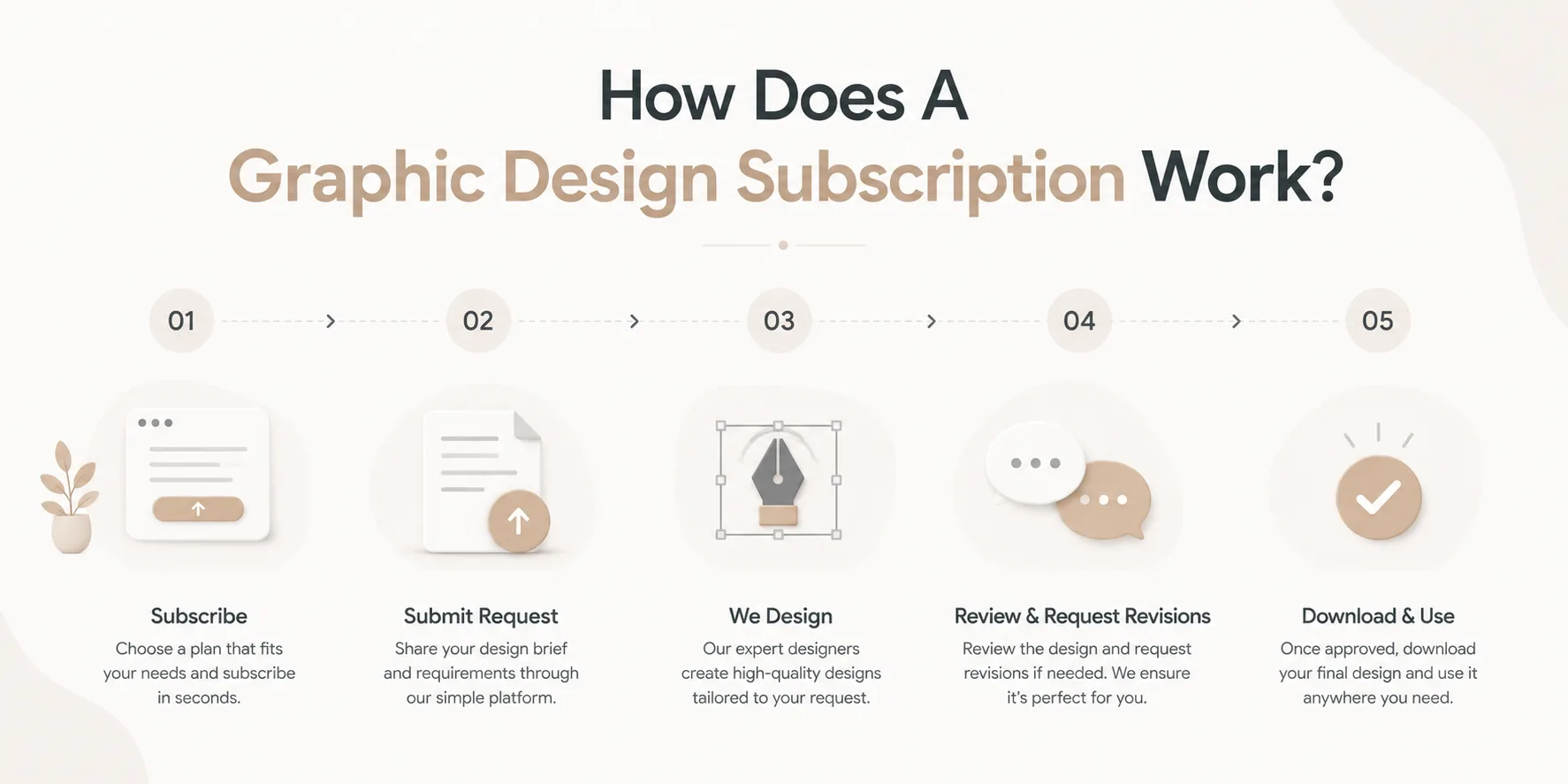
A Graphic Design Subscription gives a business regular design support for a fixed monthly fee. You send requests through a dashboard, email or project management tool. The design team works through the requests in a queue and shares drafts for review. You can ask for changes before approving the final files. Depending on the plan, the service may include social media posts, brochures, advertisements, reports, website graphics and Powerpoint Design Services. Most plans allow unlimited requests but only one or a fixed number of tasks are handled at the same time. This model helps businesses avoid hiring a complete in-house design team.
Introduction
Businesses need new designs throughout the month. A marketing team may require social media creatives today, a sales deck tomorrow and a brochure next week. Hiring a different freelancer for every task can take time and may create inconsistent results.
A Graphic Design Subscription solves this problem by giving your business access to a creative team for one recurring fee. It is useful for startups, agencies and growing companies that need regular design work.
How Does the Process Work?
1. Choose a Suitable PlanFirst estimate how much design work your business needs each month. Basic plans may support simple graphics and one active request. Larger plans may offer faster delivery, more active projects, senior designers or Powerpoint Design Services.
Check the following before choosing:
- Active request limit
- Average delivery time
- Included design types
- Revision policy
- Editable source files
- Pause and cancellation terms
During onboarding, the provider asks for your logo, fonts, colours, audience details, previous designs and visual references.
A clear brand kit helps the designer understand your style and reduces unnecessary revisions. You should also explain the tone of your brand and share examples of designs you like.
You can usually submit tasks through Trello, Asana, Slack, email or the provider’s own dashboard. Every request should include:
- Final text
- Required design size
- Publishing platform
- Deadline
- Brand files
- Visual references
- Preferred file format
For Powerpoint Design Services, also share the slide size, approved content, presentation purpose and whether the deck will be presented live or emailed.
The project manager checks your brief and sends it to the designer. Many services use the word “unlimited” because you can submit many requests. However your plan may allow only one or two tasks to be designed at a time.
The remaining requests stay in the queue until an active task is completed. Always check this condition before paying for a plan.
The designer shares a first version for feedback. Simple social media posts may be completed quickly while reports, illustrations and presentations may need more time.
Give clear comments such as “increase the heading size” or “use our approved blue.” Avoid unclear feedback such as “make it better” because the designer may not understand what needs to change.
Most plans include several or unlimited revisions. The designer updates the work until it is approved. A Graphic Design Subscription becomes more efficient when one person collects feedback from all decision-makers. This prevents conflicting comments and repeated changes.
This also makes the Graphic Design Subscription process easier to manage. After approval, you receive the required files such as JPG, PNG, PDF, PPTX or editable source files.
What Designs Can You Request?
The exact services depend on the provider but common requests include:
- Social media graphics
- Digital advertisements
- Website banners
- Brochures and flyers
- Infographics
- Reports and white papers
- Sales presentations
- Brand templates
- Powerpoint Design Services
Some providers also offer video editing, motion graphics, packaging and UI design. Check whether specialist work is included in the normal plan or charged separately.
Useful Tools for Managing Requests
- Trello or Asana: Use these tools to organise new, active, review and approved requests.
- Google Drive: Create separate folders for logos, content, brand guidelines, reference images and final files.
- Figma: Review layouts and add comments directly to specific parts of the design.
- Loom: Record short videos when visual feedback is difficult to explain in writing.
- Slack: Use Slack for quick communication and project updates.
- Canva: Create a rough reference to show the designer the layout or style you have in mind.
Hacks to Get Better Results
- Finalise the Content First: Content changes after designing starts can delay the task. Share approved copy whenever possible.
- Set Clear Priorities: Keep the most important task at the top of the queue. Do not mark every request as urgent.
- Approve One Master Design: For a campaign, approve the main design before requesting different sizes. This reduces repeated corrections across every format.
- Build Reusable Templates: Ask the team to create templates for reports, social posts and sales decks. Templates speed up future work and maintain brand consistency.
- Give Visual References: Share two or three examples that clearly show the style you expect. Avoid sending too many unrelated references.
- Review the Monthly Output: Divide the monthly fee by the number of approved designs. This helps you understand the real cost of every completed task.
Is It Right for Your Business?
A Graphic Design Subscription is suitable when your company needs designs every week and wants predictable monthly spending. It can also support an internal marketing team during busy campaigns.
It may not be the best option when you need only one logo, one brochure or one website. A fixed project fee may be more practical for occasional work. Before choosing a plan, review your design requirements from the last three months. This will help you select the right level of support.
Conclusion
Graphic Design Subscriptions follow the same basic process: Choose an option, provide the details of your business, make a request, look over drafts, request changes and then approve the final file.
The most effective results are derived from concise briefs, organized feedback, and realistic goals. Compare the providers based on the quality of their designs, delivery capacity communications, and other services instead of selecting only by the lowest monthly cost.