
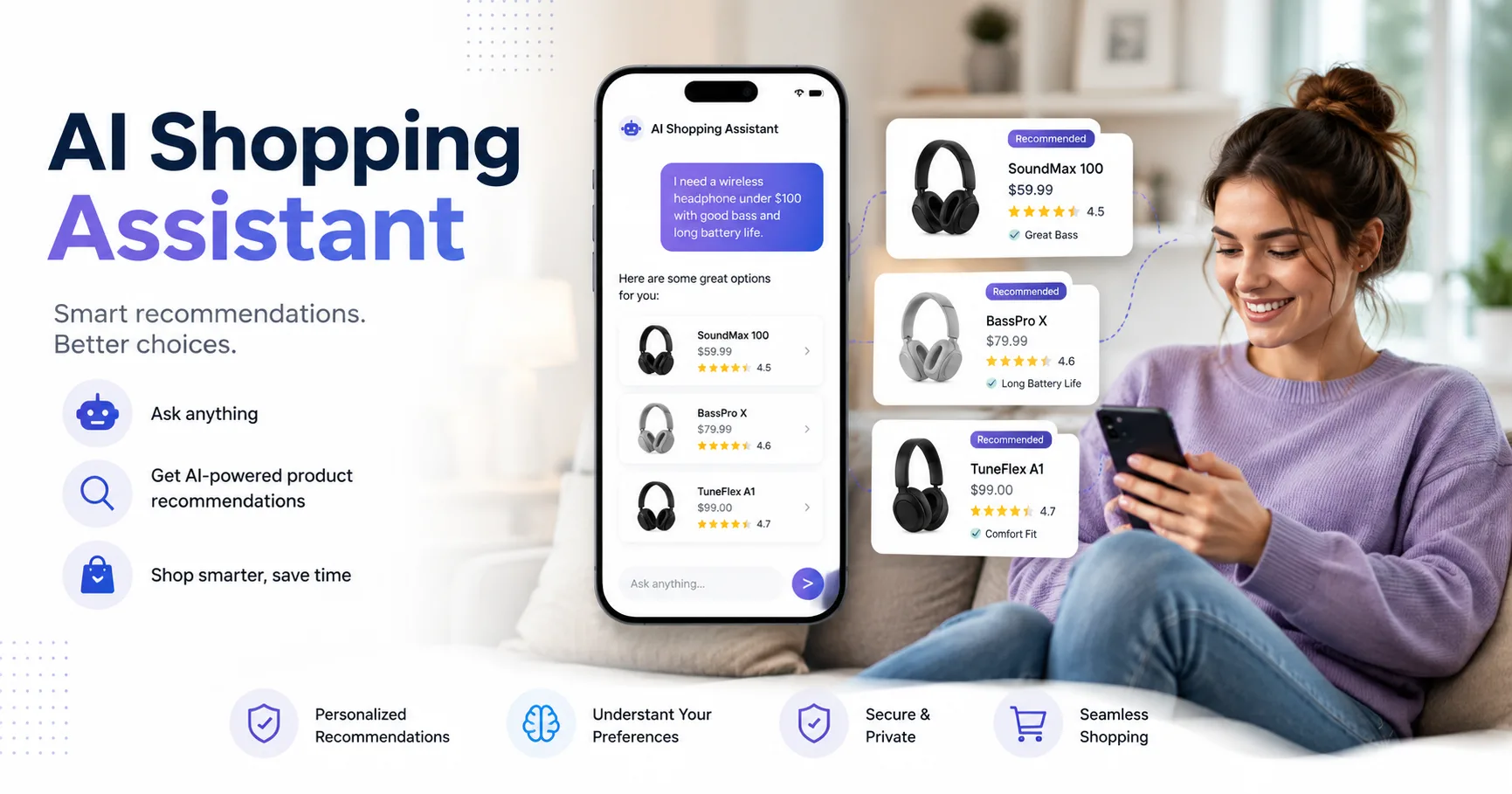
Imagine a customer asking an AI assistant, "What's the best coffee maker for a small apartment?" or "Recommend a skincare product for sensitive skin under $50." Within seconds, the AI presents a shortlist of products that perfectly match the request. If your product isn't on that list, you miss the opportunity before the customer even visits your website.
This is quickly becoming the new way people shop. AI shopping agents are changing product discovery by doing the research on behalf of shoppers. Instead of scrolling through pages of search results, customers are relying on AI to compare products, understand their needs, and recommend the best options. For ecommerce brands, this means the goal is no longer just ranking on Google—it is earning a place in AI-generated recommendations.
So, how do you make that happen?
The answer isn't about finding a secret ranking trick or stuffing more keywords into your product pages. AI shopping agents recommend products they understand and trust. The easier it is for AI to understand what your product does, who it is for, and why it stands out, the more likely it is to recommend it.
Understand How AI Shopping Agents Think
Unlike traditional search engines, AI shopping agents don't simply match keywords. They try to understand the shopper's intent.
For example, if someone asks for a "durable backpack for frequent travelers with a laptop compartment," the AI isn't looking for pages that repeat those exact words. Instead, it searches for products whose information clearly confirms they are durable, travel-friendly, and include a laptop compartment.
This means your product page has to answer questions before they're even asked. If important details are missing, AI often chooses another product that provides clearer information.
Think of AI as a knowledgeable sales assistant. If it doesn't know enough about your product, it can't confidently recommend it.
Your Product Page Is More Important Than Ever
Many ecommerce brands still treat product pages as a place to add a few images, a short description, and a list of specifications. That might have worked when shoppers were browsing manually, but AI needs much more context.
A strong product page tells a complete story. It explains who the product is designed for, what problems it solves, how it compares to alternatives, and why someone should choose it.
For example, instead of writing:
“Wireless earbuds with Bluetooth 5.3.”
Write something like:
“These lightweight wireless earbuds are designed for commuters and fitness enthusiasts. They deliver up to 40 hours of battery life with the charging case, feature active noise cancellation for noisy environments, and include IPX5 water resistance for workouts and outdoor use.”
The second description gives AI far more information to work with. It understands the audience, the benefits, and the situations where the product performs best.
Answer the Questions Customers Are Already Asking
One of the easiest ways to improve AI recommendations is by thinking like your customers.
Before buying, people naturally have questions. Is it waterproof? Does it fit true to size? Is it compatible with my device? How long does the battery last? What's included in the box?
If your product page answers these questions clearly, AI doesn't have to search elsewhere for information. It can confidently use your page as a trusted source.
Adding FAQs to product pages is also becoming increasingly valuable because they mirror the conversational questions shoppers ask AI assistants every day.
Complete Product Data Matters More Than Clever Copy
Great writing helps, but detailed product information matters even more.
AI shopping agents rely on structured information such as dimensions, materials, colors, compatibility, certifications, ingredients, weight, warranty details, and technical specifications. These attributes allow AI to compare products quickly and determine whether they match a shopper's request.
Many brands lose visibility simply because these details are incomplete or inconsistent across their product catalog.
If your listing leaves important fields blank, AI has to guess. Most recommendation systems prefer products they fully understand over products they need to interpret.
Original Content Gives You an Advantage
A common mistake in ecommerce is copying manufacturer descriptions.
When hundreds of websites publish the same product description, none of them offer unique value. AI has little reason to favor one over another.
Instead, write descriptions that reflect your own expertise. Explain how the product performs, who benefits most from it, and what makes it different from competing products.
Unique content doesn't just help SEO—it helps AI understand your product from multiple perspectives.
Reviews Help AI Build Confidence
Customer reviews have always influenced buying decisions, but they're becoming even more valuable in AI-driven shopping.
Reviews provide real-world evidence that supports your product claims. They reveal how customers actually use the product, what they like about it, and whether it solves the problem it promises to solve.
For example, dozens of reviews mentioning that a backpack comfortably fits a 16-inch laptop reinforce information that AI can use when recommending it to shoppers with similar needs.
Authentic reviews create trust for both customers and AI systems.
Structure Your Content So AI Can Read It Easily
Even the best information loses value if it is difficult to understand.
Instead of placing everything inside long paragraphs, organize product pages with clear headings, feature lists, specifications, compatibility sections, FAQs, and structured data.
This improves the shopping experience for customers while making it easier for AI to identify the most relevant information quickly.
The goal isn't simply adding more content. It's presenting information in a way that's easy for both humans and machines to understand.
Keep Your Product Information Updated
Outdated information can reduce trust.
If your pricing, availability, specifications, or product features change, your listings should reflect those updates immediately.
AI shopping agents are more likely to recommend products that provide accurate, current information. A product page that hasn't been updated in years sends the opposite signal.
Regularly reviewing and improving your catalog is becoming an essential part of ecommerce success.
Final Thoughts
Getting your products recommended by AI shopping agents isn't about chasing algorithms. It's about creating product pages that are genuinely useful. The more complete, accurate, and trustworthy your product information is, the easier it becomes for AI to understand your products and recommend them to shoppers.
As AI-powered shopping becomes more common, brands that invest in better product content today will have a significant advantage tomorrow. Every improved description, completed attribute, authentic review, and structured data point increases the likelihood that your products will appear in AI-generated recommendations.
If you're unsure whether your product catalog is ready for this shift,
we helps brands measure and improve their AI readiness through Agentic Commerce Optimization (ACO). By identifying content gaps and strengthening product information, businesses can improve their chances of being understood—and recommended—by AI shopping agents.