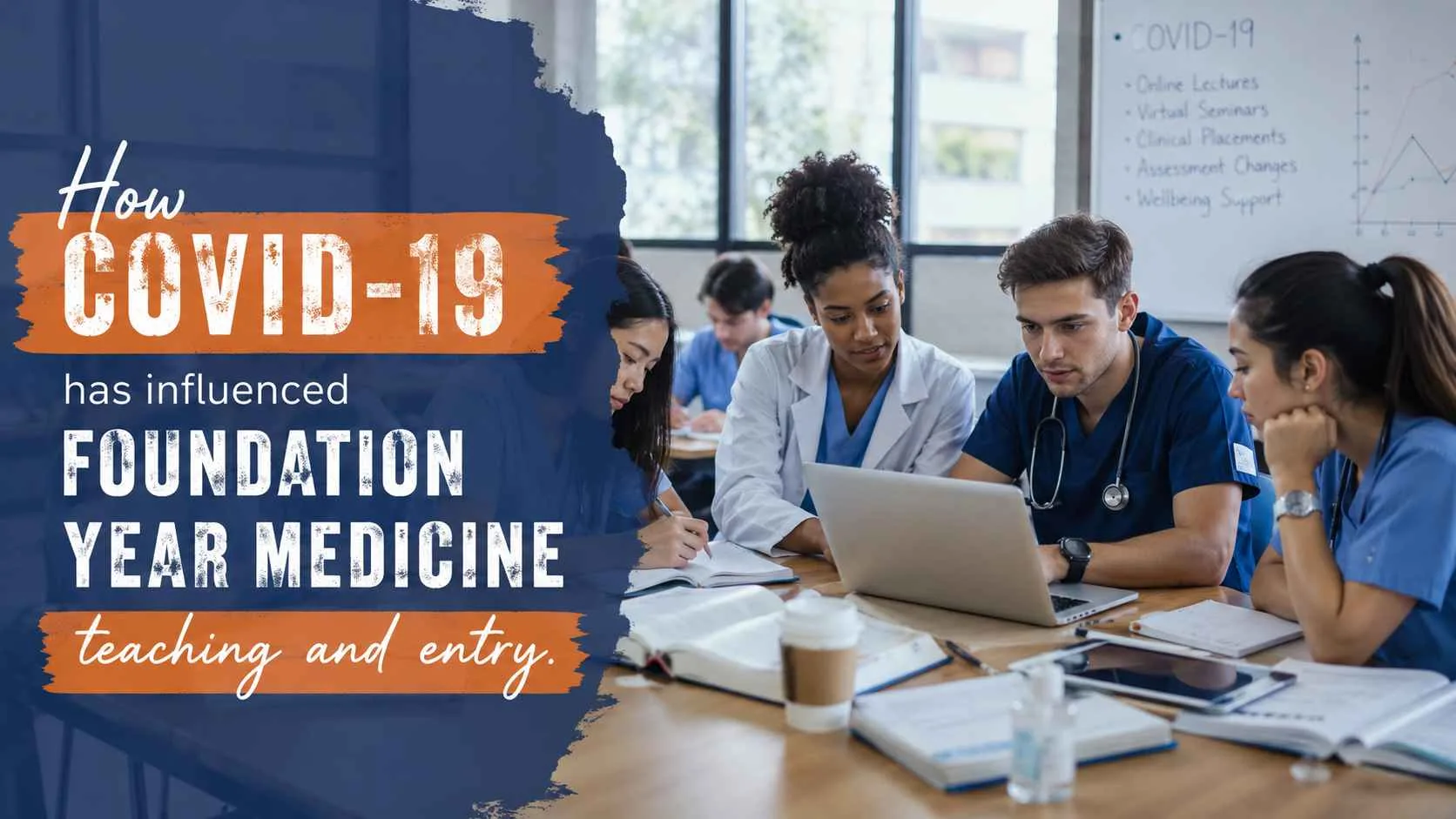
The COVID-19 pandemic changed medical education faster than anyone expected. Universities had to move teaching online within weeks. Clinical placements stopped. Admissions processes changed. Students had to adapt to a new way of learning medicine.
For students considering a medicine with foundation year course, many of the changes introduced during the pandemic still affect how universities teach, assess, and support future doctors today.
Some changes were temporary. Others became permanent parts of medical education. Hybrid learning, virtual interviews, online resources, telemedicine training, and stronger student support systems are now common across many institutions.
The pandemic did more than disrupt education. It changed what medical schools value in applicants and how they prepare students for modern healthcare.
What Is a Medicine With Foundation Year Course?
A medicine with foundation year course is designed for students who have the ability to become doctors but may not meet the standard entry requirements for direct admission to medicine.
The foundation year acts as an additional preparatory year before students progress into the main medical degree. During this period, students strengthen their knowledge of biology, chemistry, healthcare systems, communication, and academic study skills.
Many universities use these programmes to widen access to medicine. They create opportunities for students from underrepresented backgrounds, schools with lower progression rates, or applicants who have faced educational disadvantages.
Unlike a traditional medical degree, a medicine with foundation year course offers extra support during the transition into higher education. Students receive guidance that helps them build confidence before entering the more demanding stages of medical training.
Medical Education Before COVID-19
Before the pandemic, foundation medicine teaching followed a predictable structure. Most learning happened on campus. Students attended lectures, laboratory sessions, workshops, and small-group tutorials in person.
Clinical exposure was also an important part of the learning experience. Even foundation year students often had opportunities to observe healthcare environments and understand how hospitals operate.
Admissions processes were equally traditional. Medical schools relied heavily on academic grades, admissions tests, personal statements, interviews, and work experience placements.
Many universities considered hospital shadowing and volunteering valuable evidence of commitment to medicine. Applicants often spent months arranging healthcare-related experiences before applying.
Medical education was built around face-to-face interaction. Few people expected that model to change so dramatically.
The Immediate Impact of COVID-19 on Foundation Medicine Programmes
When lockdowns began in 2020, medical schools faced a major challenge. Education could not stop, but campuses were closing.
Universities quickly moved lectures online. Tutorials shifted to video platforms. Laboratories were cancelled or redesigned. Clinical visits were suspended in many areas.
Students suddenly found themselves studying medicine from bedrooms, kitchens, and living rooms.
The disruption affected every stage of the student journey. Teaching methods changed overnight. Assessment methods had to be redesigned. Admissions teams also had to reconsider how they evaluated applicants whose education had been interrupted.
Research published in BMC Medical Education found that students appreciated the flexibility of remote learning but reported concerns about reduced clinical skills training, limited participation, and fewer hands-on learning opportunities.
The experience created uncertainty, but it also accelerated changes that might otherwise have taken years to develop.
How COVID-19 Changed Teaching in Medicine With Foundation Year Courses
Digital Learning Became a Core Part of Medical Education
Before COVID-19, many universities offered recorded lectures as optional resources. During the pandemic, online learning became the primary teaching method.
Students attended lectures remotely and accessed course materials through digital learning platforms. Universities expanded online libraries, virtual discussion boards, and electronic study resources.
Many students enjoyed the flexibility. Recorded lectures allowed learners to revisit difficult topics and study at their own pace.
A large international study found that online learning increased flexibility for students, and many reported improved attendance compared with traditional classroom teaching.
Today, many foundation medicine programmes continue to provide recorded content alongside classroom teaching.
Hybrid Learning Became the New Standard
One of the biggest long-term outcomes of the pandemic is the rise of hybrid education.
Instead of choosing between fully online and fully face-to-face teaching, universities now combine both approaches.
Students may attend practical sessions on campus while accessing lectures online. This model offers greater flexibility without removing important in-person learning opportunities.
A report involving UK medical schools highlighted the widespread adoption of hybrid teaching following the pandemic and its continuing role in medical education.
For foundation year students, this often means easier access to learning materials and greater control over revision schedules.
Clinical Skills Teaching Was Reimagined
Teaching medicine without patients created obvious challenges.
Medical schools introduced virtual patient cases, simulation exercises, and online clinical reasoning activities. Students learned how to assess symptoms and develop treatment plans through digital platforms.
Although virtual learning could not fully replace real patient contact, it helped students continue developing essential decision-making skills.
Research during the pandemic showed that many students felt less prepared for clinical training because of reduced practical exposure.
As restrictions eased, universities invested heavily in simulation centres and practical skills sessions to address these gaps.
Telemedicine Entered the Curriculum
One of the most significant changes involved telemedicine.
During the pandemic, healthcare providers rapidly expanded remote consultations. Medical schools responded by introducing telehealth training into their programmes.
Students learned how to communicate with patients through video consultations, conduct remote assessments, and understand digital healthcare systems.
Studies recommended telehealth training as an important part of future medical education.
This experience prepared students for a healthcare system that increasingly relies on digital tools.
Public Health Became More Important Than Ever
COVID-19 turned public health from an academic subject into a real-world issue affecting every community.
Medical schools placed greater emphasis on topics such as:
- Infectious disease control
- Epidemiology
- Health inequalities
- Vaccination programmes
- Population health
- Global healthcare systems
Students could see these concepts unfolding in real time. The pandemic demonstrated how public health decisions influence hospitals, communities, and national healthcare systems.
As a result, many foundation medicine programmes now give public health a stronger presence within their curricula.
How COVID-19 Changed Entry Into Medicine With Foundation Year Courses
Examination Disruptions Changed Admissions
School examinations were cancelled in several countries during the pandemic. Universities had to evaluate applicants using alternative grading methods.
Admissions teams faced difficult decisions because traditional academic indicators were less consistent than in previous years.
Medical schools adopted more flexible approaches and reviewed applications within the wider context of each student's circumstances.
The pandemic forced universities to look beyond grades alone and consider a broader picture of applicant potential.
Work Experience Expectations Changed
Before COVID-19, healthcare work experience was often seen as an important part of a strong medical application.
When hospitals restricted visitors and volunteers, many students lost access to these opportunities.
Universities adapted quickly. They began accepting virtual work experience programmes, online healthcare courses, and community volunteering activities as evidence of commitment to medicine.
This change helped broaden access for applicants who previously struggled to arrange traditional hospital placements.
Online Interviews Became Common
Medical school interviews moved online during the pandemic.
Many universities discovered unexpected advantages. Online interviews reduced travel costs and made participation easier for students from different regions.
Although face-to-face interviews have returned in some cases, virtual interviews remain part of the admissions process at many institutions.
The experience showed that technology could make admissions more accessible without reducing assessment quality.
The Rise of Resilience as an Admissions Factor
The pandemic highlighted an important reality. Academic ability alone does not determine success in medicine.
Students faced disrupted schooling, family responsibilities, health concerns, financial pressures, and social isolation. Many demonstrated remarkable adaptability during this period.
Admissions teams increasingly recognised qualities such as:
- Resilience
- Adaptability
- Self-motivation
- Communication skills
- Emotional maturity
- Commitment to service
These characteristics became more visible during the pandemic and continue to influence how universities assess applicants today.
For students applying to a medicine with foundation year course, personal growth and life experiences can now carry greater weight than they did before COVID-19.
Positive Changes That Remain Today
Greater Flexibility
Students now have access to more learning formats than ever before.
Recorded lectures, online resources, and digital revision tools make studying more flexible and accessible.
Many students appreciate the ability to review challenging topics multiple times before assessments.
Better Digital Skills
The pandemic accelerated digital literacy across medical education.
Students learned to use online collaboration tools, virtual healthcare platforms, electronic patient records, and remote communication systems.
These skills have become increasingly valuable in modern healthcare settings.
Stronger Student Support
Universities recognised the emotional impact of the pandemic on students.
As a result, many institutions expanded mental health support, wellbeing programmes, mentoring schemes, and academic assistance services.
These improvements continue to benefit foundation year students today.
Challenges That Still Affect Students
Not every consequence of the pandemic was positive.
Some students entered medical training with less clinical exposure than previous generations. Others experienced reduced opportunities to build confidence through direct patient interaction.
Research and student experiences frequently highlighted concerns about practical skills development and social isolation during extended periods of online learning.
Medical schools continue to address these challenges through:
- Additional simulation training
- Clinical skills workshops
- Peer mentoring programmes
- Increased patient-facing opportunities
- Enhanced practical teaching sessions
These efforts help bridge learning gaps created during the pandemic years.
What Students Should Look for Today
Students considering a medicine with foundation year course should pay close attention to how programmes have evolved since COVID-19.
Look for courses that offer a strong balance between digital flexibility and practical learning. A programme should provide access to laboratories, clinical skills training, and meaningful patient-focused experiences.
Student support services also matter. Mental wellbeing, academic mentoring, and progression guidance can make a significant difference throughout the course.
Most importantly, students should choose a programme that prepares them for the realities of modern healthcare rather than focusing solely on admissions requirements.
The Future of Foundation Year Medicine
The pandemic accelerated trends that were already beginning to appear in medical education.
Hybrid learning is likely to remain common. Digital resources will continue growing. Telemedicine training will become more advanced. Simulation technology will play a larger role in teaching practical skills.
Artificial intelligence, virtual reality, and personalised learning systems may also become more integrated into future foundation medicine programmes.
Medical schools are no longer preparing students only for traditional healthcare environments. They are preparing them for a healthcare system where technology, public health awareness, and adaptability are essential.
The students entering medicine today will work in a very different healthcare system from the one that existed before 2020.
Frequently Asked Questions
Is a medicine with foundation year course easier than standard medicine?
No. The foundation year provides additional preparation and support, but students must still meet progression requirements before entering the medical degree. The final qualification remains rigorous and demanding.
Did COVID-19 make it easier to enter medical school?
Not necessarily. Admissions processes became more flexible, but competition remained high. In fact, medical school applications increased significantly during the pandemic in several countries.
Are online learning methods still used today?
Yes. Most medical schools continue to use recorded lectures, digital resources, and online learning platforms alongside face-to-face teaching.
Why is resilience important in medicine admissions?
Medicine requires students to manage pressure, adapt to challenges, and continue learning during difficult situations. The pandemic highlighted the value of these qualities.
Is a medicine with foundation year course still a good option?
Yes. It remains one of the strongest routes into medicine for students who need additional academic preparation or who come from backgrounds that may not follow the traditional pathway into medical school.
Conclusion
COVID-19 changed foundation medicine teaching and admissions in ways that few people expected. Universities moved learning online, redesigned assessments, introduced telemedicine training, and adopted more flexible admissions approaches.
Many temporary solutions became lasting improvements. Hybrid learning, stronger student support, digital resources, and broader admissions criteria now play a major role in medical education.
For students considering a medicine with foundation year course, the legacy of the pandemic is clear. Medical schools now focus not only on academic achievement but also on adaptability, resilience, communication, and readiness for a modern healthcare system.
The result is a pathway that is more flexible, more accessible, and better aligned with the future of medicine than it was before COVID-19.