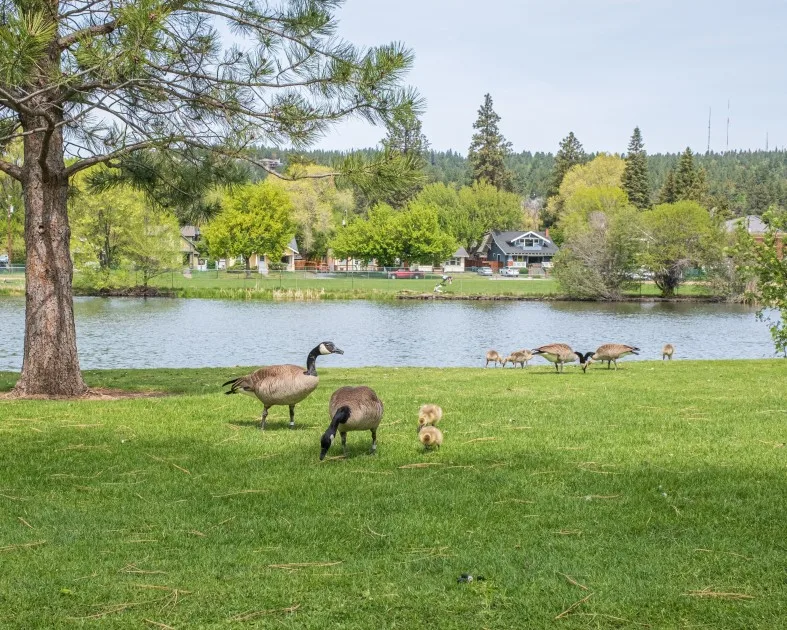
Most stormwater retention ponds and community water features are designed to handle runoff, filter pollutants, and maintain a certain ecological balance. They are functional infrastructure, even when they look like amenities. What they are not designed to handle is a resident flock of Canada geese treating the shoreline as a permanent home.
Property managers, HOAs, and municipal parks departments across North America are increasingly running into this problem. A pond that looked healthy a few seasons ago now has murky water, degraded banks, and persistent algae growth. In many of those cases, a closer look at what changed reveals a steadily growing goose population that nobody dealt with consistently.
The connection between geese and water quality is not always obvious at first. But the biology is straightforward, and the cumulative effect on a retention pond or stormwater feature is significant.
How Goose Waste Gets Into the Water and What It Does
A single Canada goose produces a substantial amount of waste every day. When a flock establishes itself on or near a retention pond, the daily nutrient load entering that water adds up quickly. Goose droppings are high in nitrogen and phosphorus, the same compounds that drive algae blooms when they accumulate in still or slow-moving water.
Excessive algae growth depletes oxygen levels, which stresses or kills fish and other aquatic life. It also creates conditions where harmful bacteria can thrive. Municipalities and HOAs that manage ponds subject to water quality testing have reported elevated fecal coliform counts in water bodies where geese have been present long-term. This is a documented pattern that environmental consultants and stormwater engineers have seen on properties across the Mid-Atlantic and Northeast.
For communities considering professional wild goose removal because of recurring water quality issues, the source of contamination is not always identified quickly enough. The source of contamination is not always identified quickly enough. By the time a pond tests poorly, the goose population has typically been there long enough to establish nesting loyalty.
Why Geese Destroy the Grass and Plants Around the Water's Edge
Canada geese are grazers. They feed heavily on grasses and ground-level vegetation, and they prefer the kind of manicured turf that surrounds most managed ponds. When geese congregate along a shoreline in numbers, they strip the vegetation down to bare soil.
That matters because shoreline vegetation is what holds banks together and filters runoff before it reaches the water. Healthy grass, native plantings, and buffer zones slow the movement of sediment, lawn chemicals, and other pollutants into the pond. Once geese remove that ground cover, erosion accelerates, banks destabilize, and unfiltered runoff flows directly into the water.
Stormwater engineers who design and maintain retention systems often include vegetated buffer zones as a core part of their plans. Geese undermine those systems not through a single dramatic event but through sustained, daily grazing that compounds over months and seasons.
Why Common Deterrents Keep Failing on Retention Ponds
This is the part property managers tend to learn the hard way. Floating predator decoys, solar-powered noise devices, and chemical repellents on turf are commonly tried first. They occasionally work for a short period, typically until the geese figure out the threat is not real. Habituation is fast.
A flock that has been using a pond for weeks will not be moved by a plastic alligator head or a motion-activated sprinkler for long. This is especially true for retention ponds because geese are not just passing through. They have a biological preference for open water with grassy shorelines, which describes almost every stormwater feature built into a residential development or commercial campus.
The deterrents that hold up are the ones that replicate genuine predator pressure. Border Collie programs work because the dogs trigger an instinctive fear response that geese cannot habituate to. They read the dog's movements as a real threat every single time, which is why recurring professional visits produce a different outcome than any static or automated solution. Reliable goose control services operating on a regular schedule disrupt that habituation cycle before the birds settle in for nesting season.
Stormwater ponds and retention basins on commercial and municipal properties are often subject to permit conditions or monitoring requirements. Water quality, sediment levels, and the health of the buffer zone can all fall under state environmental agency oversight. In states like New Jersey and Pennsylvania, stormwater management regulations have become more detailed, and property owners bear more responsibility for maintaining those systems in working order.
When geese degrade a pond's water quality or strip a buffer zone bare, the property manager faces two problems at once: the environmental issue and the cost of remediation. Reseeding eroded banks, treating algae growth, and restoring native plantings all carry real budget implications.
What to Expect If You Wait Too Long to Act
Water quality problems tied to geese do not resolve on their own. Once a pond has elevated nutrient levels and destabilized banks, active restoration is typically required alongside population management. The two need to run in parallel.
Geese Chasers has worked with property managers, HOAs, and municipalities dealing with exactly this combination of issues. The wildlife management side of the problem and the infrastructure side are closely connected. Addressing one without the other tends to produce temporary results. For retention ponds where water quality is a genuine concern, the more practical starting point is consistent professional management of the birds before pond damage becomes the main item on the budget.