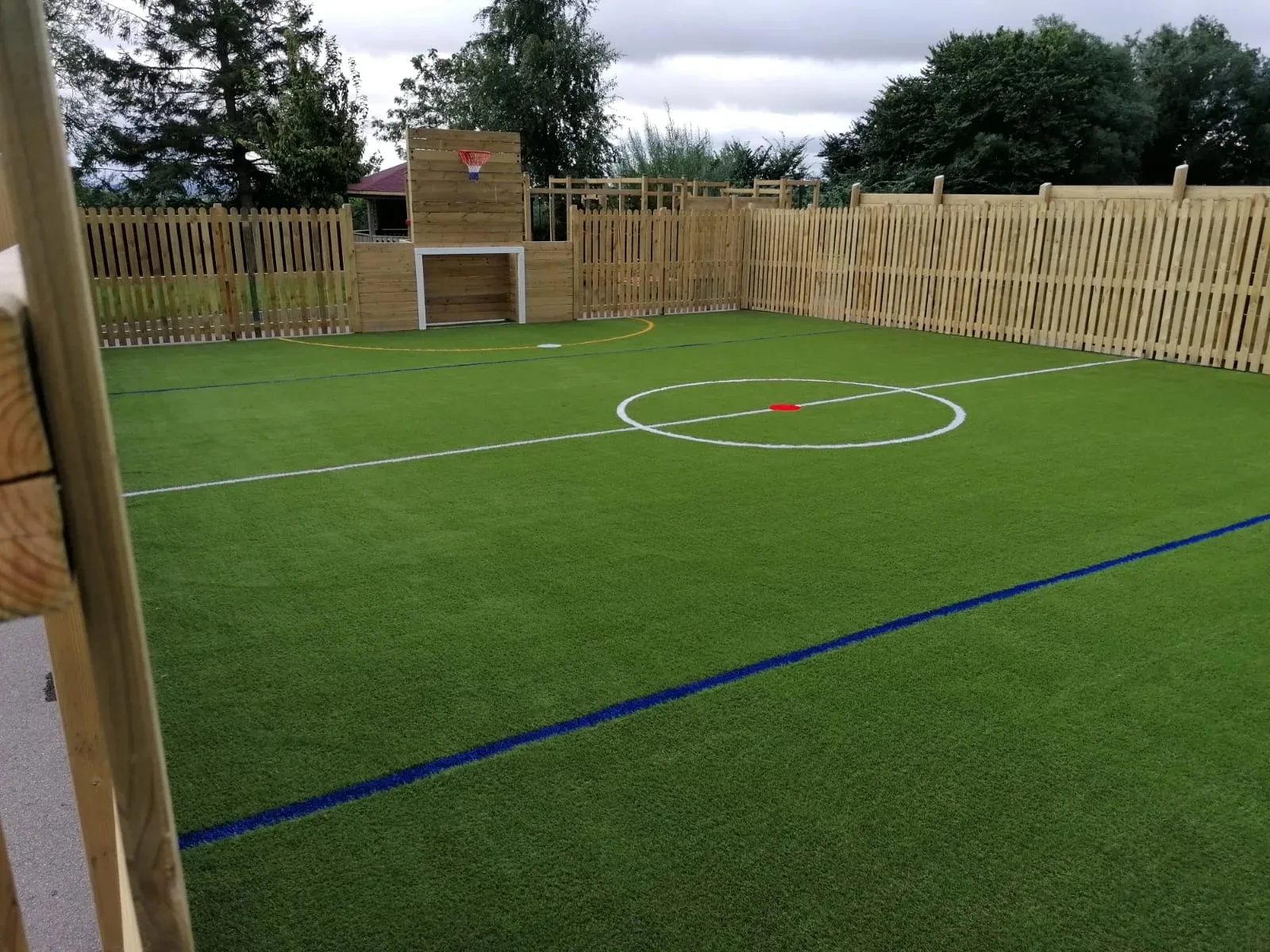
For London families with young children, the garden is not a decorative feature — it is a play space that gets used hard every day. Natural grass struggles to keep up. It turns muddy in winter, wears to bare soil under repeated use, and creates a constant cycle of mess tracked indoors. Artificial grass solves all of this, and for families with children it offers specific advantages that go beyond the usual low-maintenance appeal.
Here is what London parents need to know before making the switch.
Why Artificial Grass Works So Well for Families
Children use gardens differently from adults. They run, roll, crawl, play, and fall — and they do it in all weathers. The demands this places on a lawn are significant:
● Constant foot traffic in the same areas creates worn patches and bare soil on natural grass within weeks in a small London garden.
● Mud after rain is a persistent problem — children come inside with muddy shoes, muddy knees, and muddy hands regardless of how often you ask them not to.
● Natural grass in shaded London gardens thins out and becomes patchy, leaving an uneven surface with exposed soil that children trip on.
● Lawn chemicals — fertilisers, weedkillers, moss treatments — are a concern in gardens where small children regularly play at ground level.
Artificial grass removes every one of these problems. It does not wear away under heavy use, it does not produce mud, it grows evenly regardless of shade, and it requires no chemicals whatsoever to maintain its appearance.
Safety Considerations for Children
Safety is the first question most parents ask, and the answers are reassuring when you choose the right product and installation:
- Material safety: Quality artificial grass for domestic use is manufactured from polyethylene, which is non-toxic, non-allergenic, and safe for children to play on. The infill material — typically silica sand — is also non-toxic. Always check that any product being considered meets EN71 toy safety standards, which confirms it is free from harmful substances.
- Surface hardness: Artificial grass laid directly over a hard sub-base is firmer than natural grass, which has some natural cushioning from the soil beneath. For gardens where young children will be playing, falling, and using the surface intensively, a shock-absorbing underlay beneath the grass significantly reduces the impact of falls. These underlays are rated to specific Critical Fall Height (CFH) standards — ask your installer about options if safety from falls is a priority.
- Heat in direct sun: Artificial grass in direct sunlight gets warmer than natural grass because it does not benefit from evaporative cooling. On a very hot summer day, the surface temperature can be notably higher than ambient air temperature. This is worth being aware of for very young children playing barefoot in strong sun, though it is rarely a practical problem in most London gardens, which receive limited direct sun for much of the year.
- No sharp edges or trip hazards: A well-installed artificial lawn with properly secured edges is a smooth, even surface without the trip hazards that patchy or worn natural grass can create.
The No-Mud Benefit
Ask any London parent with young children what they would most like to eliminate from their daily routine, and mud comes up consistently. A garden where children play freely without generating mud that gets tracked through the house is a genuinely transformative change for family life.
Artificial grass does not produce mud. Even after heavy rain, the surface drains quickly and children can go out and play without coming back covered in it. For the average London family, this single benefit alone often justifies the installation cost within the first year.
Durability Under Heavy Use
Children are harder on lawns than almost any other use. For a family garden in London, choosing the right product specification matters:
● Look for a dtex rating of 11,000 or above — this indicates robust fibres that withstand repeated compression and spring back effectively.
● C-shape or W-shape fibre cross-sections recover better after heavy foot traffic than flat fibres.
● A stitch density of 18,000+ per m² produces a fuller, more resilient surface that handles intensive use better than a sparsely stitched product.
Mid-range products in the £60–£90/m² installed bracket typically meet all of these specifications and are the right choice for most family gardens. Budget products may look adequate initially but flatten and wear faster under the demands of children playing daily.
Garden Design Ideas for Family Gardens
The best family gardens with artificial grass are those designed for use, not just for appearance:
Keep the lawn level: A flat, even surface is safer for children running and playing than one with slopes or undulations. A well-prepared sub-base ensures the finished lawn is consistently level.
Choose soft borders: Raised beds and planters work well in family gardens because they keep planting out of the play zone without creating hard edges that children can fall against. Soft timber-framed raised beds are a good choice.
Allow space for play equipment: If a climbing frame, trampoline, or other play equipment is planned, discuss this with your installer before the grass goes down. Some equipment needs ground anchors; heavy equipment sitting in one spot long-term can flatten fibres in that area.
Consider a sandpit zone: A discrete sandpit area alongside the artificial lawn gives children an additional play texture without the sand spreading across the entire garden.
Maintenance With Children
One of the genuine advantages of artificial grass for families is how easy it is to keep clean:
● Mess from outdoor play — muddy hands, chalk, food from al fresco lunches — rinses off quickly with a hose.
● No lawn treatments or chemicals are ever needed, so the surface is safe for children to use immediately after any maintenance.
● The regular brushing routine takes minutes and children can help with it. For London families looking for child-friendly artificial grass across London that performs well under the demands of daily play while staying clean, safe, and low-maintenance, artificial grass consistently delivers on all counts.
Final Thoughts
Artificial grass and young children are an excellent combination. The safety credentials are solid when you choose the right product, the no-mud benefit is transformative for daily family life, and the durability under heavy use means the lawn looks as good in year five as it did on the day it was installed. For London families with active children and limited garden space, it is one of the most practical home improvements available.