
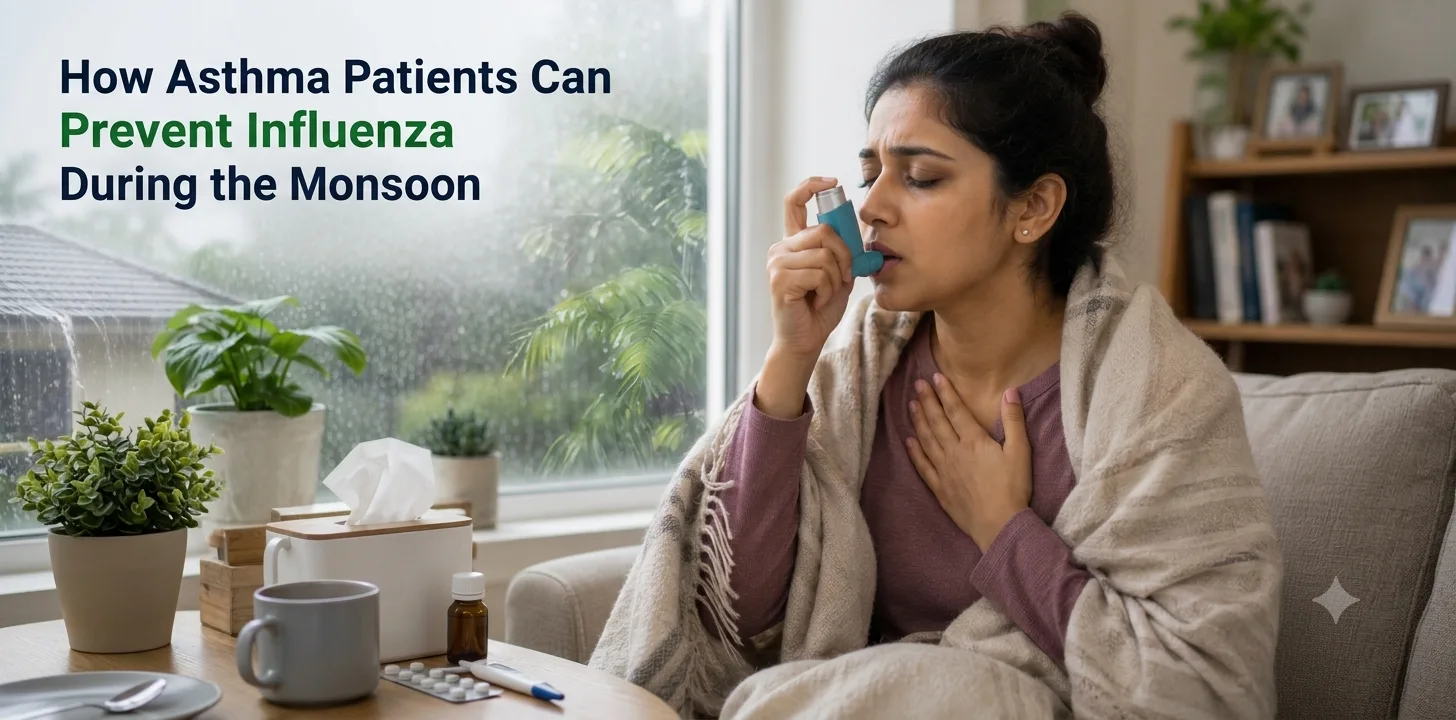
Respiratory infections during the monsoon can make asthma symptoms harder to manage. Coughing, wheezing, and breathing problems may become more noticeable when someone with asthma develops an infection.
Influenza can be more serious for people with asthma because it may worsen breathing symptoms and increase the risk of complications. In India, influenza activity varies by region, with some areas seeing increased circulation during the rainy months.
Staying on top of asthma treatment, getting an appropriate influenza vaccine, and limiting exposure to respiratory infections can help during the monsoon.
Key Takeaways
- Influenza can worsen asthma symptoms and increase the risk of complications.
- An Influenza Vaccine can help reduce the risk of influenza and severe illness.
- Hand hygiene, good ventilation, and avoiding close contact with sick people can reduce exposure.
- People with asthma should continue their prescribed treatment during the monsoon.
- Fever, body aches, or a change in usual breathing symptoms may point to an infection rather than an asthma flare-up.
Why Is Influenza a Concern for People With Asthma?
Asthma causes inflammation and narrowing of the airways, which can lead to coughing, wheezing, chest tightness, and shortness of breath. A viral infection such as influenza can increase this inflammation and make symptoms worse.
Influenza viruses cause influenza and mainly spread through respiratory particles when an infected person coughs, sneezes, talks, or breathes. Common symptoms include:
- Fever
- Cough
- Sore throat
- Body aches
- Headache
- Tiredness
In people with asthma, influenza can trigger worsening symptoms and increase the risk of complications such as pneumonia.
How Can Asthma Patients Reduce Their Risk During Monsoon?
Vaccination and everyday precautions can help reduce the risk of influenza.
Keep Your Asthma Under Control
Continue your prescribed asthma medicines as directed, even when you feel well. Do not stop or change an inhaler without medical advice.
If your asthma symptoms have become more frequent or severe, speak with your healthcare professional about whether your treatment plan needs to be reviewed.
Consider an Annual Influenza Vaccine
Vaccination is one of the main ways to prevent influenza and reduce the risk of severe illness. WHO recommends influenza vaccination for people with chronic medical conditions, including asthma.
Influenza viruses change over time, so seasonal vaccines are updated, and annual vaccination is generally recommended. Protection also takes time to develop after vaccination. An inactivated quadrivalent vaccine, such as the Influvac Tetra vaccine, is one example available in India. The timing of vaccination may vary by age, health status, and influenza activity in the region.
Vaccination can reduce the risk of influenza and serious illness, although it does not provide complete protection.
Practice Good Hand Hygiene
Wash your hands regularly with soap and water, particularly after being in public places and before eating or touching your face.
If soap and water are unavailable, an appropriate hand sanitiser can be used. Avoid touching your eyes, nose, and mouth with unwashed hands.
Improve Indoor Ventilation
During the monsoon, people may spend more time indoors with windows and doors closed. Crowded, poorly ventilated spaces can increase exposure to respiratory viruses.
Open windows or use suitable ventilation when practical, especially if someone nearby has a respiratory infection.
Avoid Close Contact With Sick People
If someone around you has a fever, cough, or other flu-like symptoms, try to maintain some distance until they recover.
People who are unwell should also avoid close contact with others where possible. Covering your mouth and nose while coughing or sneezing and disposing tissues properly can help limit the spread of infection.
How Can You Tell Influenza From an Asthma Flare-Up?
Some symptoms of influenza and asthma overlap, which can make them difficult to distinguish.
An asthma flare-up commonly causes:
- Wheezing
- Chest tightness
- Shortness of breath
- Persistent coughing
Influenza more often causes a sudden illness with symptoms such as fever, dry cough, sore throat, headache, body aches, and marked tiredness.
Knowing the Most Common Respiratory Disease Symptoms can help you notice when an illness feels different from your usual asthma symptoms. For example, a sudden fever and body aches, along with a worsening cough, may suggest an infection.
Influenza can also trigger an asthma flare-up, so the two can occur together. If you are unsure what is causing your symptoms, seek medical advice.
What Should You Do If You Develop Flu-Like Symptoms?
If you have asthma and develop symptoms that could be influenza, pay attention to any changes in your breathing.
Continue your prescribed asthma treatment unless your healthcare professional advises otherwise. Rest, stay hydrated, and limit close contact with others while you are unwell.
People with asthma have a higher risk of complications from influenza. A healthcare professional may consider antiviral treatment, particularly when treatment is started early in people at higher risk of severe illness.
Seek urgent medical attention if you develop:
- Severe difficulty breathing
- Chest pain
- Confusion
- Bluish lips or face
- Other signs of serious illness
Not every fever or cough during the monsoon is influenza. Other respiratory infections can cause similar symptoms, so testing or medical assessment may be needed.
Living With Asthma During the Monsoon
Managing asthma during the rainy season does not mean avoiding normal activities. It means being prepared for changes in your symptoms and acting early when something feels different.
Keep your asthma medicines available and follow your asthma action plan if you have one. If you have been advised to use a reliever inhaler during worsening symptoms, follow those instructions.
People with asthma may be more vulnerable to complications from influenza, so keeping asthma under control and taking preventive measures can help during periods of increased flu activity. If you have asthma, speak with your healthcare professional about whether an Influenza Vaccine is appropriate for you and when vaccination would be suitable in your area.
Disclaimer: This article is for general health information only and should not replace medical advice, diagnosis, or treatment from a qualified healthcare professional.