Artificial lift technologies provide the additional energy required to sustain production when natural flow is no longer adequate.
Artificial lift technologies provide the additional energy required to sustain production when natural flow is no longer adequate. When integrated with Enhanced Oil Recovery (EOR) techniques, artificial lift enables operators to extend well life, improve recovery factors, optimize production, and maximize the value of existing assets.
What Is Artificial Lift and Why Is It Important?
Artificial lift is a production method used to increase the flow of oil and gas from wells when natural reservoir pressure is insufficient. Rather than relying solely on reservoir energy, artificial lift systems introduce mechanical or fluid energy to transport hydrocarbons efficiently to the surface.
During the early life of a well, reservoir pressure is often sufficient to sustain natural production. However, as hydrocarbons are produced, reservoir pressure gradually declines, reducing production rates and leaving significant volumes of recoverable oil behind.
Artificial lift addresses these challenges by:
- Increasing fluid movement from the reservoir to the surface
- Maintaining stable and sustainable production rates
- Improving recovery from mature and depleted wells
- Reducing production losses caused by declining reservoir pressure
- Supporting long-term field development and asset optimization
For operators, implementing an artificial lift system is often a more cost-effective solution than drilling new wells, allowing greater recovery from existing infrastructure.
How Does Artificial Lift Support Enhanced Oil Recovery?
Enhanced Oil Recovery (EOR) focuses on extracting additional hydrocarbons that cannot be recovered through primary production methods. EOR techniques—including water flooding, gas injection, and chemical injection—improve oil mobility and increase the volume of recoverable reserves.
While EOR mobilizes oil within the reservoir, artificial lift ensures that these mobilized fluids are efficiently transported from the wellbore to the surface. Together, they form a complementary production strategy that maximizes overall recovery.
1. Sustaining Production After Reservoir Pressure Declines
Although EOR methods help move additional oil toward production wells, the reservoir may still lack sufficient pressure to lift those fluids to the surface.
Artificial lift provides the additional lifting energy required, allowing wells to continue producing efficiently throughout the later stages of field development while maintaining economically viable production rates.
2. Increasing Recovery from Mature Wells
Many mature reservoirs still contain considerable recoverable reserves. However, declining reservoir pressure, increasing water cut, and changing production conditions often make extraction increasingly difficult.
Artificial lift improves production efficiency by maintaining stable flow rates and enabling continued recovery from aging assets.
Typical applications include:
- Mature onshore oil fields
- High water-cut wells
- Low-pressure reservoirs
- Wells experiencing natural production decline
3. Supporting Gas Injection and Gas Lift Operations
Gas lift is one of the most widely used artificial lift methods, particularly for wells with changing production conditions. In this process, compressed gas is injected into the production tubing, reducing fluid density and allowing reservoir fluids to flow more easily to the surface.
A successful gas lift system relies on properly engineered components, including:
- Gas Lift Valves – Regulate the controlled injection of gas into the production tubing.
- Gas Lift Mandrels – Provide the housing and installation points for gas lift valves within the tubing string.
Together, these components ensure efficient gas injection, improved lifting performance, and reliable production from challenging reservoirs.
Artificial Lift Methods Commonly Used in Enhanced Oil Recovery
Selecting the appropriate artificial lift method depends on several factors, including reservoir characteristics, production targets, well depth, fluid properties, and operating economics.
Electric Submersible Pumps (ESP)
Electric Submersible Pumps use a downhole electric motor to drive a centrifugal pump capable of lifting large fluid volumes. ESPs are particularly suitable for high-production wells with substantial liquid rates.
Rod Pump Systems
Rod pumps are among the most widely used artificial lift methods due to their simplicity, reliability, and proven performance across a broad range of conventional oil production applications.
Gas Lift Systems
Gas lift systems offer excellent operational flexibility and are particularly effective in wells with fluctuating production conditions or varying reservoir pressures. They are commonly selected for offshore operations and deviated wells where mechanical pumping systems may be less suitable.
Plunger Lift Systems
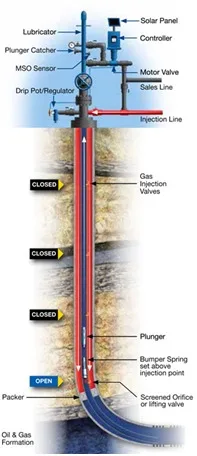
Plunger lift systems are commonly used in lower-rate wells affected by liquid loading or gas interference. By utilizing a free-traveling mechanical plunger, these systems efficiently remove accumulated liquids, restore gas flow, and improve production performance while requiring relatively low operating costs.
Factors to Consider When Selecting an Artificial Lift System
Choosing the most appropriate artificial lift solution requires a comprehensive evaluation of reservoir performance, well design, production objectives, and lifecycle economics.
Key selection criteria include:
- Reservoir pressure and temperature
- Well depth and completion design
- Oil viscosity and fluid properties
- Gas-to-liquid ratio and water production
- Target production rate
- Equipment reliability and maintenance requirements
- Operating and lifecycle costs
Because every reservoir presents unique production challenges, careful engineering analysis is essential to ensure long-term operational success and maximum economic return.
How Artificial Lift Improves Oilfield Efficiency
Beyond increasing production, artificial lift systems contribute significantly to overall field efficiency by improving operational reliability and reducing production interruptions.
Key benefits include:
- Improved production rate control
- Reduced well downtime
- Enhanced utilization of existing infrastructure
- Extended productive life of mature wells
- More predictable and consistent field performance
Modern digital monitoring and automation technologies further enhance artificial lift performance by enabling real-time equipment surveillance, predictive maintenance, and early detection of production issues.
Frequently Asked Questions
What is the primary purpose of an artificial lift system?
The primary purpose of an artificial lift system is to maintain or increase oil and gas production when natural reservoir pressure is insufficient to transport fluids to the surface.
Can artificial lift improve oil recovery?
Yes. Artificial lift increases oil recovery by enabling continued production after natural reservoir pressure declines and by efficiently lifting the additional fluids mobilized through Enhanced Oil Recovery methods.
Is gas lift an artificial lift method?
Yes. Gas lift is one of the most widely used artificial lift techniques. It injects compressed gas into the production tubing to reduce fluid density and improve lifting efficiency.
What role do gas lift valves perform?
Gas lift valves regulate the injection of compressed gas into the production tubing, ensuring efficient lifting performance while maintaining stable production and optimizing gas consumption.
When is plunger lift most effective?
Plunger lift is particularly effective in lower-production wells experiencing liquid loading or intermittent flow. It removes accumulated liquids, restores natural gas flow, and improves overall well productivity.
Conclusion
Artificial lift plays a vital role in sustaining production and maximizing recovery throughout the life of an oil field. As reservoirs mature and natural pressure declines, artificial lift systems provide the additional energy required to maintain economically viable production.
When combined with Enhanced Oil Recovery techniques, artificial lift enables operators to recover more hydrocarbons, improve production efficiency, extend the productive life of existing assets, and reduce the need for new drilling. Through proper system selection, engineering design, continuous monitoring, and proactive maintenance, artificial lift remains one of the industry's most effective technologies for maximising recovery from mature and challenging reservoirs.