Caring for an ageing parent or relative is one of those responsibilities that comes with constant, quiet worry. Did they take their medication? Are they eating properly? What if something happens while no one's around? In a city like Dubai, where families are often juggling demanding careers, frequent travel, and sometimes living apart from elderly relatives entirely, that worry can feel especially heavy. Artificial intelligence is quietly changing this picture, making elderly care services at home in Dubai more responsive, more personalised, and considerably less stressful for families trying to balance care with everyday life.
Why Elderly Care in Dubai Is Evolving So Quickly
Dubai's population includes a growing number of expatriate families whose parents or grandparents may be ageing either locally or in their home countries, alongside a rising local population of seniors as the UAE's own demographic profile shifts over time. This creates a genuine demand for flexible, high-quality elderly care options that go beyond a traditional caregiver simply checking in a few times a day. Technology, and AI specifically, has stepped into this gap in ways that were barely imaginable a decade ago.
1. Smarter Health Monitoring, Around the Clock
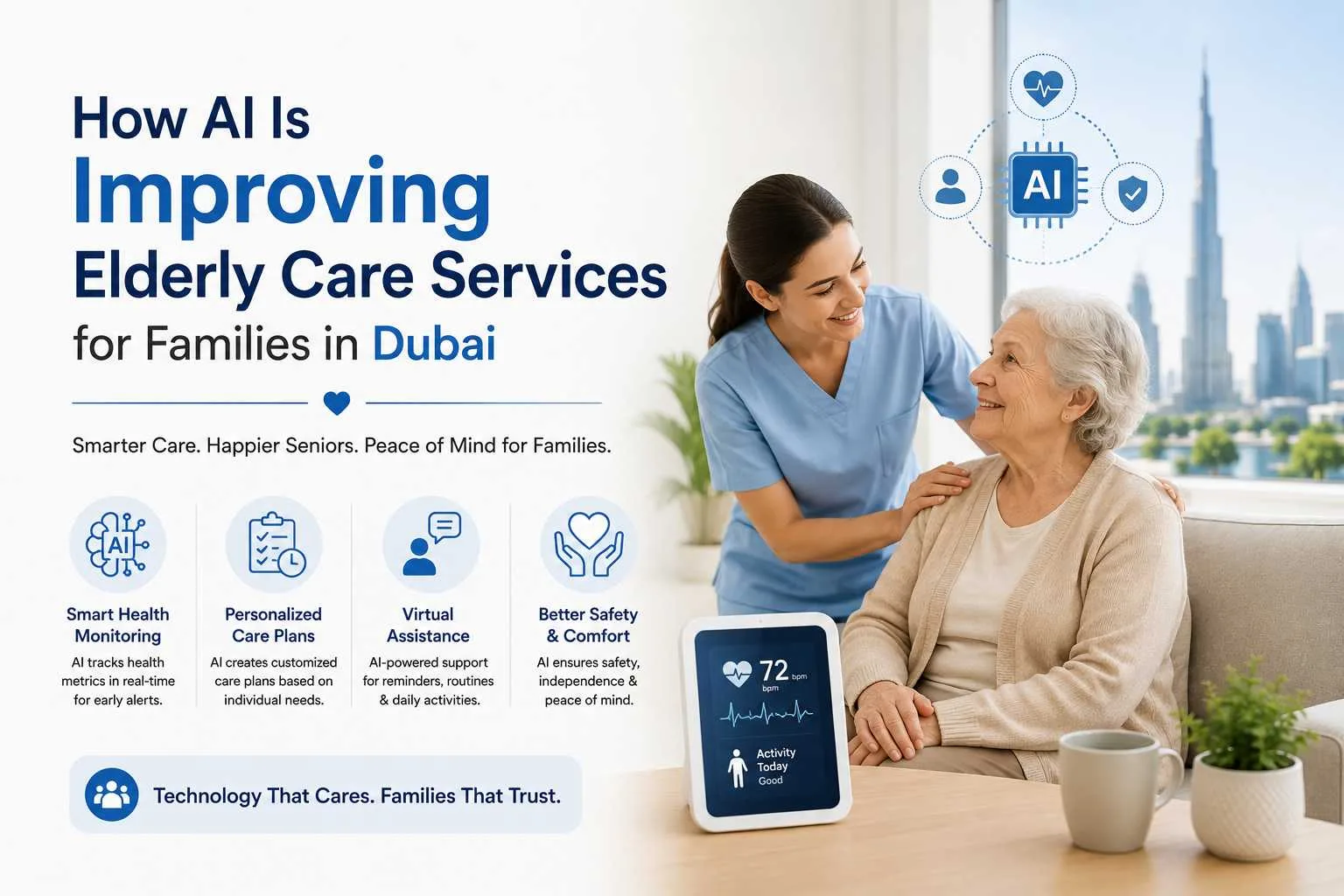
One of the most significant contributions AI has made to elderly care is continuous, passive health monitoring. Wearable devices and home sensors can now track vital signs like heart rate, blood pressure, sleep patterns, and activity levels, feeding this data into AI systems that learn what's normal for a specific individual over time.
- Rather than waiting for a scheduled check-up to catch a potential issue, these systems can flag subtle changes, an irregular heartbeat, a drop in activity, disrupted sleep patterns, well before they become a serious problem. For families managing home health care services in Dubai, UAE for an elderly parent, this kind of early warning system offers a level of reassurance that periodic visits alone simply can't match.
2. Fall Detection and Emergency Response
Falls are one of the biggest safety risks for elderly individuals living independently or with part-time care. AI-powered fall detection systems, often built into wearables or home sensors, can identify the specific motion patterns associated with a fall and automatically alert caregivers, family members, or emergency services within seconds.
This kind of instant response can make a genuine difference in outcomes, particularly for injuries where quick medical attention matters. For families who can't always be physically present, knowing that a fall will trigger an immediate alert rather than going unnoticed for hours provides real peace of mind.
3. Medication Management Made Simple
Missed doses, doubled-up medications, or confusion around complex medication schedules are common challenges in elderly care, especially for seniors managing multiple chronic conditions. AI-powered medication management tools, from smart pill dispensers to reminder apps connected to caregiver dashboards, help ensure medications are taken correctly and on schedule.
Some systems go a step further, using predictive analytics to flag when a medication refill is needed or alerting caregivers if a dose is missed entirely, allowing for quick follow-up rather than discovering the issue days later.
4. Predictive Insights for Proactive Care
Perhaps the most transformative shift AI brings to elderly care is the move from reactive to proactive support. Traditional care models often respond after something has already gone wrong, a fall, a missed medication, a sudden health decline. AI-driven platforms analyse ongoing health data to identify patterns and risk factors before they escalate, allowing caregivers and medical professionals to intervene earlier.
For chronic condition management, cardiovascular issues, diabetes, respiratory conditions, this kind of predictive insight means care plans can be adjusted proactively rather than simply reacting to a crisis after it happens.
5. Reducing the Burden on Family Caregivers
Family members providing care alongside professional support often experience significant stress, particularly when they're also managing work and their own family responsibilities. AI tools that handle routine monitoring, medication reminders, and basic check-ins free up family caregivers to focus their time and energy on meaningful connection rather than constant logistical tracking.
Dashboard apps that consolidate health data, medication schedules, and caregiver notes into a single, easy-to-check overview mean families don't need to piece together information from multiple sources or rely entirely on verbal updates from caregivers.
6. Virtual Companionship and Cognitive Support
Loneliness and cognitive decline are two of the more emotionally difficult aspects of ageing, and AI is starting to play a role here too. Conversational AI companions and cognitive engagement apps offer seniors interactive activities, memory exercises, and simple conversation, particularly valuable for those living alone or spending significant time without in-person company.
While these tools are never a full substitute for genuine human connection, they can meaningfully supplement it, offering mental stimulation and a sense of engagement between visits from family or caregivers.
7. Telehealth Integration for Faster Medical Access
AI-enhanced telehealth platforms are making it easier for elderly patients in Dubai to access medical consultations without the logistical challenge of travelling to a clinic. AI triage systems can help direct patients to the right specialist quickly, flag urgent symptoms that need immediate attention, and even assist doctors in reviewing patient history efficiently during virtual consultations.
For families managing elderly relatives with mobility challenges or chronic conditions requiring regular check-ins, this reduces a significant amount of logistical strain while still ensuring proper medical oversight.
8. Personalised Care Plans Based on Real Data
Rather than relying on generic, one-size-fits-all care schedules, AI allows care providers to build genuinely personalised plans based on real, ongoing data about an individual's health patterns, preferences, and needs. This means care can be adjusted dynamically as circumstances change, rather than sticking rigidly to a plan created months earlier that may no longer reflect the person's actual condition.
Why This Matters for Dubai Families Specifically
Dubai's fast-paced professional environment, combined with its significant expatriate population, means many families are managing elderly care from a distance, or juggling full-time work alongside caregiving responsibilities. AI-enhanced elderly care services at home in Dubai address exactly this gap, offering continuous oversight and early warning systems that don't require someone to be physically present around the clock.
For families with relatives living independently, or those balancing professional home nursing care with family involvement, these tools create a layered safety net, professional carers, family oversight, and AI-driven monitoring working together, rather than families feeling like they need to choose between hiring help and staying personally involved.
Balancing Technology With Human Care
It's worth being clear that AI is a powerful support tool, not a replacement for compassionate, hands-on care. The families and providers seeing the best results tend to be the ones combining AI-driven monitoring and predictive insights with genuine, qualified human caregivers, whether that's licensed nurses, trained caregivers, or family members providing direct emotional support. Technology handles the constant vigilance and data tracking; people provide the warmth, judgment, and human connection that no algorithm can fully replicate.
Final Thoughts
AI is reshaping elderly care in Dubai in ways that genuinely ease the burden on families, from round-the-clock health monitoring and fall detection to medication management and predictive health insights. For families balancing demanding careers with caregiving responsibilities, these tools offer a level of reassurance and proactive support that traditional care models alone often couldn't provide. As adoption continues to grow across Dubai's home healthcare sector, families are increasingly able to give their elderly relatives both the safety net of advanced technology and the genuine human care they deserve, without having to choose between the two.