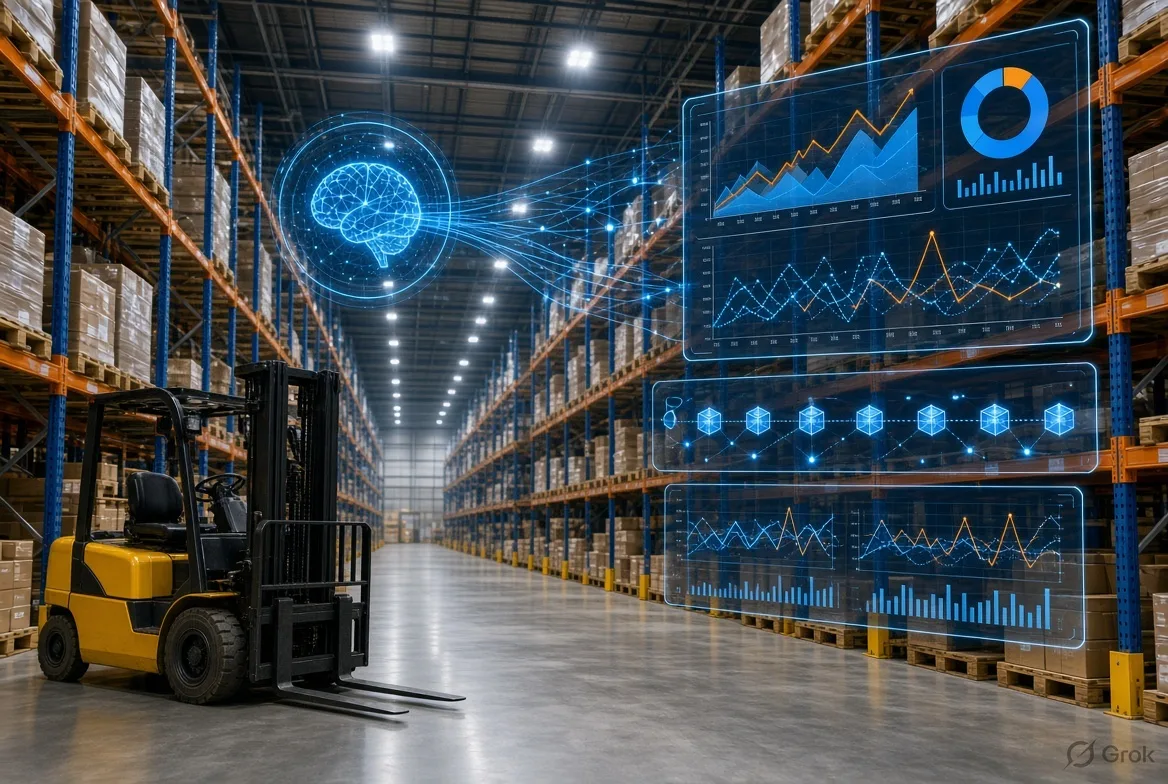
Warehouse operations depend on continuous system availability. When an AS400-based PKMS (Pick Management System) experiences unexpected performance issues, the impact can quickly spread across inventory management, order fulfillment, shipping, and labor productivity. As a result, organizations using as400 pkms implementation & support services in usa are increasingly exploring how artificial intelligence (AI) can help identify problems before they become business disruptions.
Rather than replacing IBM i (AS400) systems, modern AI technologies are being used alongside existing PKMS environments to improve monitoring, incident detection, predictive maintenance, and operational visibility. This shift allows organizations to move from reactive troubleshooting to proactive system management.
Understanding AS400 PKMS in Modern Warehouse Operations
PKMS has long been one of the most widely used warehouse management systems in distribution and logistics environments. Many organizations continue to run PKMS on IBM i (AS400) platforms because of their reliability, stability, and ability to handle large transaction volumes.
A typical AS400 PKMS environment manages:
- Inventory tracking
- Order picking
- Receiving operations
- Shipping processes
- Labor management
- Warehouse reporting
Despite their reputation for reliability, these systems still face operational challenges such as:
- Database performance degradation
- Storage capacity limitations
- Integration failures
- Network bottlenecks
- Batch job delays
- Hardware aging issues
- Security-related events
Traditionally, support teams investigated problems after system alerts appeared or users reported slowdowns. AI introduces a different approach by identifying warning signs before a disruption occurs.
The Shift from Reactive Support to Predictive Support
Conventional IT support follows a reactive model:
- A problem occurs.
- Users experience impact.
- Support teams investigate.
- The issue is resolved.
AI-enabled monitoring changes this workflow by continuously analyzing operational data and identifying patterns that often precede failures.
Modern AIOps (Artificial Intelligence for IT Operations) platforms use machine learning to analyze logs, performance metrics, events, and historical trends to detect anomalies and predict incidents before they affect users. IBM's AIOps solutions are specifically designed to identify anomalies, correlate events, predict issues, and accelerate incident resolution across complex IT environments.
For warehouse operations relying on PKMS, even a few hours of avoided downtime can significantly improve operational continuity.
How AI Predicts Issues in AS400 PKMS Environments
1. Log Analysis and Pattern Recognition
AS400 systems generate extensive operational logs.
AI systems can analyze:
- Job logs
- System logs
- Application logs
- Database events
- Security activities
Instead of relying on manual review, machine learning models examine thousands of historical events and identify patterns associated with previous failures.
For example:
- Repeated database lock warnings
- Gradual increases in query response times
- Frequent communication failures with integrated systems
These patterns can trigger early warnings before users notice any performance issues.
2. Anomaly Detection
Traditional monitoring often uses static thresholds.
For example:
- CPU exceeds 90%
- Disk reaches 85% utilization
The problem is that not all abnormalities occur beyond predefined limits.
AI-based anomaly detection establishes a baseline of normal system behavior and identifies unusual deviations automatically. Modern AIOps platforms use anomaly detection and event correlation to identify emerging issues that traditional monitoring may overlook.
In an AS400 PKMS implementation, anomaly detection could identify:
- Unusual transaction spikes
- Unexpected warehouse processing delays
- Irregular inventory update patterns
- Network latency anomalies
before they lead to service interruptions.
3. Predictive Capacity Management
Storage and resource planning remain important challenges for warehouse systems.
AI can continuously monitor:
- Disk usage trends
- Database growth
- CPU consumption
- Memory utilization
- Batch processing workloads
Instead of simply reporting current conditions, predictive models estimate future resource requirements based on historical behavior.
This allows IT teams to address capacity constraints weeks or months before they become critical.
4. Database Performance Forecasting
Many PKMS environments depend heavily on database performance.
Over time, organizations may experience:
- Index fragmentation
- Query inefficiencies
- Increasing database size
- Slower response times
AI-powered analytics can detect gradual performance deterioration and recommend optimization actions before users experience delays.
This is particularly valuable in high-volume distribution centers where transaction processing speed directly affects warehouse productivity.
5. Identifying Integration Failures Early
Modern warehouse ecosystems are highly connected.
AS400 PKMS environments often integrate with:
- ERP systems
- Transportation Management Systems
- E-commerce platforms
- Supplier systems
- Barcode scanners
- RFID technologies
AI-driven monitoring can identify unusual data flow patterns between connected systems and alert teams before integrations completely fail.
For businesses utilizing as400 pkms implementation services in usa, this capability helps maintain operational continuity across complex supply chain environments.
Real-World Use Cases in Warehouse Operations
Preventing Batch Job Failures
Many warehouse processes depend on overnight batch jobs.
AI can monitor:
- Job execution time
- Historical success rates
- Resource consumption
If a batch process begins exhibiting unusual behavior, support teams can investigate before order processing is affected.
Forecasting Hardware-Related Risks
While IBM i platforms are known for reliability, hardware components still age.
AI can analyze:
- Error logs
- Device performance
- System diagnostics
to identify potential hardware degradation before failures occur.
Predictive maintenance approaches have become a major focus of modern IT operations because they help organizations detect resource exhaustion, performance degradation, and infrastructure issues before service disruption occurs.
Improving Peak Season Readiness
Warehouse activity often increases significantly during:
- Holiday seasons
- Promotional events
- End-of-quarter fulfillment cycles
AI models can analyze historical warehouse behavior and forecast periods of elevated system demand.
This helps support teams:
- Allocate resources
- Optimize workloads
- Prevent performance bottlenecks
before peak traffic arrives.
Recent Technology Trends Influencing AS400 PKMS Support
AI adoption in enterprise IT operations continues to accelerate.
Several trends are particularly relevant for IBM i environments:
Growth of AIOps Platforms
Organizations increasingly use AIOps solutions for:
- Event correlation
- Automated root-cause analysis
- Predictive alerting
- Incident prioritization
IBM's AIOps portfolio combines observability, anomaly detection, predictive analytics, and automated incident management to improve operational resilience. [ibm.com], [developer.ibm.com]
AI-Powered IT Assistants
Recent developments have introduced AI-based operational assistants capable of helping administrators analyze incidents and understand system conditions through natural language interactions. IBM has expanded AI-driven operational capabilities through solutions such as watsonx and AI-assisted operations management.
These advancements may eventually simplify troubleshooting for complex PKMS environments.
Continued Modernization of IBM i
IBM continues to invest in the IBM i platform through ongoing Technology Refresh updates, security enhancements, database improvements, management tools, and modernization capabilities. Recent IBM i 7.5 enhancements include security, monitoring, database, and operational improvements that support long-term platform viability. [ibm.com], [ibm.com], [ibm.com]
This ongoing development helps organizations integrate modern AI and analytics capabilities without completely replacing existing warehouse management systems.
Benefits of AI in AS400 PKMS Support Services
Organizations implementing AI-enhanced monitoring often experience several operational advantages.
Reduced Unplanned Downtime
Potential failures can be identified earlier, enabling corrective action before business impact occurs.
Faster Issue Resolution
AI helps correlate events from multiple sources, reducing diagnostic time.
More Efficient Resource Planning
Predictive analytics improve infrastructure planning and budgeting decisions.
Improved Warehouse Productivity
Fewer system interruptions mean fewer disruptions to picking, packing, and shipping activities.
Better Visibility Across Operations
AI provides deeper insight into relationships between applications, infrastructure, databases, and integrations.
Limitations and Considerations
While AI offers significant operational value, it is not a complete solution.
Organizations should be aware of several limitations:
Data Quality Matters
AI systems depend on accurate historical and real-time data.
Poor log quality or incomplete monitoring can reduce prediction accuracy.
Initial Learning Period
Machine learning models require time to understand normal system behavior and establish baselines.
False Positives
Some AI-generated alerts may not develop into actual incidents.
Support teams should balance automation with human review.
Legacy Integration Challenges
Older PKMS environments may require additional integration work before AI platforms can access necessary telemetry data.
Best Practices for Organizations Using AS400 PKMS
Whether utilizing as400 pkms support services in usa or managing systems internally, organizations should consider:
- Implementing centralized monitoring
- Collecting comprehensive operational data
- Maintaining historical performance records
- Performing regular system health assessments
- Reviewing capacity growth trends
- Combining human expertise with AI-driven insights
- Continuously updating security controls
These practices help maximize the effectiveness of predictive support initiatives.
Conclusion
AI is changing how organizations manage warehouse technology by shifting support strategies from reactive troubleshooting to predictive operations. Through machine learning, anomaly detection, log analysis, and predictive analytics, businesses can identify warning signs before they become system outages.
For organizations running PKMS on IBM i platforms, this approach offers a practical way to enhance reliability while preserving the stability that AS400 environments are known for. As AIOps, observability, and predictive maintenance technologies continue to evolve, AI will likely become an increasingly important component of modern as400 pkms services in usa, helping warehouse operators reduce risk, improve visibility, and maintain business continuity with fewer unexpected disruptions.