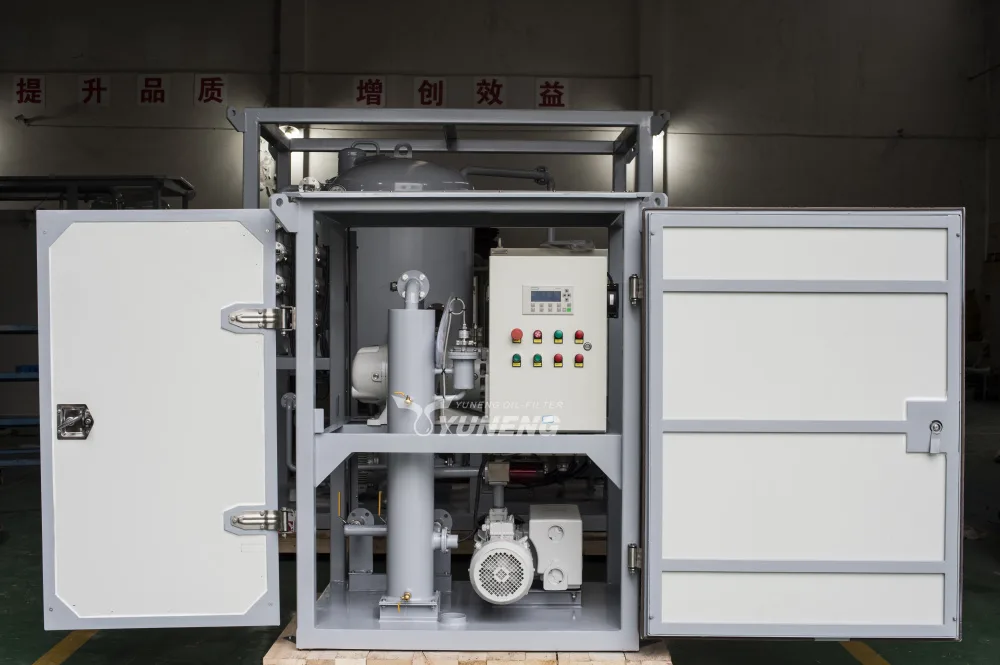
A transformer vacuum drying machine is designed to solve one of the most important problems in transformer preparation: moisture inside the insulation system. The ZJ-300 page describes the unit as an industrial vacuum processing machine with fast start-up speed and fast air extraction, especially suitable for transformer vacuumization. It also states that the machine can be used in vacuum metallurgy, pharmaceuticals, paint, welding, electronics, and other industries, but transformer work is one of its primary use cases. In transformer applications, the machine is not simply removing air. It is creating the conditions needed for proper drying and later oil filling. That is why the page also positions the unit for medium transformers up to 220 kV and emphasizes continuous operation and a dedicated GIS vacuum interface.
The technical details on the ZJ-300 page show how the machine is designed for practical field use. It has a pumping rate of 300 L/s, a limit vacuum of Pa≤3, two pumping levels, 10 kW total power, a DN 50 vacuum connection, and a compact footprint relative to larger units. More importantly, the advantages listed on the page include high-flow evacuation capacity, intelligent and precise control, anti-suckback pump protection, continuous long-hour operation, and multi-scenario applicability. These features matter in a transformer vacuum drying machine because drying cycles are often long, and the equipment must remain stable during extended operation. A stable machine helps avoid interruptions that can slow the drying process and complicate the final commissioning sequence.
A vacuum evacuation machine like the ZJ-300 is also useful because transformers are not always treated in one fixed environment. The product page notes that the unit is suitable for factory production and large on-site maintenance tasks. That means the same platform can support manufacturing lines and field service jobs. In a factory, the value is throughput and repeatability. In the field, the value is fast setup and dependable operation. The machine’s stable 24/7 capability and real-time vacuum monitoring further support that flexibility. For customers managing transformer fleets, that flexibility can reduce the need for multiple machines with overlapping functions.
The comparison article helps explain why drying performance is tied to vacuum quality. It states that moisture and gas reduce dielectric strength and that a deep vacuum, often below 133 Pa and sometimes down to 1 Pa, is needed before oil filling. That technical requirement gives context to the ZJ-300 and similar systems. A transformer vacuum drying machine is not judged only by how quickly it starts. It is judged by whether it can create a sufficiently deep and stable vacuum condition for drying insulation systems in a repeatable way. In that sense, the machine becomes part of the transformer’s reliability chain rather than a temporary accessory. If moisture is not removed effectively, later insulation performance may suffer, which is why drying equipment is central to the installation process.
For engineers and buyers, the main takeaway is that a good drying machine must combine capacity, control, and safety. YUNENG’s material repeatedly points to anti-backflow design, automatic alarms, and stable operation under load, all of which support more predictable transformer processing. The transformer vacuum drying machine should therefore be evaluated by the whole operating cycle: start-up, evacuation speed, moisture handling, long-duration stability, and protection against contamination or pump reversal. When those conditions are met, drying becomes a controlled step rather than a trial-and-error procedure. That is the practical value of choosing the right vacuum evacuation machine for transformer work.
How a Transformer Vacuum Drying Machine Supports Moisture Removal and Reliable Oil Filling