Introduction
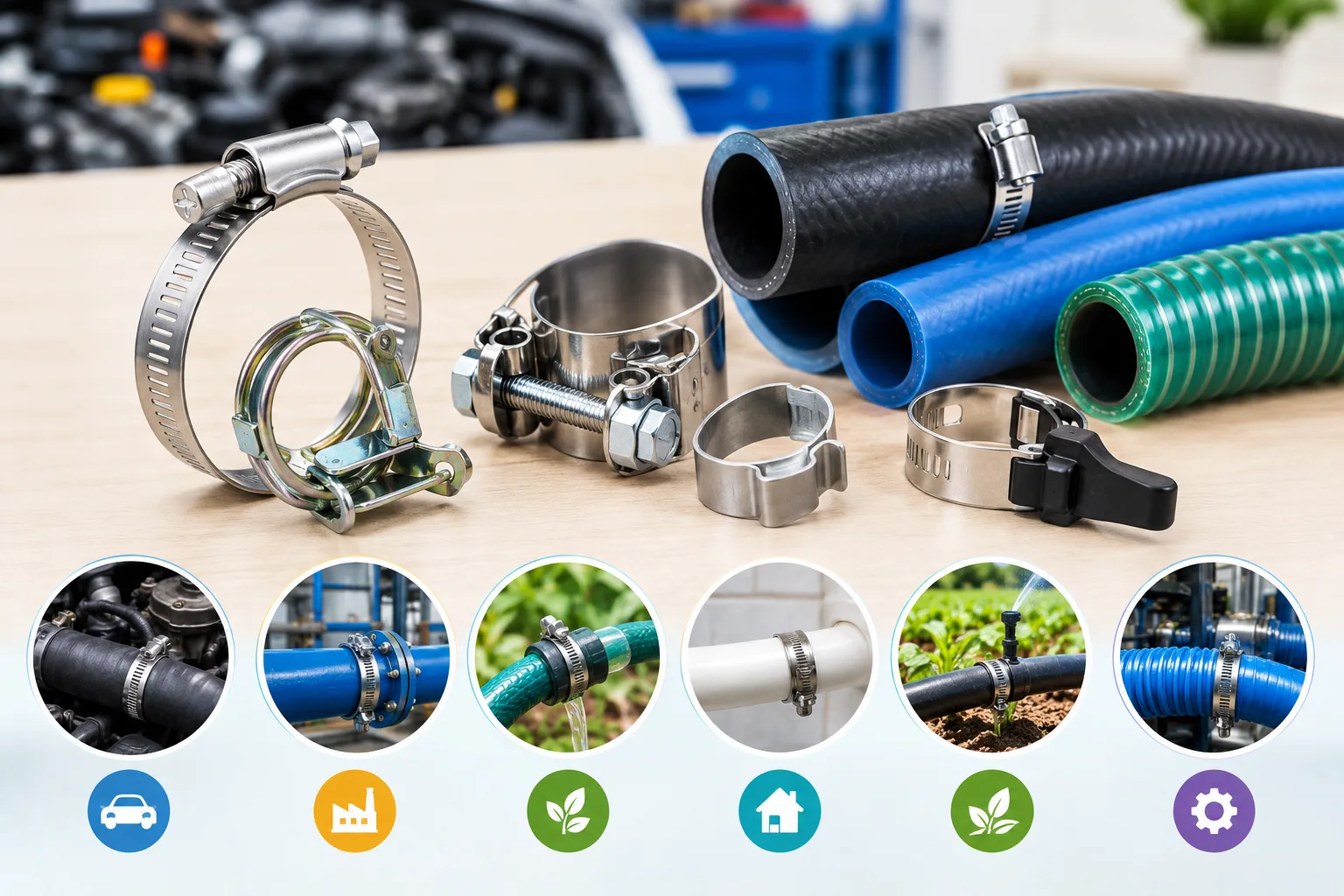
Hose clamps are essential fastening components used in various industries to secure hoses to pipes, fittings, and other connecting parts. They help create a tight and reliable connection, preventing leaks and maintaining the efficient flow of liquids, gases, and air through a system. From automotive applications and industrial machinery to plumbing systems and agricultural equipment, hose clamps play an important role in ensuring safety, reliability, and performance. Choosing the right hose clamp can improve equipment efficiency, reduce maintenance requirements, and extend the service life of connected components. Understanding the different types, materials, applications, and selection criteria can help businesses and individuals find the most suitable solution for their specific requirements.
What Are Hose Clamps?
A hose clamp is a mechanical fastening device designed to hold a hose securely around a fitting, pipe, or connector. Most conventional hose clamps use a metal band that tightens around the outside of a hose. The tightening mechanism applies pressure to the hose, helping it maintain contact with the connecting surface and reducing the possibility of leakage or accidental disconnection.
Hose clamps are available in different designs, sizes, and materials to accommodate a wide range of operating conditions. Some are designed for simple household plumbing applications, while others are engineered to withstand high pressure, vibration, temperature changes, or corrosive environments.
The correct clamp depends on several factors, including hose diameter, hose material, operating pressure, temperature, exposure to chemicals, and the type of connection being secured.
Importance of Hose Clamps in Different Industries
Hose clamps may be small components, but their role in maintaining secure connections is significant. A poorly fitted or unsuitable clamp can contribute to leaks, equipment downtime, material loss, and potential safety hazards.
In industrial environments, reliable hose connections help maintain consistent operations and minimize interruptions. In vehicles, properly selected clamps help secure cooling, air intake, fuel, and other compatible hose connections. In residential plumbing, they can be used in appropriate applications involving water supply, drainage, and flexible tubing.
Agriculture also relies on hose connections for irrigation systems, pumps, and fluid transfer equipment. Similarly, manufacturing facilities use clamps in pneumatic systems, machinery, and fluid handling installations.
Selecting an appropriate clamp helps improve connection stability and supports dependable system performance. However, the clamp must always be suitable for the hose, fitting, and operating conditions.
Common Types of Hose Clamps
Different hose clamp designs are developed to meet specific fastening requirements. Understanding their characteristics makes it easier to choose the right product.
1. Worm Drive Hose Clamps
Worm drive hose clamps are among the most widely used types. They generally feature a metal band with slots or perforations and a screw mechanism that tightens the band around the hose.
When the screw is turned, the band contracts and applies pressure to the connection. These clamps are popular because they are adjustable, easy to install, and available in numerous sizes.
Common applications include automotive maintenance, household plumbing, garden hoses, and general-purpose industrial connections. The material and design should be selected according to the environment and the manufacturer's specifications.
2. Spring Hose Clamps
Spring hose clamps use the elasticity of the material to maintain clamping pressure. They are commonly manufactured from spring steel and are often used in automotive cooling systems and other applications involving temperature changes.
Their spring action allows them to accommodate certain changes in hose dimensions as the hose expands or contracts. Installation typically requires suitable pliers or a dedicated tool.
Spring clamps should be chosen according to the hose dimensions and the intended application. Their suitability depends on the required clamping force and the conditions under which the connection operates.
3. T-Bolt Hose Clamps
T-bolt hose clamps are designed for applications that require strong and relatively uniform clamping force. They typically consist of a metal band, a T-bolt, and a locking nut.
These clamps are frequently used in industrial machinery, heavy-duty vehicles, turbocharger connections, and compatible air or fluid systems. Some designs are suitable for demanding environments involving vibration or higher mechanical loads.
The correct specification is important because not every T-bolt clamp is suitable for every pressure or temperature requirement. Users should verify the manufacturer's ratings before installation.
4. Ear Hose Clamps
Ear clamps use one or more raised sections, commonly called ears, that are compressed with a suitable tool to tighten the clamp around a hose.
They are often used in automotive assemblies, household appliances, and fluid connections where a compact, secure fastening solution is required. Some ear clamps are designed for permanent or semi-permanent installation.
Because many ear clamps are not easily adjustable after installation, choosing the correct size is particularly important. Installation tools and procedures should follow the manufacturer's instructions.
5. Quick-Release Hose Clamps
Quick-release hose clamps are designed to make installation, removal, or adjustment easier. Depending on their construction, they may include a lever, latch, or another release mechanism.
These clamps can be useful in maintenance environments where hoses need to be disconnected frequently. They may be found in workshop equipment, selected industrial systems, and certain general-purpose applications.
Before choosing a quick-release design, users should confirm that its locking mechanism, materials, and clamping capacity meet the needs of the intended application.
Materials Used in Hose Clamps
The material of a hose clamp affects its durability, corrosion resistance, strength, and suitability for different environments.
Stainless Steel
Stainless steel hose clamps are widely used because they offer good corrosion resistance and mechanical durability. They are commonly selected for outdoor installations, marine environments, food-related equipment where the specific product is approved, and various industrial applications.
Different stainless steel grades provide different levels of corrosion resistance. Therefore, the grade should be selected according to exposure to moisture, salt, cleaning agents, and other environmental factors.
Carbon Steel
Carbon steel clamps are often used in applications where strength and cost are important considerations. Depending on their protective coating, they may be suitable for indoor equipment, machinery, and general fastening tasks.
However, unprotected carbon steel can corrode when exposed to moisture or harsh environmental conditions. Users should check the coating and maintenance requirements before selecting these clamps for outdoor or corrosive environments.
Plastic and Specialty Materials
Certain applications use plastic clamps or clamps made from specialty materials. These products may be suitable for lightweight connections, electrical installations, or environments where metal components are not preferred.
Plastic clamps have different strength, temperature, and chemical resistance characteristics from metal designs. They should only be used when their specifications meet the requirements of the application.
Major Applications of Hose Clamps
Hose clamps are used across many sectors because hoses are common components in fluid transfer, ventilation, cooling, and pneumatic systems.
Automotive Industry
Vehicles contain numerous hose connections that transport coolant, air, fuel, oil, and other fluids. Depending on the vehicle design, hose clamps may be used in cooling systems, air intake assemblies, and compatible fluid connections.
Selecting the correct clamp helps maintain a secure connection under vibration and temperature fluctuations. Automotive repairs should follow the vehicle manufacturer's recommendations, especially for fuel systems and other safety-critical components.
Plumbing and Water Management
Plumbing systems use hoses and flexible tubing in various residential, commercial, and industrial installations. Hose clamps can secure suitable connections in drainage systems, water pumps, and other compatible assemblies.
For drinking-water applications, all components must meet the applicable material and safety requirements. A conventional hose clamp should not be assumed to be appropriate for every pressurized plumbing connection.
Agriculture and Irrigation
Agricultural operations often depend on flexible hoses for irrigation, pumping, spraying, and fluid transfer. Hose clamps help secure compatible hose connections and reduce the risk of accidental separation.
Outdoor agricultural equipment may be exposed to sunlight, water, fertilizers, dust, and temperature variations. Corrosion-resistant materials and application-appropriate designs can help improve service life.
Manufacturing and Industrial Equipment
Manufacturing facilities use hoses in pneumatic systems, industrial pumps, processing machinery, and fluid handling equipment. In these settings, a clamp must be selected according to the hose construction, operating pressure, vibration, temperature, and chemical exposure.
Correct installation and routine inspection are essential for maintaining reliable connections and reducing unexpected equipment interruptions.
Marine Applications
Boats and marine equipment frequently operate in humid and saltwater environments. These conditions can accelerate corrosion, making material selection especially important.
Marine hose connections should use clamps and fittings that are specifically appropriate for the application. Corrosion-resistant materials, correct sizing, and regular inspection help support dependable performance.
Benefits of Using the Right Hose Clamp
Choosing a suitable hose clamp offers several practical advantages.
Leak prevention: A correctly sized and installed clamp helps maintain a secure connection and reduce leakage when used with a compatible hose and fitting.
Improved reliability: Appropriate clamping helps keep hoses in position during normal operation, reducing the likelihood of accidental disconnection.
Longer service life: Selecting suitable materials and designs can help reduce corrosion-related deterioration and damage caused by incorrect fastening.
Reduced maintenance: Reliable hose connections can minimize the need for repeated adjustments and repairs.
Versatility: The wide range of available clamp designs makes it possible to find solutions for many different hose diameters and operating environments.
Cost efficiency: Choosing the right clamp from the beginning can help reduce avoidable replacement costs, downtime, and material waste.
These benefits depend on proper selection, installation, inspection, and compliance with the equipment manufacturer's requirements.
How to Choose the Right Hose Clamp
Selecting a hose clamp involves more than simply matching the clamp to the outside diameter of a hose. Several important factors should be considered.
1. Measure the Hose Diameter
Measure the outside diameter of the hose when it is positioned over the fitting. Select a clamp whose specified adjustment range includes the actual installed diameter.
A clamp that is too large may not tighten securely, while one that is too small may be difficult to install or may damage the hose.
2. Consider the Hose Material
Different hoses have different levels of flexibility, wall thickness, and resistance to compression. Soft rubber hoses may respond differently to tightening pressure than reinforced or rigid hoses.
Choose a clamp that provides appropriate pressure without cutting, deforming, or excessively compressing the hose.
3. Check Operating Pressure and Temperature
Applications involving pressure or significant temperature fluctuations require careful product selection. Confirm that the complete connection, including the hose, fitting, and clamp, is rated for the intended operating conditions.
A clamp's appearance or size alone does not establish its pressure rating.
4. Evaluate Environmental Conditions
Moisture, salt, chemicals, dust, and outdoor exposure can affect clamp performance. Stainless steel or another corrosion-resistant material may be appropriate in certain environments, but the required grade depends on the specific conditions.
5. Assess Vibration and Movement
Equipment exposed to vibration or repeated movement may require a clamp specifically designed for those conditions. Follow the equipment manufacturer's recommendations to determine the appropriate fastening method.
6. Follow Installation Instructions
Use the correct tool and tightening procedure. Avoid overtightening, which can damage the hose or compromise the connection. Under-tightening can also cause leakage or slippage.
For critical systems, follow the specified installation torque, inspection procedure, and replacement schedule.
Installation and Maintenance Best Practices
Proper installation is essential for getting the expected performance from a hose clamp. Before installation, inspect the hose and fitting for cracks, contamination, corrosion, or other signs of damage.
Position the hose fully over the intended fitting and place the clamp in the designated clamping area. The clamp should not be positioned over a sharp edge or in a way that interferes with the fitting's sealing surface.
Tighten the clamp according to the manufacturer's instructions. Do not assume that additional tightening always produces a better seal. Excessive force can damage soft hoses, distort components, or create future failure points.
During maintenance, inspect clamps for corrosion, deformation, loose fasteners, and signs of leakage. Replace damaged clamps rather than relying on temporary adjustments. Hoses that have hardened, split, or become permanently deformed should also be evaluated for replacement.
Always isolate pressure, drain fluids, and follow appropriate safety procedures before working on a hose connection. High-pressure, hot-fluid, fuel, and other hazardous systems may require specialized components and qualified technicians.
Common Mistakes to Avoid
Several mistakes can reduce the effectiveness of hose clamps and lead to unnecessary repairs.
- Using the wrong size: An incorrectly sized clamp may fail to provide adequate clamping force.
- Overtightening the clamp: Excessive tightening can damage the hose or fitting.
- Ignoring corrosion: A deteriorated clamp may lose strength and compromise the connection.
- Choosing materials based only on price: A low-cost clamp may not be suitable for harsh environmental conditions.
- Using general-purpose clamps in critical systems: Safety-sensitive applications require components that meet the relevant specifications.
- Skipping inspections: Regular checks help identify wear, looseness, and leakage before they lead to more serious problems.
Avoiding these mistakes helps improve connection reliability and supports safer equipment operation.
Conclusion
Hose clamps are important components in automotive, industrial, agricultural, plumbing, marine, and many other applications. They help secure compatible hoses to fittings, maintain reliable connections, and reduce the risk of leaks or accidental disconnections. With different types, sizes, and materials available, selecting the correct clamp requires careful consideration of hose diameter, operating conditions, environmental exposure, and equipment requirements.
Understanding the differences between worm drive, spring, T-bolt, ear, and quick-release clamps can simplify the selection process. Proper installation and regular maintenance are equally important for ensuring long-term performance. By choosing suitable products and following manufacturer guidelines, businesses and individuals can improve equipment reliability, reduce maintenance costs, and maintain efficient operations.
Whether used in a simple household project or a demanding industrial installation, the right hose clamp can make a meaningful difference in the safety and performance of a hose connection.