
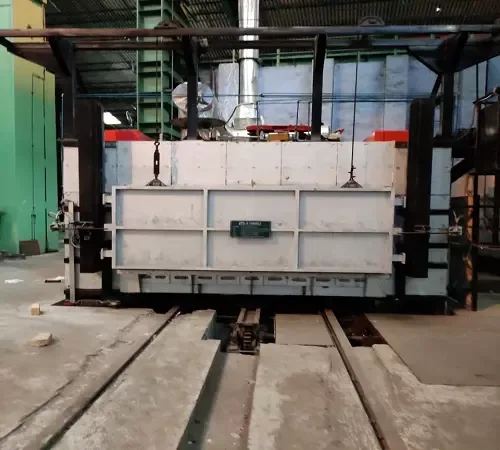
Heat treatment plays an important role in modern manufacturing because it helps improve the properties and performance of metal components. From automotive parts and heavy engineering components to fabricated structures and tools, controlled heating and cooling are used to achieve specific material characteristics. A Heat Treatment Furnace provides the controlled environment required for these processes.
Choosing the right furnace is essential for achieving consistent temperature, reliable processing, and efficient production. The furnace design should be selected according to the material, treatment process, component dimensions, production volume, and required temperature range.
What Is a Heat Treatment Furnace?
A Heat Treatment Furnace is industrial heating equipment designed to heat metal components under controlled temperature conditions. Depending on the application, the furnace can be used for processes such as annealing, normalizing, hardening, tempering, stress relieving, ageing, and other thermal treatments.
The furnace maintains the required temperature for a specific period before the material is cooled according to the treatment cycle. Precise temperature control and uniform heating are important for obtaining consistent results.
Why Is Heat Treatment Important?
Manufacturing processes such as welding, forging, casting, machining, and forming can affect the internal structure and properties of metals. Heat treatment allows manufacturers to modify specific properties according to the intended application.
A properly controlled heat-treatment process can help improve:
- Hardness
- Strength
- Ductility
- Toughness
- Dimensional stability
- Machinability
- Resistance to wear
The exact result depends on the material and the selected heat-treatment process.
Common Types of Heat Treatment Furnaces
Different manufacturing applications require different furnace configurations. Some commonly used types include:
Box-Type Furnaces
Box-type furnaces have an enclosed chamber and are suitable for batch processing of components. They can be designed for different temperature ranges and production capacities.
Bogie Hearth Furnaces
Bogie hearth furnaces are suitable for large and heavy components. The hearth can be moved outside the furnace chamber to facilitate loading and unloading.
Continuous Furnaces
Continuous furnaces are designed for high-volume production where components need to move continuously through different heating zones.
Bell-Type Furnaces
Bell-type furnaces are used for applications where controlled heating and cooling cycles are required. They are commonly used for processing coils and other suitable components.
Specialized Heat Treatment Furnaces
Certain applications require specially designed furnaces based on component size, material, temperature requirements, atmosphere, and production cycle.
Important Features of a Heat Treatment Furnace
When selecting a furnace, manufacturers should evaluate several technical features.
Temperature Control
Accurate temperature control is essential for maintaining the required heat-treatment cycle. Modern furnace systems can incorporate programmable controllers and temperature monitoring systems.
Temperature Uniformity
Uniform heating helps ensure that different areas of the component receive consistent thermal treatment. Proper furnace construction, heating arrangements, insulation, and circulation systems can contribute to better temperature distribution.
Insulation
High-quality insulation helps minimize heat loss and can improve energy efficiency. Proper insulation also helps maintain stable temperatures inside the working chamber.
Safety Systems
Industrial furnaces should incorporate appropriate safety features, including temperature alarms, electrical protection, emergency controls, and suitable interlocking systems.
Loading Arrangement
The loading system should be selected according to component dimensions and weight. Heavy components may require bogie systems, trays, or specialized material-handling arrangements.
Applications of Heat Treatment Furnaces
Heat treatment furnaces are used across a wide range of industries, including:
- Automotive manufacturing
- Aerospace
- Steel processing
- Aluminium industries
- Foundries
- Heavy engineering
- General engineering
- Tool and die manufacturing
- Fabrication
- Industrial component manufacturing
The specific furnace configuration depends on the application and production requirements.
Benefits of Using a Heat Treatment Furnace
A properly designed furnace can offer several advantages to manufacturers.
Consistent Processing: Controlled temperature and heating cycles help improve process consistency.
Improved Material Properties: Heat treatment can be used to achieve desired mechanical and physical properties.
Better Dimensional Stability: Appropriate thermal cycles can help reduce unwanted dimensional changes in certain components.
Production Efficiency: Furnace capacity and loading systems can be optimized according to production requirements.
Process Monitoring: Modern control systems can help operators monitor and record important process parameters.
How to Select the Right Furnace
Selecting a Heat Treatment Furnace should begin with a clear understanding of the application.
Consider the following factors:
- Type of material being treated
- Required heat-treatment process
- Maximum operating temperature
- Component size and weight
- Batch size and production volume
- Required temperature uniformity
- Heating method
- Loading and unloading requirements
- Control and monitoring requirements
- Energy consumption and operating costs
It is also important to consider future production requirements when selecting furnace capacity.
Working With an Experienced Furnace Manufacturer
Industrial heating requirements can vary significantly from one manufacturing process to another. Therefore, a standard furnace may not always be the most suitable solution.
An experienced furnace manufacturer can evaluate the application and recommend a suitable furnace configuration based on temperature requirements, component dimensions, production volume, heating method, and process specifications.
For more information about industrial heat-treatment equipment, explore this detailed resource on Heat Treatment Furnace Manufacturer in India.
Conclusion
A Heat Treatment Furnace is an important part of many industrial manufacturing and metal-processing operations. By providing controlled heating and cooling conditions, it supports processes designed to achieve specific material properties and improve component performance.
When selecting a furnace, manufacturers should look beyond basic temperature capacity and consider furnace size, temperature uniformity, control systems, insulation, loading arrangements, safety, energy efficiency, and production requirements.
A properly selected and designed furnace can provide reliable thermal processing and support consistent manufacturing quality over the long term.