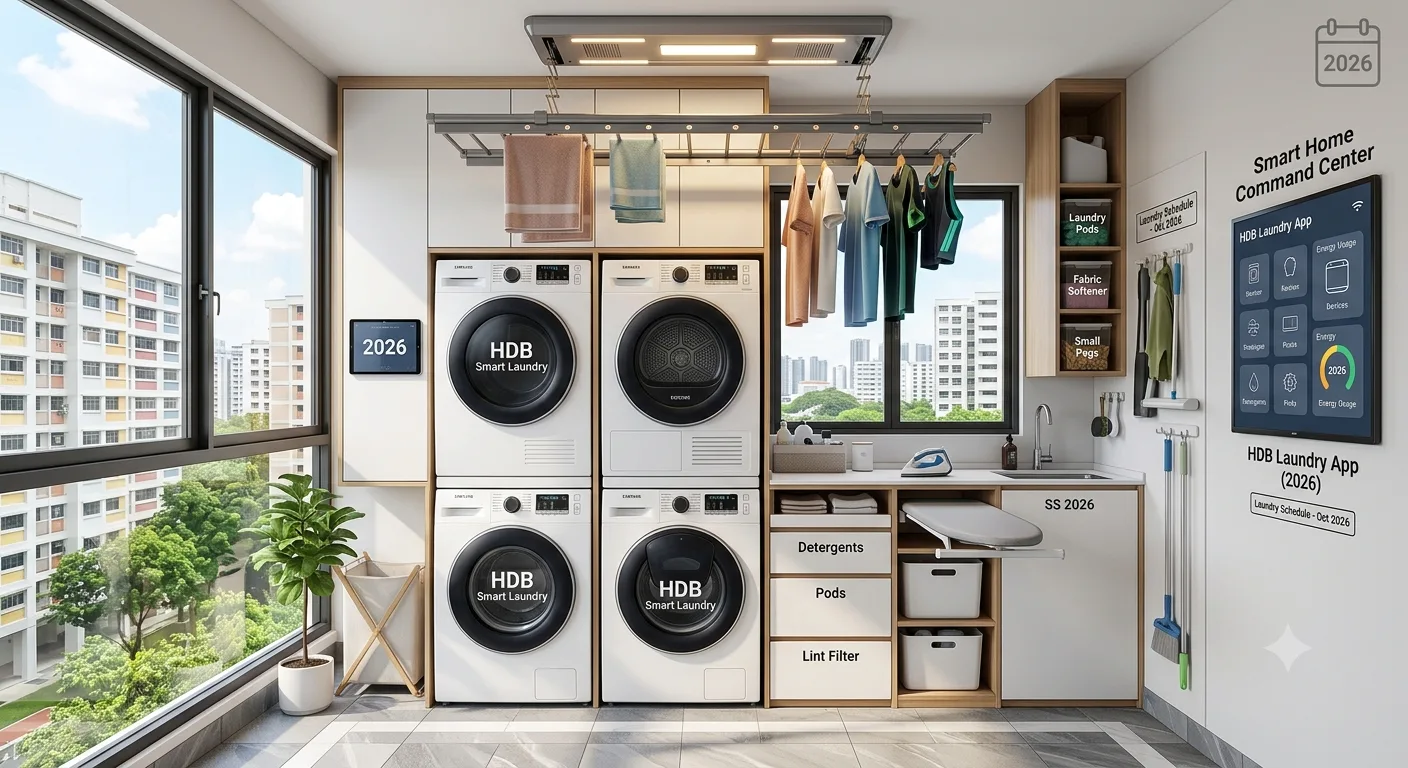
Singapore homes are designed to make practical use of limited space, but the laundry area can still become one of the most challenging parts of a home. Service yards are often compact, and drying clothes can take up valuable room that could otherwise be used for storage or everyday activities. As modern homeowners look for more convenient solutions, the way laundry is managed is changing.
For many HDB residents, the traditional approach involves hanging clothes manually, moving drying poles up and down, and adjusting laundry whenever rain or strong sunlight affects the service yard. While this method works, it can become inconvenient when the household has several loads of laundry every week.
One of the biggest advantages of improving a laundry area is better use of vertical space. Instead of allowing drying equipment to occupy the lower part of the service yard, homeowners can consider solutions that make use of ceiling height. This keeps the floor clearer and makes the area feel less crowded.
A well-planned hdb laundry rack can also make everyday laundry routines more comfortable. Rather than constantly reaching upward or moving a heavy rack manually, homeowners can choose systems designed to make hanging and removing clothes easier. This can be particularly useful for families, elderly residents, or anyone who regularly handles large amounts of laundry.
Another important factor is airflow. Singapore's humid weather can make clothes take longer to dry, particularly during rainy periods. A crowded drying area can reduce air circulation even further. Choosing a system that provides better spacing between garments can help create a more organised drying environment.
Homeowners should also consider how their laundry needs may change over time. A couple living in a flat may have very different requirements from a family with children. Instead of selecting a rack based purely on appearance, it is useful to consider load capacity, available ceiling height, drying space, controls, installation requirements, and the frequency of laundry.
Smart laundry solutions can also contribute to a cleaner-looking home. When drying equipment is neatly positioned and clothes can be lifted away when not needed, the service yard becomes easier to maintain. This is especially valuable in smaller flats where every square metre matters.
Safety is another consideration that should not be overlooked. A quality system should be securely installed and suitable for the structure of the home. Professional measurement can help determine whether the selected design is appropriate for the available space and ceiling conditions.
Before upgrading, homeowners can measure the service yard, identify windows and doors, check available ceiling clearance, and estimate how much laundry is normally dried at one time. These simple steps can prevent problems later and help ensure that the chosen solution fits comfortably.
The goal is not simply to replace an old drying rack with a newer model. It is about creating a laundry area that works better with the way people live today. With thoughtful planning, even a compact HDB service yard can become more organised, accessible, and efficient.
As Singapore homes continue to become smarter and more space-conscious, practical laundry improvements can make a noticeable difference to everyday routines. A well-designed drying setup can reduce clutter, improve accessibility, and help homeowners make better use of one of the most overlooked spaces in the home.