Hair Transplant Guide: Choosing Clinics in Surat and Pune
Hair loss and progressive thinning can affect people of different ages and backgrounds. Modern hair restoration procedures, including Follicular Unit Extraction (FUE), can help suitable candidates improve hair coverage and achieve a natural-looking hairline. Outcomes depend on donor hair quality, the extent of hair loss, surgical planning, and individual healing.
Whether you are researching a hair transplant clinic in Surat or comparing options for a hair transplant in Pune, it is important to evaluate medical qualifications, treatment methods, pricing transparency, and postoperative support before making a decision.
Choosing a Hair Transplant Clinic in Pune
Pune offers a range of hair restoration services. When comparing clinics, focus on the medical team's experience and the quality of the consultation rather than relying only on advertisements or promotional packages.
Doctor qualifications: Verify the treating doctor's recognized medical qualifications, relevant training, and experience in hair restoration. Ask who performs the key surgical stages.
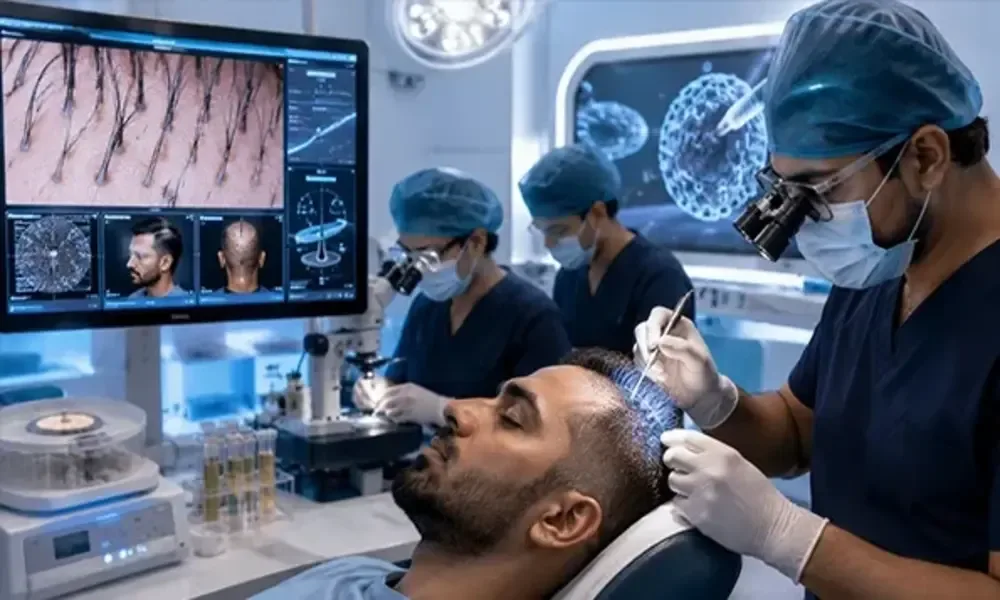
FUE techniques: Follicular Unit Extraction involves removing individual follicular units from a donor area and implanting them into selected recipient sites. Ask how the clinic handles grafts and protects the donor area.
Personalized treatment planning: Hairline design and graft estimates should reflect your hair-loss pattern, donor supply, age, and long-term goals.
Convenient follow-up: Consider whether the clinic provides clear recovery instructions and scheduled postoperative reviews. Locations such as Kharadi and Pimple Gurav may be convenient for some Pune patients.
Choosing a Hair Transplant Clinic in Surat
When evaluating a hair transplant clinic in Surat, prioritize patient safety, realistic expectations, and transparent communication.
- Donor-area assessment: The doctor should evaluate donor density and plan extraction carefully to reduce the risk of overharvesting.
- Individualized graft estimates: Requirements depend on the size of the recipient area, hair characteristics, and available donor supply.
- Clear pricing: Request a written estimate explaining the procedure, proposed graft count, medications, and follow-up costs.
- Aftercare services: Confirm the schedule for scalp washing, review appointments, and guidance on managing common postoperative symptoms.
Treatments such as platelet-rich plasma (PRP) or growth factor concentrate (GFC) may be discussed in selected cases. Ask about their intended role, supporting evidence, costs, and realistic benefits.
Understanding Hair Transplant Techniques
Follicular Unit Extraction (FUE)
FUE uses small punches to remove individual follicular units from the donor area. The grafts are then placed into the recipient area. The technique avoids a long linear incision, although small scars may remain. Suitable candidates may include people seeking to improve a receding hairline or areas of scalp thinning.
Growth-factor-assisted procedures
Some clinics use terms such as Bio-FUE for FUE combined with additional treatments. Protocols can vary, so ask exactly what the procedure includes and what evidence supports the proposed benefits. These additions should not be assumed to guarantee improved graft survival or faster healing.
Body Hair Transplant (BHT)
In selected cases, follicles from areas such as the beard or chest may supplement scalp donor hair. Body hair differs from scalp hair in texture and growth characteristics, and suitability varies. BHT is not a guaranteed solution for extensive baldness and requires careful assessment by an experienced doctor.
Hair Transplant Recovery and Results
Recovery differs between individuals. The following timeline is a general guide rather than a guarantee.
- Days 1–10: Small scabs, swelling, or redness may occur. Follow the clinic's instructions for washing and protecting the scalp.
- Weeks 2–8: Transplanted hair shafts may shed temporarily. This is common and does not necessarily mean the follicles have been lost.
- Months 3–4: Early new growth may become visible.
- Months 6–9: Hair growth and visible coverage often continue to improve.
- Months 12–18: Results mature further, although timing varies and some areas may take longer.
Follow your surgeon's advice about returning to work, exercise, and normal hair-care routines.
Frequently Asked Questions
How do I choose between a hair transplant clinic in Surat and Pune?
Compare the doctor's qualifications, genuine before-and-after results, safety procedures, pricing, and availability of follow-up care. Choose based on medical suitability and service quality rather than location or price alone.
Is a hair transplant painful?
Local anesthesia is generally used during the procedure. Some discomfort may occur during injections or recovery, so discuss pain management and expected sensations with your doctor.
How long does recovery take after FUE?
Initial surface healing often takes around 7–10 days. Some patients return to desk work within a few days, depending on their recovery and job requirements. Your surgeon should provide individualized guidance.
Final Thoughts
Choosing a hair restoration clinic requires research, a careful medical assessment, and realistic expectations. Before proceeding, verify the doctor's credentials, understand the proposed technique, discuss donor-area limitations, and confirm that postoperative care is available.
For more information about hair restoration services and clinic locations, visit Hairfree & Hairgrow Clinic.