
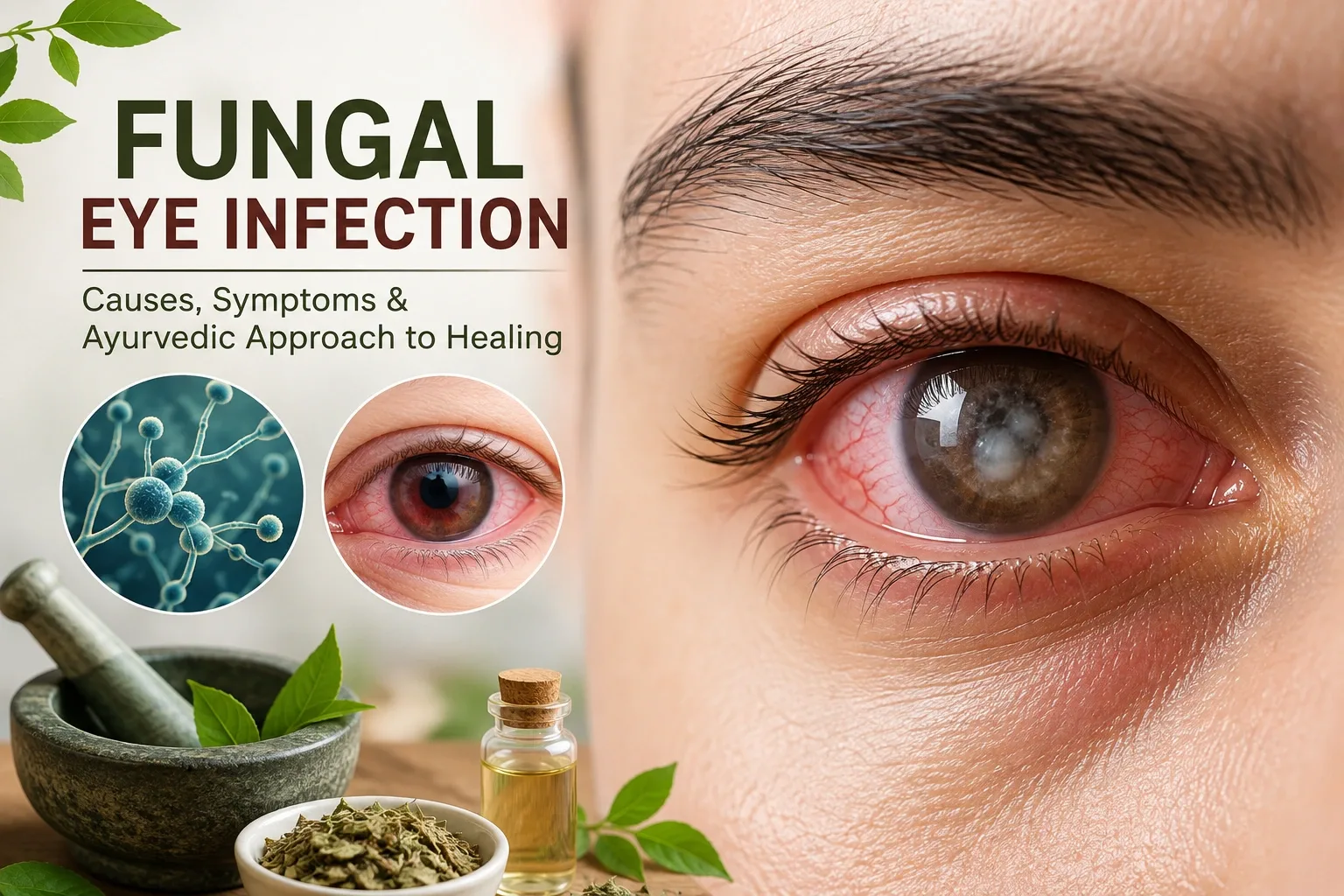
Fungal eye infections are uncommon, but when they occur, they can become serious if diagnosis and treatment are delayed. One of the most important forms is fungal keratitis, in which fungi infect the cornea—the clear front surface of the eye.
In more severe cases, fungal infections can affect deeper structures of the eye.
Fungal eye infections may develop after an eye injury, particularly an injury involving plant material, but other factors such as contact lens use, eye surgery, chronic eye-surface problems, corticosteroid use, diabetes and a weakened immune system can also increase the risk.
Because fungal eye infections can resemble bacterial or other types of keratitis, professional examination and appropriate testing are important before deciding on treatment.
What Is a Fungal Eye Infection?
A fungal eye infection occurs when a fungus infects one or more parts of the eye. Fungal keratitis affects the cornea, while fungal endophthalmitis affects the inside of the eye.
Common fungi associated with eye infections include Fusarium, Aspergillus and Candida. Fungi such as Fusarium and Aspergillus are found widely in the environment, including soil and plant material.
Fungal keratitis is particularly important to recognize because the infection can progress slowly and may cause significant damage to the cornea if treatment is delayed.
What Causes Fungal Eye Infections?
There is no single cause of fungal eye infection. Several situations can allow fungi to enter or infect the eye.
1. Eye Injury
An injury involving a thorn, stick, leaf or other plant material is a well-known risk factor. Fungal spores present on plant material can enter through a damaged corneal surface and begin an infection.
2. Contact Lens Use
Improper contact-lens hygiene or inappropriate lens care can increase the risk of eye infections. People who develop unusual eye irritation while wearing contact lenses should remove their lenses and seek an eye examination.
3. Eye Surgery or Procedures
Fungal infections can occasionally occur after eye surgery or invasive eye procedures. Contaminated medical products have also been associated with some fungal eye infections.
4. Long-Term or Unnecessary Steroid Eye-Drop Use
Corticosteroids can increase the risk of fungal keratitis and may allow an existing fungal infection to become worse. For this reason, steroid eye drops should not be started or continued for an unexplained red or painful eye without medical supervision.
5. Diabetes and Reduced Immunity
People with diabetes, weakened immune systems or certain chronic eye-surface conditions may have a higher risk of fungal eye infections.
6. Fungal Infection in the Bloodstream
In rare cases, a fungal infection in the bloodstream can spread to the eye and cause fungal endophthalmitis.
Symptoms of Fungal Eye Infection
The symptoms can resemble those of other eye infections, which is one reason professional diagnosis is important.
Common symptoms include:
- Eye redness
- Eye pain or discomfort
- Blurred or reduced vision
- Excessive watering
- Sensitivity to light
- Eye discharge
- Foreign-body sensation
- Swelling around the eye
- Persistent irritation
- A corneal ulcer or white/grey area on the cornea in some cases
According to the CDC, symptoms may appear several days to several weeks after exposure.
A painful, red eye accompanied by reduced vision should not be ignored. Fungal keratitis can become sight-threatening if treatment is delayed.
How Is Fungal Eye Infection Diagnosed?
Symptoms alone cannot reliably tell whether an eye infection is fungal, bacterial, viral or caused by another organism.
An ophthalmologist may examine the eye using a slit lamp and, when fungal keratitis is suspected, collect a sample from the corneal lesion for laboratory examination.
Testing can include microscopy, culture and, in some settings, molecular testing such as PCR.
Early identification is particularly important because fungal keratitis can require prolonged treatment and close follow-up.
Treatment Options for Fungal Eye Infection
Treatment depends on the type of fungus, the location and depth of infection, and how advanced the condition is.
Prescription Antifungal Eye Drops
Prescription antifungal eye drops are commonly used for fungal keratitis. Natamycin is an important topical antifungal used in fungal corneal infections.
Depending on the organism and clinical situation, ophthalmologists may also consider other antifungal medicines.
Oral or Systemic Antifungal Medicines
For deeper, severe or resistant infections, an ophthalmologist may use oral or other systemic antifungal medicines. The exact medicine and duration depend on the infection and the patient's overall condition.
Close Ophthalmic Monitoring
Fungal keratitis may take considerably longer to resolve than some other eye infections.
Patients may need repeated examinations to monitor the cornea and make sure the infection is responding to treatment.
Surgery in Severe or Resistant Cases
If medication does not control the infection or the cornea becomes severely damaged, surgical treatment may sometimes be necessary. In advanced cases, procedures including corneal transplantation may be considered.
Can Fungal Eye Infection Be Treated Naturally?
This is an important question, particularly for people looking for Ayurvedic or natural approaches.
Fungal keratitis is a medical eye infection, and there is currently no good evidence that Ayurvedic herbs or home remedies can replace prescription antifungal treatment for a confirmed fungal infection.
Therefore, putting herbal preparations, oils, juices or homemade remedies directly into an infected eye is not advisable unless specifically prescribed and prepared for ophthalmic use by an appropriately qualified professional.
Ayurveda may be considered as a supportive and complementary approach, particularly for overall health, nutrition, lifestyle and recovery, but it should not delay appropriate diagnosis and antifungal treatment.
Ayurvedic Treatment for Fungal Eye Infection
Ayurveda has a long history of describing eye disorders and using approaches aimed at supporting ocular health. However, modern clinical evidence specifically establishing Ayurvedic treatment as a replacement for antifungal therapy in fungal keratitis is limited.
An Ayurvedic approach should therefore begin with a proper assessment rather than a one-size-fits-all treatment.
Depending on the person's condition, an Ayurvedic physician may focus on:
1. Individualized Diet and Lifestyle
Dietary and lifestyle recommendations may be provided according to the individual's constitution, digestion, general health and recovery needs.
Adequate nutrition, hydration, sufficient sleep and management of underlying health conditions can be important components of overall recovery.
2. Support for General Health
Ayurvedic care may focus on supporting digestion, daily routines and general wellbeing while the person continues appropriate ophthalmic treatment.
3. Ayurveda-Based Eye Care Under Professional Supervision
Traditional Ayurvedic procedures such as Tarpana and other Netra Chikitsa procedures may be considered in selected eye conditions.
However, these procedures should not be performed on an actively infected eye without evaluation by an appropriately qualified eye specialist and Ayurvedic physician.
Importantly, Ayurvedic procedures should be selected according to the patient's condition rather than assuming that the same procedure is suitable for every person.
Some published Ayurvedic case reports have described improvement in certain forms of nonresponsive ulcerative keratitis following Ayurvedic interventions, but such reports do not establish that Ayurveda can cure fungal keratitis or replace evidence-based antifungal treatment.
Ayurvedic Care and Modern Eye Treatment: A Balanced Approach
For someone diagnosed with fungal eye infection, the safest approach is to avoid choosing between "modern medicine" and "Ayurveda" as if only one can be used.
The priority should be:
Accurate diagnosis → appropriate antifungal treatment → regular ophthalmic monitoring → supportive lifestyle and Ayurvedic care where appropriate.
This integrated approach can allow patients who are interested in Ayurveda to explore supportive care without unnecessarily delaying treatment for a potentially sight-threatening infection.
How Jeena Sikho Supports People Seeking Ayurvedic Care
At Jeena Sikho, the approach to health focuses on Ayurveda, lifestyle modification, individualized guidance and holistic wellbeing.
Over the years, people have approached Jeena Sikho and its associated healthcare centres with a wide range of health concerns, including chronic and difficult-to-manage conditions. Patients have also shared their experiences of improvement after receiving individualized care and making changes to their diet and lifestyle.
For people dealing with persistent eye-related problems, the focus should be on understanding the person's overall health, daily routine, diet and individual requirements rather than simply addressing one symptom.
However, it is important to make a distinction: individual patient experiences should not be interpreted as proof that Ayurvedic treatment alone cures fungal eye infections. Confirmed fungal keratitis requires appropriate ophthalmic assessment and treatment.
Jeena Sikho's role can be to provide Ayurveda-based supportive care alongside responsible medical guidance, helping people make sustainable changes in their lifestyle and overall approach to health.
How to Prevent Fungal Eye Infections
Prevention is especially important for people who work outdoors or around plants.
Some useful precautions include:
- Wear protective eyewear while gardening, farming or working around plants.
- Avoid touching the eyes with unwashed hands.
- Follow proper contact-lens cleaning and replacement practices.
- Never use someone else's contact lenses.
- Avoid using leftover eye drops without professional advice.
- Do not use steroid eye drops for a red eye unless prescribed.
- Seek prompt medical attention after an eye injury involving plant material.
- Get an eye examination if redness, pain or blurred vision persists.
Protective eyewear can reduce the risk of plant-related eye injuries, while appropriate contact-lens care can help reduce infection risk.
When Should You See an Eye Doctor?
Do not wait for an eye infection to "settle on its own" if you have:
- Severe or increasing eye pain
- Sudden or worsening blurred vision
- Significant redness
- Strong sensitivity to light
- A white spot on the cornea
- Eye injury from a thorn, leaf or stick
- Persistent symptoms despite treatment
- Symptoms after eye surgery
- Symptoms while wearing contact lenses
These symptoms can occur with several serious eye conditions, including infectious keratitis, and require timely professional evaluation.
Final Thoughts
Fungal eye infections are rare but potentially serious. They can develop after eye trauma, particularly involving plant material, and may also be associated with contact lenses, eye procedures, corticosteroid use, diabetes or reduced immunity.
The symptoms—such as redness, pain, watering, light sensitivity and blurred vision—can look similar to other eye infections. Diagnosis may require examination and laboratory testing, while confirmed fungal keratitis generally requires prescription antifungal treatment and close ophthalmic follow-up.
Ayurveda can be explored as a complementary approach to overall health and supportive care, but it should not replace prescribed antifungal treatment or ophthalmic monitoring for a confirmed fungal eye infection.
At Jeena Sikho, the emphasis is on individualized Ayurvedic care, healthy lifestyle practices and holistic wellbeing. People who have experienced improvement through Jeena Sikho's care may share their personal recovery journeys, but every case of fungal eye infection should be assessed individually and managed with appropriate medical supervision.
Frequently Asked Questions
1. Is fungal eye infection serious?
Yes. Fungal eye infections, particularly fungal keratitis, can become serious and may threaten vision if diagnosis and treatment are delayed.
2. Can fungal eye infection cause blurred vision?
Yes. Blurred or reduced vision is a recognized symptom of fungal keratitis.
3. Can fungal eye infection spread from person to person?
Fungal keratitis itself is not generally spread from person to person.
4. Can I use Ayurvedic medicine instead of antifungal eye drops?
A confirmed fungal eye infection should not be treated by replacing prescribed antifungal therapy with home remedies or unproven Ayurvedic preparations. Ayurvedic care may be considered complementary under appropriate professional supervision.
5. How long does fungal keratitis take to heal?
Recovery can take weeks or even months depending on the severity, organism and response to treatment. Regular follow-up is important.
6. Can steroid eye drops make fungal eye infection worse?
Steroid use can increase the risk of fungal keratitis and may worsen an existing fungal infection, so steroid eye drops should only be used under appropriate medical supervision.