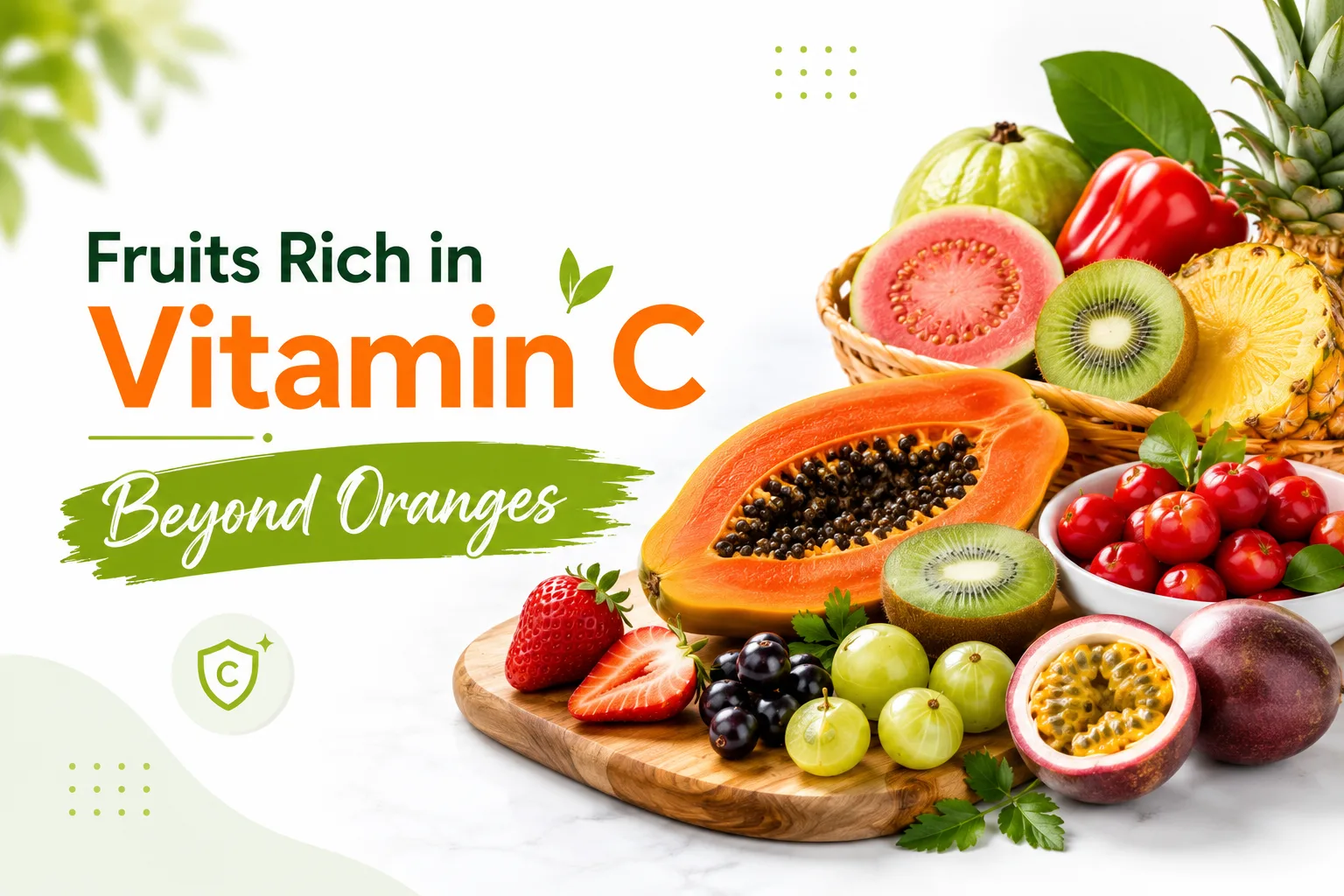
When people think about vitamin C, oranges usually come to mind first.
It's almost automatic.
But oranges aren't the only way to get this nutrient.
Plenty of other fruits contain vitamin C, and some are surprisingly good sources. Guava, kiwi, strawberries, papaya, and several other fruits can add vitamin C to your diet while also bringing fibre, water, and other nutrients to the table.
So, if you're bored with oranges or simply want more variety, there's plenty to choose from.
Why Does Your Body Need Vitamin C?
Vitamin C, also called ascorbic acid, is a water-soluble vitamin your body needs for several important functions.
It helps your body:
- Make collagen
- Support normal immune function
- Absorb iron from plant foods
- Heal wounds
- Protect cells from oxidative damage
Your body doesn't store large amounts of vitamin C, so getting it regularly from food matters. The recommended intake for adults is 90 mg per day for men and 75 mg for women. People who smoke need an additional 35 mg per day.
Fruits and vegetables are among the best natural sources.
1. Guava
If you're looking for a fruit that deserves more attention, guava is a good place to start.
Guava is naturally rich in vitamin C and is also a source of fibre.
It's easy to enjoy on its own.
You can:
- Slice it and eat it fresh
- Add it to a fruit bowl
- Mix it into a simple salad
- Pair it with nuts for a snack
Guava is also widely available in India, making it a practical choice rather than something you need to search for in specialty stores.
USDA nutrient data lists common raw guava as a particularly rich source of vitamin C.
2. Kiwi
Kiwi has a slightly tangy taste and is another good source of vitamin C.
One medium kiwi provides about 64 mg of vitamin C according to NIH data.
That's a useful amount from a relatively small fruit.
Try adding sliced kiwi to:
- Oatmeal
- Curd
- Smoothies
- Fruit bowls
If you've never included kiwi in your diet before, start with a small serving and see how you like it.
3. Strawberries
Strawberries aren't just a dessert topping.
They also provide vitamin C.
Half a cup of sliced fresh strawberries contains about 49 mg of vitamin C according to NIH data.
They also add colour and natural sweetness to meals.
You can add them to plain yogurt, oats, or a homemade fruit bowl.
Fresh strawberries are especially easy to include during their growing season.
4. Papaya
Papaya is another fruit worth adding to your regular rotation.
It provides vitamin C along with other nutrients and can be eaten as a simple breakfast or snack.
Try combining papaya with:
- Plain curd
- Chia seeds
- A few nuts
- Other seasonal fruits
You don't need to turn it into an elaborate recipe.
Cut it, serve it, and eat it.
That's often the easiest way to make healthy food a regular habit.
5. Grapefruit
Grapefruit is another citrus fruit, but it's often overlooked compared with oranges.
Half a medium grapefruit provides around 39 mg of vitamin C, according to NIH data.
It has a sharp, slightly bitter taste that some people love and others don't.
If you enjoy it, it can be a simple addition to breakfast.
One thing to remember is that grapefruit can interact with certain medications. If you take prescription medicines, check with your doctor or pharmacist before making grapefruit a regular part of your diet.
6. Cantaloupe
Cantaloupe may not be the first fruit you associate with vitamin C, but it contributes to your intake.
Half a cup provides around 29 mg of vitamin C.
It also has a high water content, which makes it a refreshing option, especially in warmer weather.
Serve it chilled or add it to a mixed fruit bowl.
7. Strawberries and Other Berries
Strawberries are the standout vitamin C source among common berries, but adding different berries can also bring variety to your diet.
The exact vitamin C content varies depending on the fruit.
The bigger point is variety.
You don't need to eat the same fruit every day just because someone calls it a "superfood."
Rotate different seasonal fruits instead.
8. Tomatoes May Surprise You
Tomatoes are technically fruits, even though we usually treat them as vegetables in the kitchen.
They contain vitamin C too.
One medium raw tomato provides about 17 mg of vitamin C according to NIH data.
That means tomatoes can contribute to your daily intake through foods you already eat.
Add them to:
- Salads
- Sandwiches
- Raita
- Homemade chutneys
- Vegetable dishes
You don't need to eat tomatoes separately to benefit from them.
9. Litchi
Litchi is another fruit that can contribute vitamin C.
USDA nutrient data shows that raw litchis contain vitamin C, although the amount can vary depending on serving size and the fruit itself.
They're naturally sweet, so portion size still matters if you're watching your overall sugar and calorie intake.
Enjoy them as part of a varied fruit intake rather than relying on them as your main vitamin C source.
10. Cantaloupe, Melons, and Seasonal Fruits
Seasonal eating can make getting a variety of nutrients much easier.
Different fruits provide different combinations of vitamins, minerals, fibre, and other plant compounds.
Instead of asking, "Which one fruit should I eat every day?"
Ask yourself, "How can I include different fruits across the week?"
That small change in thinking can make your diet much more varied.
How Much Vitamin C Do You Need?
The recommended daily amount depends on your age and sex.
For adults:
- Men generally need 90 mg per day
- Women generally need 75 mg per day
- Pregnant women need 85 mg per day
- Breastfeeding women need 120 mg per day
People who smoke need 35 mg more per day because smoking increases the body's vitamin C requirements.
Most people can meet their vitamin C needs through a varied diet that includes fruits and vegetables.
Eat Vitamin C Fruits Fresh When Possible
Vitamin C is sensitive to heat and can also decline during prolonged storage.
That's one reason fresh fruits can be a convenient source.
Many vitamin C-rich fruits are eaten raw, so you don't have to worry about cooking losses.
When preparing vegetables that contain vitamin C, shorter cooking methods such as steaming or microwaving may help reduce losses compared with prolonged cooking.
This doesn't mean you should avoid cooked vegetables.
Just vary the way you prepare them.
Pair Vitamin C Fruits With Plant-Based Iron Foods
Here's a useful nutrition habit that doesn't get enough attention.
Vitamin C can help your body absorb non-heme iron, the type of iron found mainly in plant foods.
So you could pair:
- Chana with tomatoes
- Dal with lemon
- Spinach with a vitamin C-rich fruit
- Sprouts with guava
- Beans with a fresh salad
This is particularly useful for people who eat mostly plant-based meals.
Do You Need Vitamin C Supplements?
Not necessarily.
If you're eating a varied diet with fruits and vegetables regularly, you may already be getting enough vitamin C from food.
Supplements can be useful in certain situations, but taking more isn't automatically better.
For most people, food should be the starting point.
If you're unsure about your nutritional needs, a qualified Nutritionist in Delhi can help assess your overall diet and suggest practical food choices based on your individual needs rather than simply recommending supplements.
Don't Focus on One Fruit
There is no need to stop eating oranges.
They're still a good source of vitamin C. NIH data lists one medium orange at around 70 mg of vitamin C.
The point is simply to expand your choices.
Have a guava one day.
Papaya another.
Add kiwi or strawberries when available.
Use tomatoes in your meals.
Choose seasonal fruits when they're fresh and accessible.
A varied diet gives you more than one way to meet your nutritional needs.
Make Vitamin C-Rich Fruits Part of Your Routine
You don't need a complicated nutrition plan to eat more vitamin C-rich foods.
Keep fruit where you can see it.
Add one serving to breakfast.
Carry fruit when you're working outside the home.
Use seasonal options instead of buying expensive imported produce.
And most importantly, don't rely on one fruit to do all the work.
Guava, kiwi, strawberries, papaya, grapefruit, tomatoes, and other fruits can all contribute to your vitamin C intake. When combined with vegetables, whole grains, protein sources, nuts, seeds, and other nutritious foods, they can be part of a balanced eating pattern.
Sometimes better nutrition isn't about finding a new food.
It's simply about eating a wider variety of the foods already available to you.
Easy Ways to Add Vitamin C-Rich Fruits to Your Day
You don't need to completely change your meals to eat more vitamin C.
Try a few simple habits:
- Add guava or papaya to breakfast.
- Keep seasonal fruits ready for snacks.
- Add strawberries or kiwi to plain curd.
- Include tomatoes in salads and sandwiches.
- Pair dal or chana with lemon or tomatoes.
- Make a simple fruit bowl instead of reaching for packaged desserts.
The goal isn't to eat a huge amount of fruit.
It's to include a variety of fruits regularly.
A Simple Indian Meal Pattern With Vitamin C
You can get vitamin C through foods you already eat.
For example:
Breakfast: Vegetable poha with guava
Mid-morning: Papaya
Lunch: Dal, roti, vegetables, salad with tomatoes and lemon
Evening: Plain curd with strawberries when available
Dinner: Rice, rajma, vegetables, and a tomato-based salad
The exact foods can change based on your preferences and what is available locally.
Don't Forget Vegetables
Fruits aren't the only source of vitamin C.
Vegetables such as capsicum, broccoli, cabbage, tomatoes, and green leafy vegetables can also contribute to your intake.
This is why focusing on your overall diet is more useful than searching for one "best" vitamin C fruit.
Try to include both fruits and vegetables across your meals.
Choose Variety Over Food Trends
You may see claims online about one fruit being better than every other option.
You don't need to follow that approach.
Guava can be great.
Oranges can be great.
Papaya, kiwi, strawberries, and other fruits can also fit into a healthy diet.
What matters more is variety, regularity, and the overall quality of your meals.
A simple fruit rotation can make your diet more interesting while helping you get different nutrients throughout the week.