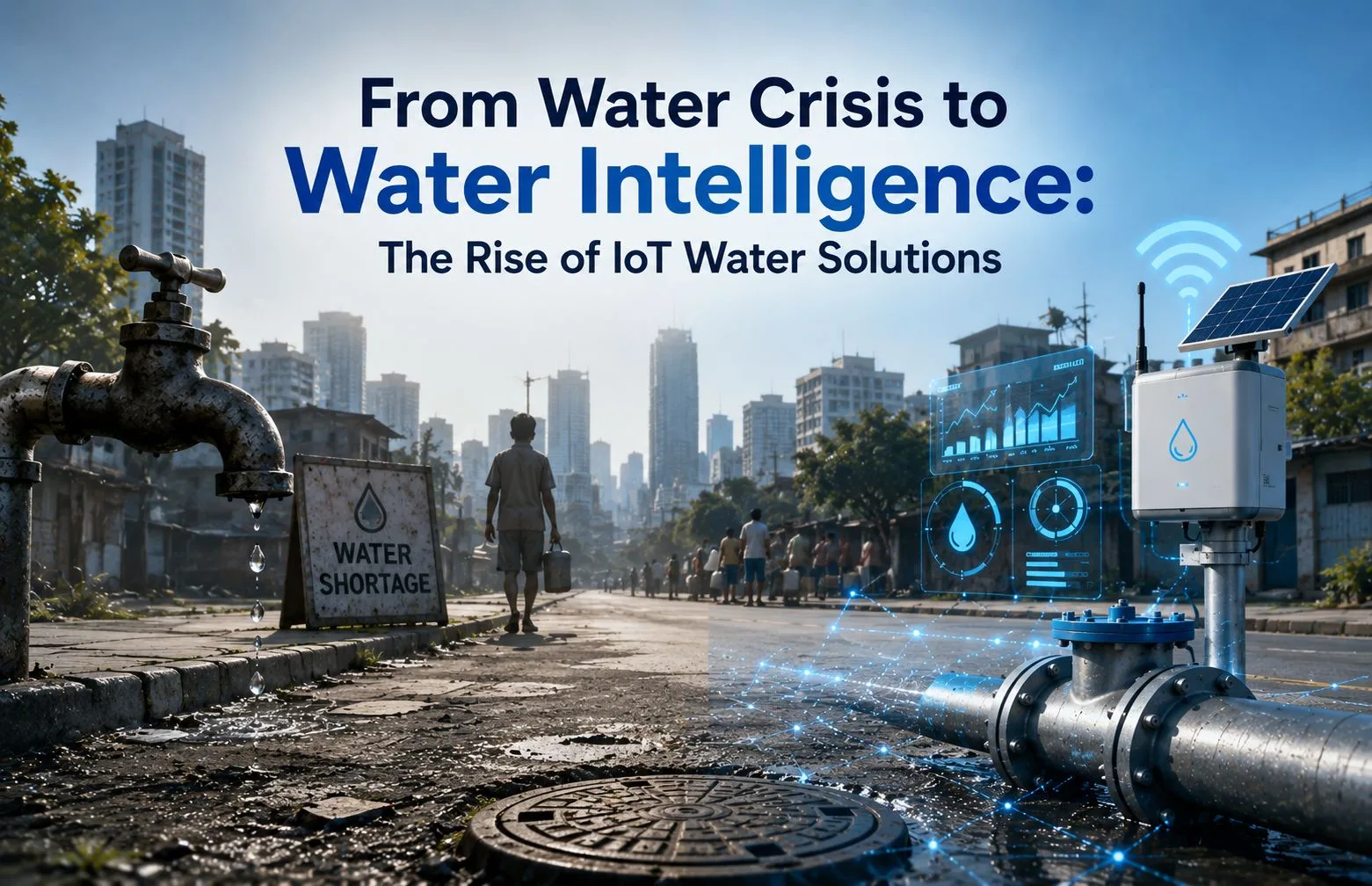
Water is among the world’s most essential resources. But managing it effectively has become a very big challenge. Due to rapid urban growth, changing climate patterns, rising industrial demand, and aging infrastructure, all have placed immense pressure on available water resources.
Due to this, water scarcity is no longer limited to drought-prone areas. Industries, towns, cities, and agricultural regions are all facing concerns related to the availability of water, its distribution, quality, and long-term sustainability. In this evolving landscape, digital technologies are also helping to reshape the way water is managed or monitored.
A modern Water App, backed by smart IoT water monitoring systems, lets organizations and communities access real-time information, identify issues early, and make better and more informed decisions. Instead of reacting only after the occurrence of a problem, water management is steadily moving towards a data-driven and smart approach.
This shift from managing water shortages to building water intelligence is being powered by connected technologies, advanced data analytics and automation. At the core of this transformation is the IoT water solution, which provides an efficient way to analyze, monitor and manage water resources across a huge range of applications.
Understanding the shift from water crises to water intelligence
Water-related challenges rarely occur from a single cause. Aging infrastructure, increasing demand, unpredictable rainfall, and declining groundwater levels usually combine to make complex issues. In most regions, hidden pipeline leaks, delayed maintenance, and inefficient distribution systems can result in significant water loss each year. At the same time, water contamination may go unnoticed until it has already affected the environment or consumers.
Traditional methods of managing water depend heavily on scheduled inspections and collecting data manually. While these approaches have supported water systems for multiple years, they often provide only limited visibility into what is happening at a given point in time. By the time any issue is discovered, water, valuable time, and resources may already have been lost.
Water intelligence also introduces a more proactive way for managing these challenges. Also, instead of depending purely on periodic inspections, intelligent systems regularly gather information from various parts of the water network. The collected data is then analyzed instantly, allowing them to respond before small issues become major problems.
The role of data in water intelligence
Reliable data is at the core of every intelligent water management system. Instead of just depending on estimates or waiting for routine inspections, firms can make decisions based on real-time information that is collected from across their water networks.
Regular data collection also helps operators to understand how a system is performing at any given time. It can also reveal usage patterns, highlight potential issues, and identify inefficiencies before they become a costly issue. This quick approach lets resources be managed more effectively while improving the overall reliability of the water interface. Some of the key insights that real-time data can provide include:
- Detecting unusual pressure fluctuations
- Monitoring reservoir and tank levels
- Tracking daily and seasonal water consumption
- Identifying unexpected flow variations
- Measuring important water quality parameters
- Forecasting future demand based on historical trends
When this real-time information is combined with historical data, organizations gain a clearer understanding of system performance. This also makes long-term planning, maintenance scheduling, and resource allocation much more efficient.
Real-time monitoring supports faster decisions
Among the biggest advantages of smart water management is the ability of monitoring systems to provide regular updates. Instead of depending on customer complaints or scheduled inspections, operators receive proper updates whenever something unusual happens within the network. Also, receiving alerts as soon as the issue occurs will let the maintenance team respond more quickly. With early action, you will not only prevent larger disruptions but can also minimize water loss and reduce repair costs.
How can smart IoT sensors help to reduce water loss?
Water loss continues to be a major issue for utilities and communities across the world. In most cases, leaks develop gradually and remain hidden underground for very long periods before anyone notices them. By the time they are identified, a significant amount of water may have already been wasted.
Smart sensors also make leak detection with the help of IoT Water Solutions much more efficient by regularly monitoring pressure, flow rates, and other operational conditions throughout the network. Even tiny changes can indicate that something is wrong and let the maintenance team investigate before the issue worsens.
The importance of IoT platforms and Water Apps
Collecting information is part of intelligent water management. The real value comes from presenting the information in a way that is easy to understand and act upon.
A very well-designed water app brings together the data from various monitoring points into a single platform. Through alerts, reports, dashboards, and visual summaries, users can easily understand what is happening across the entire water system without even analyzing complex datasets manually.
Also, by turning large amounts of technical data into meaningful and clear insights, IoT platforms can help operators make quicker and more informed decisions. It also helps to improve the overall efficiency of water management.
The future of water intelligence
The future of water management is becoming increasingly intelligent, data-driven and connected. Advances in AI, machine learning, digital twins, cloud computing and advanced analytics are also expected to further improve the way water systems are managed and monitored. In the coming years, intelligent platforms may be able to:
- Predict future water demand with greater accuracy
- Detect infrastructure problems automatically
- Optimize energy use across water networks
- Recommend preventive maintenance schedules
- Support long-term water resource planning
- Improve emergency response during water shortages
As these technologies continue to develop, intelligent water management is likely to become more accessible for municipalities, industries, utilities, and communities of all sizes.