Bulk materials pass through many hands before they are used. A load may be stored in a warehouse, moved by truck, held in a shed, and then lifted into place on a worksite. Each stage carries risks, including spillage, product damage, and and poor use of storage and freight space.
Packaging is one of the few factors a business can control from start to finish. Choosing a bag that suits the material, the handling method, and the transport conditions leads to safer loads and smoother operations.
What Is an FIBC Bulk Bag?
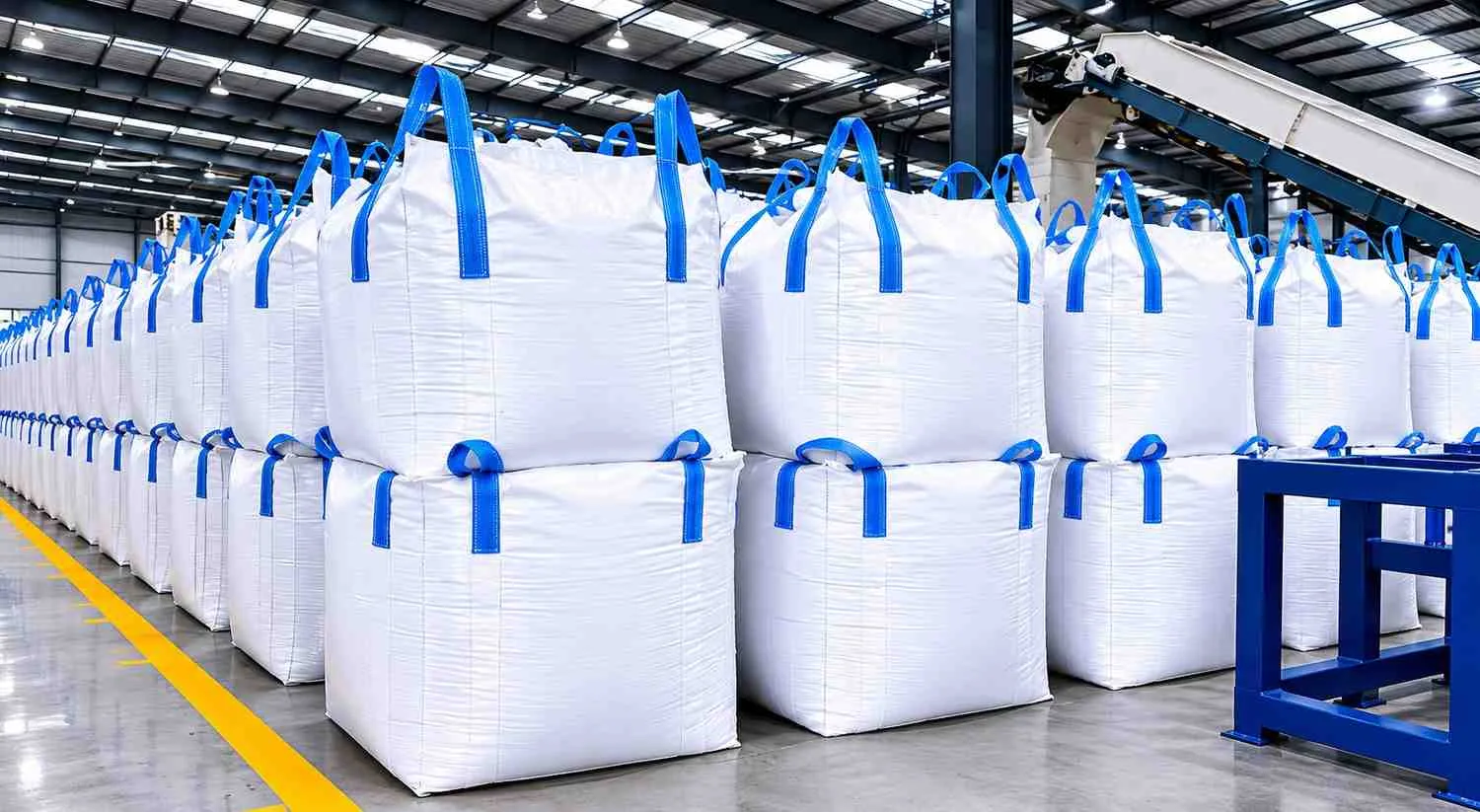
FIBC stands for flexible intermediate bulk container. It is a large bag made from high-strength woven polypropylene, used to store and move dry bulk materials.
These bags give good load stability and hold up well during filling, lifting, and discharge. They suit construction, agriculture, food processing, and chemical handling, and they work with automated systems.
Which Bulk Bag Suits Which Job?
Not every load needs the same bag. Here is how the main types differ:
- 1 & 2 Loop FIBC: A cost-effective option for easy lifting and space-efficient storage. Common in agriculture, mineral processing, and powder industries.
- 4 Loop Bulk Bags: Built for heavy-duty work. Food-grade and certified options are available.
- Baffle Bags: Designed to hold a square shape and avoid bulging during filling and transport.
- UN-Certified FIBC: Made for hazardous and dangerous goods under strict international transport rules.
- Conductive Bags (Type C): Made for flammable powders and sensitive chemicals where static is a risk.
- Ventilated Bags: Suited to products like nuts, potatoes, onions, and wood.
- Container Liners: Used for efficient bulk material transport.
How Bag Shape Affects Freight Space
Baffle bags are a good example of packaging that pays for itself. Because they keep a square shape, they make better use of space and stack more efficiently. They also help use container room well, which can reduce freight costs. For food processing and agricultural loads, certified and food-grade versions are on offer.
Choosing for Risk, Not Just Weight
Some loads call for more than strength. Hazardous goods need a UN-certified bag, which is tested for strength and durability and built to meet international transport rules.
Flammable powders need a Type C conductive bag. It dissipates static electricity through proper grounding, which helps prevent sparks during filling and discharge. Getting this choice right protects people as well as product.
How Wales Industries Tests Its Bags
A bag that looks strong on paper still has to prove itself. Wales runs product tests in its own in-house laboratory. The list includes:
- Drop test and topple test
- Stacking test
- Cyclic top lift and load to failure test
- Sifting test
- UV test
- Grounding test and breakdown voltage test
The range also covers yarn and fabric tensile tests, coating performance, and tear tests.
Standards matter too. Wales works to ISO 21898 for non-hazardous goods, ISO 9001 for quality management, and AS 3668 for non-dangerous goods. UN bags follow ADR/RID/IMDG-Code, and food-grade bags reference standards such as ISO 22000 and BRC-S&D. For static protective bags, IEC 61340 sets the testing methods.
How Wales Industries Gets Bags to Your Site
Good packaging only helps if it arrives when you need it. Wales keeps over 50 types of FIBC bulk bags in stock. Same day shipping is available from warehouses across Australia, and the team supplies customers in Australia and New Zealand.
When stock sizes don’t fit, bags can be customised to load capacity, material type, and compliance needs. The business has operated since 2016 and serves more than 500 customers.
Summary
Handling bulk material well comes down to matching the bag to the task. Loop style, shape, ventilation, certification, and static control each solve a different problem. A baffle bag can save freight space. A UN-certified bag supports safe transport of dangerous goods. A Type C bag can reduce static risk. Testing and recognised standards back up each choice.
Planning your next bulk packaging order? Send your load details to the Wales Industries team and get help choosing the right bag for your site.