The Rise of the On-Demand Economy
Convenience has become a major part of modern consumer behavior. People now expect to order products, book services, arrange transportation, and access support whenever they need it. This shift has accelerated the growth of the on-demand economy, where speed and accessibility influence purchasing decisions.
On-demand app development enables businesses to bring these expectations into a digital environment. By connecting customers with products or service providers through a single platform, businesses can simplify the entire journey from request to fulfillment.
Understanding On-Demand Apps and Their Role
An on-demand app allows users to request products or services at their convenience. Instead of depending on traditional schedules, customers can browse available options, place an order or booking, make a payment, and track the progress directly through the application.
The model typically connects customers, service providers, and the platform owner. This structure can be adapted to different industries, making on-demand applications useful for both product-based and service-based businesses.
How the On-Demand Business Model Works
The process begins when a customer searches for a product or service and submits a request. The platform identifies suitable providers based on factors such as availability and location. Once a provider accepts the request, the customer can receive updates until the service or delivery is completed.
Behind the scenes, technologies manage payments, notifications, location tracking, provider availability, and order information. This connected workflow helps businesses manage customer requests while creating a more convenient experience.
Popular Types of On-Demand Apps
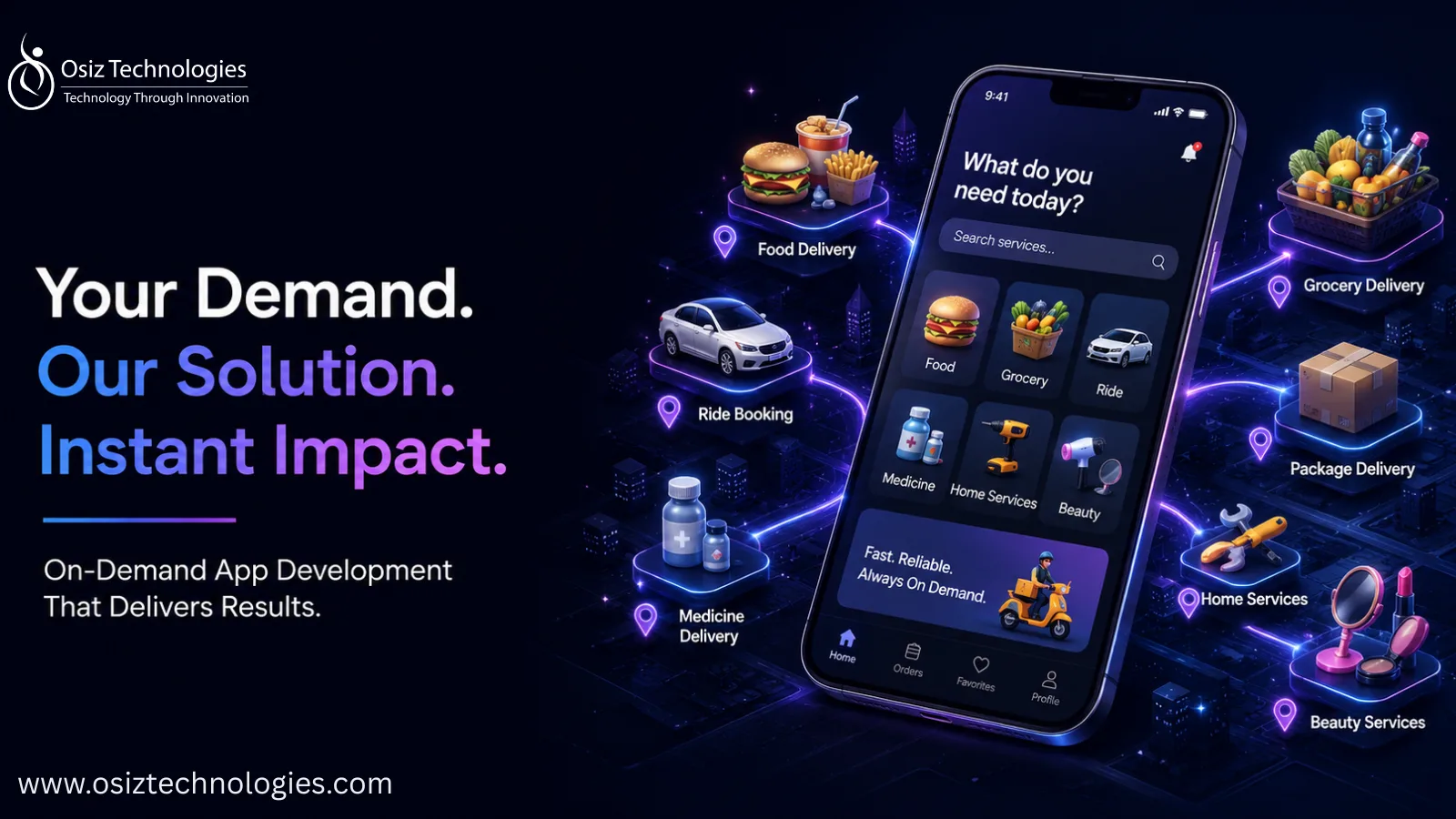
The on-demand model has expanded across multiple industries. Food and grocery delivery applications help customers receive everyday essentials without visiting physical stores. Ride-hailing platforms connect passengers with nearby drivers, while home-service apps allow users to book cleaning, repair, maintenance, and other professionals.
Healthcare, beauty, wellness, logistics, and professional services are also adopting on-demand platforms. This flexibility allows businesses to create applications around specific customer needs or combine multiple services into one ecosystem.
The Technology Behind On-Demand Platforms
A reliable on-demand platform requires more than a mobile interface. Backend infrastructure, APIs, databases, cloud services, payment gateways, and real-time communication work together to support the application.
GPS and geolocation are particularly important for services that depend on proximity and tracking. Artificial intelligence can further improve the platform through personalized recommendations, automated support, demand prediction, and intelligent service allocation.
Selecting the right technology stack depends on the application's purpose, expected users, integrations, and future scalability requirements.
Key Stages in On-Demand App Development
The development journey begins with market research and requirement planning. Businesses need to define their target audience, service model, workflows, and application goals before development starts.
The next stages typically include UI/UX design, technology selection, frontend and backend development, API integration, testing, deployment, and ongoing improvements. An experienced app development company can help businesses manage these stages while keeping the platform aligned with changing customer expectations.
Designing a Seamless On-Demand User Journey
A successful on-demand app should make every interaction simple. Users need to find services quickly, understand pricing, place requests easily, and receive clear updates throughout the process.
Features such as personalized recommendations, multiple payment options, real-time tracking, saved preferences, and timely notifications can make the experience more convenient. A well-designed journey can turn a first-time user into a returning customer.
Common Challenges in On-Demand App Development
Managing fluctuating demand is one of the major challenges for on-demand platforms. Applications must remain responsive even when request volumes increase significantly.
Businesses also need to consider provider coordination, location accuracy, payment security, data protection, third-party integrations, and infrastructure scalability. Planning these requirements early can help create a more reliable and sustainable platform.
On-Demand App Development Cost Factors
The cost of an on-demand application varies according to its complexity. Platform selection, UI/UX requirements, backend architecture, number of features, integrations, payment systems, real-time tracking, AI capabilities, and security requirements can all influence the investment.
Businesses should also consider long-term maintenance and scalability rather than focusing only on the initial development cost. A strong technical foundation makes future upgrades easier.
The Future of the On-Demand Economy
The on-demand economy is moving toward smarter and more personalized experiences. AI, predictive analytics, automation, voice interfaces, and connected technologies can help platforms understand customer needs and improve service delivery.
Future applications may increasingly anticipate demand rather than simply respond to requests. As consumers continue to prioritize convenience, businesses that embrace flexible and intelligent on-demand platforms can stay prepared for changing market expectations.
Conclusion
From a simple tap to a completed service, on-demand platforms are transforming how businesses serve modern customers. Success depends on combining a clear business model with the right technology, intuitive experiences, and scalable infrastructure.
Osiz Technologies helps businesses turn on-demand concepts into scalable digital solutions designed around their industry, audience, and long-term growth goals.