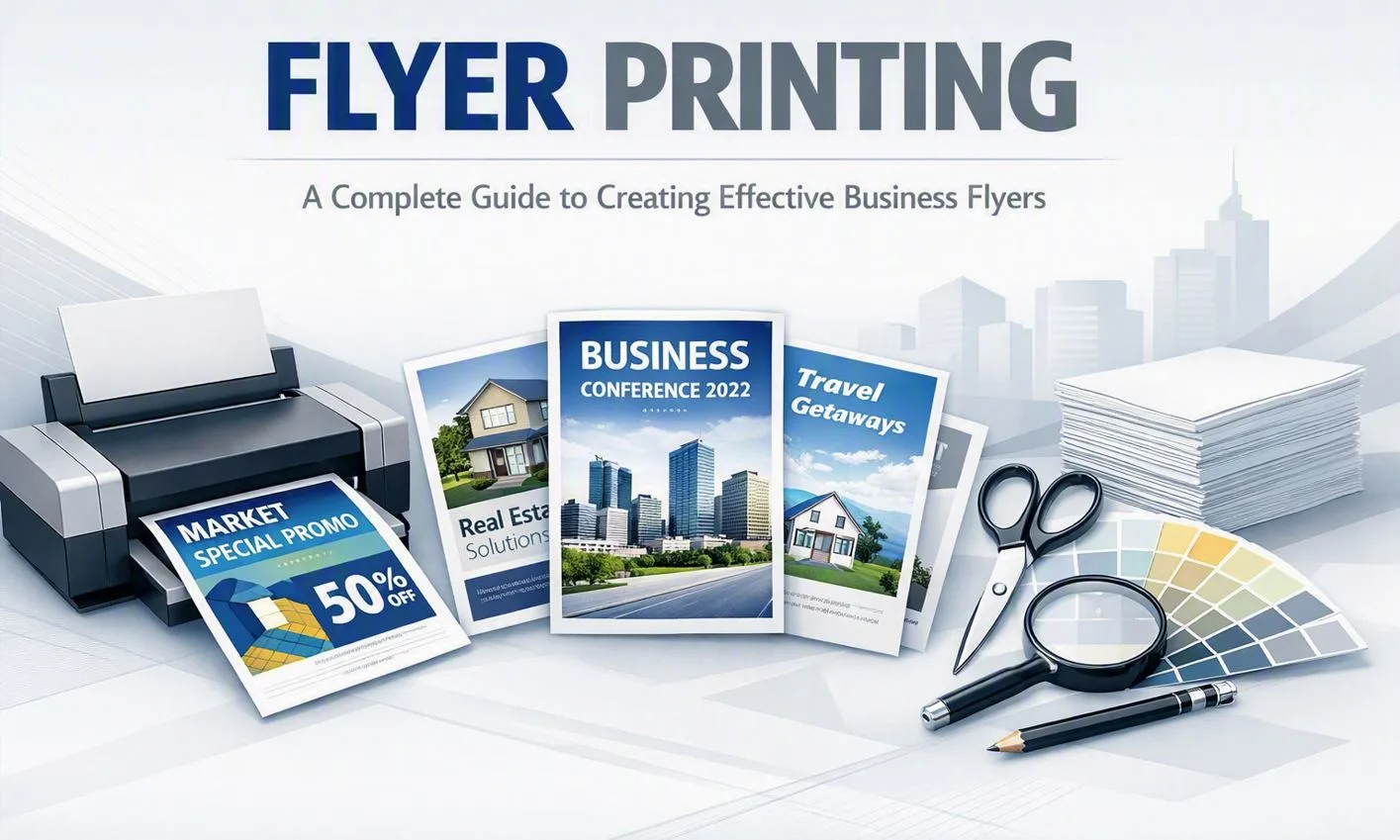
In a crowded marketplace, businesses need marketing materials that capture attention quickly and communicate information clearly. Flyer printing remains one of the most practical and affordable ways to promote products, services, events, sales, and special offers.
Unlike digital advertisements that can disappear with a swipe or click, a printed flyer gives customers something tangible they can read, keep, and share. When the design, paper quality, messaging, and distribution are carefully planned, flyers can become an effective part of a broader marketing strategy.
Whether you are a small local business, a nonprofit organization, a restaurant, a retailer, or a professional service provider, understanding the fundamentals of flyer printing can help you produce materials that look professional and deliver your message effectively.
Why Is Flyer Printing Still Effective?
Digital marketing has transformed the way businesses reach customers, but print marketing continues to provide valuable opportunities for local and targeted promotion.
Flyers can be handed directly to potential customers, distributed at community events, displayed in approved public locations, included in direct-mail campaigns, or placed inside customer orders. They can also support digital campaigns by directing readers to a website, social media profile, online promotion, or landing page through a QR code.
One of the biggest advantages of flyers is their flexibility. A business can produce a small quantity for a short-term promotion or order a larger run for a broader campaign. Flyers can also be customized for different audiences, locations, or offers.
What Should You Consider When Choosing Flyer Printing Services?
Choosing the right flyer printing services involves more than comparing prices. Businesses should consider the quality of printing, paper options, available sizes, finishing choices, turnaround times, and the printer's ability to produce consistent results.
Before placing an order, determine how the flyers will be used. A flyer intended for outdoor or frequent handling may require different specifications than one being distributed inside an office or included with a direct-mail piece.
It is also important to provide properly prepared artwork. Print-ready files should generally use the correct dimensions, sufficient image resolution, appropriate color settings, and proper bleed and margin requirements. These details help prevent problems such as cropped text, unwanted borders, or poor image quality.
A professional printing provider can review artwork specifications and help identify potential production issues before the job goes to press.
How Does Custom Flyer Printing Work?
Custom flyer printing gives businesses greater control over the appearance and functionality of their marketing materials. Instead of relying on a generic format, businesses can select the size, paper stock, printing method, layout, colors, images, and finishing options that fit their campaign.
The process typically begins with defining the purpose and target audience. From there, the content and design are developed around a clear marketing message.
For example, a restaurant promoting a weekend special may emphasize a large food image, promotional price, expiration date, and call to action. A contractor might focus on services, project photographs, contact information, and a request for a quote.
The goal is not simply to make the flyer attractive. Every design element should help the reader understand the offer and determine what action to take next.
Choosing the Right Flyer Size
Flyers are available in a variety of sizes, and the appropriate choice depends on the amount of information and how the flyer will be distributed.
Smaller formats are useful for simple promotions, coupons, event reminders, and handouts. Medium-sized flyers provide more room for images and supporting information, while larger formats can be useful when the flyer needs to showcase multiple services, photographs, or detailed information.
Standard sizes are often economical because they can be produced efficiently using common paper dimensions. Custom sizes are also possible when a campaign requires a distinctive presentation.
The important consideration is balance. A flyer should provide enough space for the message without making the reader feel overwhelmed.
Understanding Paper Stock and Finish
Paper selection can have a significant effect on how a flyer looks and feels.
Gloss paper has a smooth, reflective surface that can make photographs and colorful graphics appear vibrant. It can work particularly well for restaurants, retail promotions, entertainment events, and image-focused campaigns.
Matte paper has a softer, non-reflective surface that is easier to read under different lighting conditions. It can be a good choice for professional services, informational materials, and designs where readability is a priority.
Paper weight also matters. Lightweight stock may be suitable for large-volume handouts, while heavier stock can provide a more substantial and premium feel.
Businesses should choose paper based on the flyer’s purpose, audience, distribution method, and budget rather than automatically selecting the heaviest or most expensive option.
When Should You Choose Premium Flyers?
For campaigns where presentation is especially important, premium flyers can create a stronger first impression.
Higher-quality paper stocks, refined finishes, and professional color reproduction can give a flyer a more polished appearance. This can be particularly useful for real estate marketing, corporate promotions, professional services, luxury products, hospitality businesses, and special events.
However, premium printing does not automatically make a campaign successful. The design and message still need to be effective. A beautifully printed flyer with unclear information or a weak call to action may perform worse than a simpler flyer with a well-planned message.
The best results come from combining appropriate materials with purposeful design.
Is Cheap Flyer Printing Always the Best Choice?
Businesses searching for cheap flyer printing should consider overall value rather than focusing only on the lowest price.
Affordable printing can make sense when producing high quantities for events, community promotions, menus, sales announcements, or other campaigns where each flyer has a short promotional lifespan.
However, reducing the price too aggressively can sometimes affect paper quality, color consistency, finishing, or production options. Instead, businesses should look for cost-effective specifications that meet the campaign's needs.
Ordering larger quantities can often reduce the cost per piece. Standard sizes and commonly available paper stocks may also provide savings compared with highly customized specifications.
The right question is not simply, "What is the cheapest flyer?" but rather, "What combination of quality and quantity provides the best value for this campaign?"
How to Design a Flyer That Gets Attention
Effective flyer design starts with a clear hierarchy of information.
The headline should communicate the main message quickly. Important offers, dates, prices, or benefits should be easy to find. Supporting information can provide additional details without competing with the primary message.
Images should be high quality and relevant to the promotion. Low-resolution images can appear blurry when printed, which can make an otherwise professional flyer look unfinished.
Color should also be used strategically. Brand colors can help maintain consistency, while sufficient contrast between text and background improves readability.
Most importantly, avoid overcrowding the page. White space gives individual elements room to breathe and makes important information easier to find.
Why Print Quality Matters
Professional printing involves more than putting a digital design onto paper. Color management, paper characteristics, image resolution, finishing, and production equipment can all influence the final result.
Digital designs are commonly viewed using RGB color, while commercial printing typically uses CMYK-based processes. Colors can therefore appear somewhat different between a monitor and a printed piece. Proper file preparation and professional production help minimize unexpected results.
Businesses should also check important details such as phone numbers, website addresses, prices, dates, and promotional terms before approving the final artwork. A small mistake can require an entire print run to be corrected.
Proofing is an important step because it provides an opportunity to catch content and layout problems before production.
Printing Services Flyers for Different Industries
The versatility of printing services flyers makes them suitable for businesses and organizations across many industries.
Retail businesses can use flyers to announce sales, new products, seasonal promotions, and store events. Restaurants can promote special menus, discounts, catering services, or grand openings.
Real estate professionals can use flyers to showcase properties, open houses, and neighborhood information. Contractors and home-service companies can highlight their services, special offers, and contact information.
Schools, nonprofits, community organizations, and event planners can also use flyers to communicate schedules, announcements, fundraisers, and upcoming activities.
The key is to adapt the content and design to the intended audience rather than using the same flyer for every campaign.
How Business Leaflet Printing Supports Local Marketing
Business leaflet printing can be especially useful when a company needs to provide more information than a basic promotional flyer can accommodate.
Leaflets can introduce a business, explain multiple services, provide pricing information, highlight benefits, and include contact details in a compact printed format.
For local businesses, leaflets can be distributed in targeted areas or incorporated into direct-mail campaigns. They can also be handed to customers after an interaction, allowing them to take the information home and review it later.
When the leaflet includes a clear call to action, such as visiting a website, requesting a quote, calling the business, or scanning a QR code, it can connect offline marketing with digital engagement.
How to Make Your Flyer Campaign More Effective
A successful flyer campaign requires more than printing and distribution. Start by identifying a specific objective. Are you trying to generate store visits, promote an event, increase inquiries, introduce a service, or generate online traffic?
Once the objective is clear, create a focused message and call to action. Avoid trying to communicate every detail about the business on a single flyer.
Distribution should also be strategic. Consider where your target customers are most likely to see the material and choose locations or channels accordingly.
Finally, measure the results whenever possible. Unique discount codes, QR codes, dedicated landing pages, or campaign-specific offers can help determine how many responses came from the flyer.
Conclusion
Effective flyer printing combines thoughtful design, appropriate materials, professional production, and strategic distribution. From custom flyer printing and premium flyers to affordable high-volume campaigns, the right specifications depend on the purpose, audience, and budget of each project.
For businesses looking for professional printing solutions, All Seasons Printing can help bring marketing ideas to life with a range of printed materials designed for business promotion and local marketing. By choosing the right format, paper, design, and distribution strategy, businesses can turn flyers into a practical and measurable part of their overall marketing efforts.