Explosion Proof Flashlight for Saudi Automotive Plants: Safe Inspection Lighting in Paint Shops and Repair Areas
Walk through a paint booth mid-shift and you're standing inside an atmosphere that can behave exactly like a gas-hazardous zone, even though nobody on the production floor talks about it that way. Solvent vapours, adhesive fumes and fuel residues turn ordinary automotive manufacturing and repair spaces into classified areas more often than plant managers assume. If your inspection lighting hasn't been specified against that reality, you're carrying more risk onto the floor than your safety documentation probably reflects.

Where Flammable Atmospheres Form in Automotive Facilities
Paint vapours, solvents, fuels, adhesives and cleaning chemicals all contribute to hazardous conditions across automotive manufacturing and service environments. These aren't confined to one obvious location — they build up wherever these materials are applied, stored or evaporate into the surrounding air, often in spaces that look and feel like routine production areas.
Mapping the Risk Across Your Facility
Paint booths and spray rooms carry the most obvious exposure, with concentrated solvent vapour present throughout active spraying cycles. Body shops generate a mix of adhesive, sealant and cleaning-chemical fumes during panel work. Fuel-system areas introduce petrol vapour risk during service and testing. Maintenance bays and chemical stores accumulate residual vapours from stored materials, and even general production-line inspection zones near these processes can fall within a classified boundary depending on ventilation and layout.
Deciding Between Standard and Certified Lighting
Not every inspection task needs hazardous-area lighting, but the decision shouldn't be based on habit. If the task takes place inside or adjacent to a zone where vapour concentrations could reach an explosive range — even occasionally — a standard inspection light isn't an acceptable substitute. Where doubt exists, default to certified equipment rather than assuming a task is "probably fine" because it usually has been.
Specifying the Right Torch for Paint and Solvent Areas
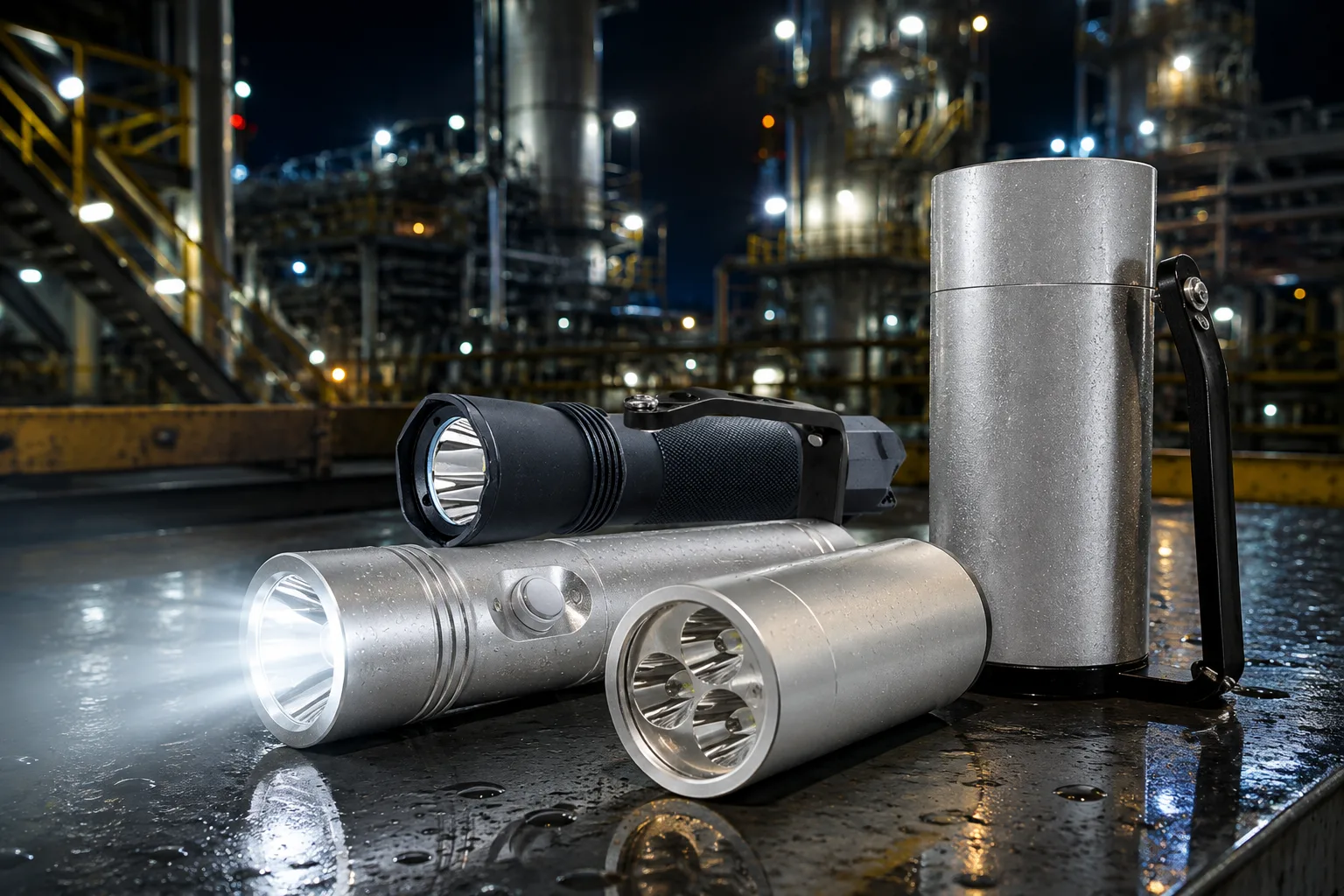
An explosion proof Handheld LED Torch used in these spaces needs the correct gas group, temperature class and zone certification matched to the specific vapours present — solvent-heavy paint shop atmospheres don't necessarily carry the same ignition characteristics as fuel vapour in a service bay, and certification should reflect that distinction rather than a one-size assumption.
Lighting Quality That Actually Catches Defects
Paint-surface inspection depends on more than raw brightness. Even beam uniformity avoids the hotspots and shadow gaps that hide orange peel, contamination or colour mismatch. Strong colour rendering lets inspectors judge finish quality accurately rather than working from a colour-shifted light source, and adjustable focus helps technicians move between close panel inspection and broader surface review without switching tools.
Housing Durability for a Demanding Workshop Environment
Automotive environments are hard on equipment in ways beyond hazardous-area exposure. Housings need to resist impact from daily handling, oils and solvents that degrade cheaper plastics over time, dust from sanding and bodywork, and general workshop chemical exposure that would otherwise shorten a unit's working life considerably.
Integrating Certified Lighting Into Safety Procedures
Automotive safety officers should build certified flashlights explicitly into lockout/tagout procedures, routine maintenance tasks, spill response protocols and emergency evacuation plans — not leave lighting as an unstated assumption within those procedures. A technician responding to a chemical spill needs to know exactly which light on the shelf is rated for that environment, without guessing under pressure.
Battery Safety and Preventing Accidental Activation
Charging stations should sit outside classified areas, storage should keep units away from solvent exposure between uses, and pre-use inspections should check for housing damage before every shift. A switch mechanism that prevents accidental activation inside a pocket or toolbox matters here specifically, since paint shop environments are exactly where an unintended spark risk shouldn't exist.
What Plant Managers Should Weigh in Procurement
Beyond certification, weigh ergonomics for extended handling, realistic runtime against shift length, how easily the housing cleans without damaging seals, replacement battery availability, spare parts lead times, and whether the supplier can produce full documentation on request rather than a generic datasheet.
General-Purpose Lamps Versus ATEX-Certified Equipment
A general-purpose inspection lamp might match or exceed a certified unit on brightness and price, but it offers no protection against ignition — the two aren't competing on the same criteria at all. An atex certified industrial flashlight Saudi plant managers specify carries a fundamentally different risk profile, and that difference is exactly what an incident investigation would examine first.

SharpEagle Explosion Proof Flashlight
Plant managers standardising lighting across paint, body shop and maintenance areas tend to land on the same shortlist, and SharpEagle Technology's range is built to match every item on it. Even beam output and strong colour rendering support accurate defect detection, while chemical-resistant housings shrug off the oils and solvents that degrade lesser equipment. It qualifies as an ATEX approved hazardous area flashlight Saudi facilities can deploy across paint booths and repair bays alike, built with the same certified reliability found in an intrinsically safe LED flashlight Saudi teams use in far higher-risk process environments, and supported by locally available spare parts and full documentation for audit purposes.
Conclusion
As Saudi automotive manufacturing and service operations continue to scale, the plants that treat paint shop and repair area lighting as safety-critical equipment — rather than a generic tool purchase — will stay ahead of both incidents and compliance findings. Map your facility's vapour risks properly and specify accordingly. To standardise certified lighting across your production, maintenance and warehouse teams, speak to SharpEagle Technology about your plant's requirements.