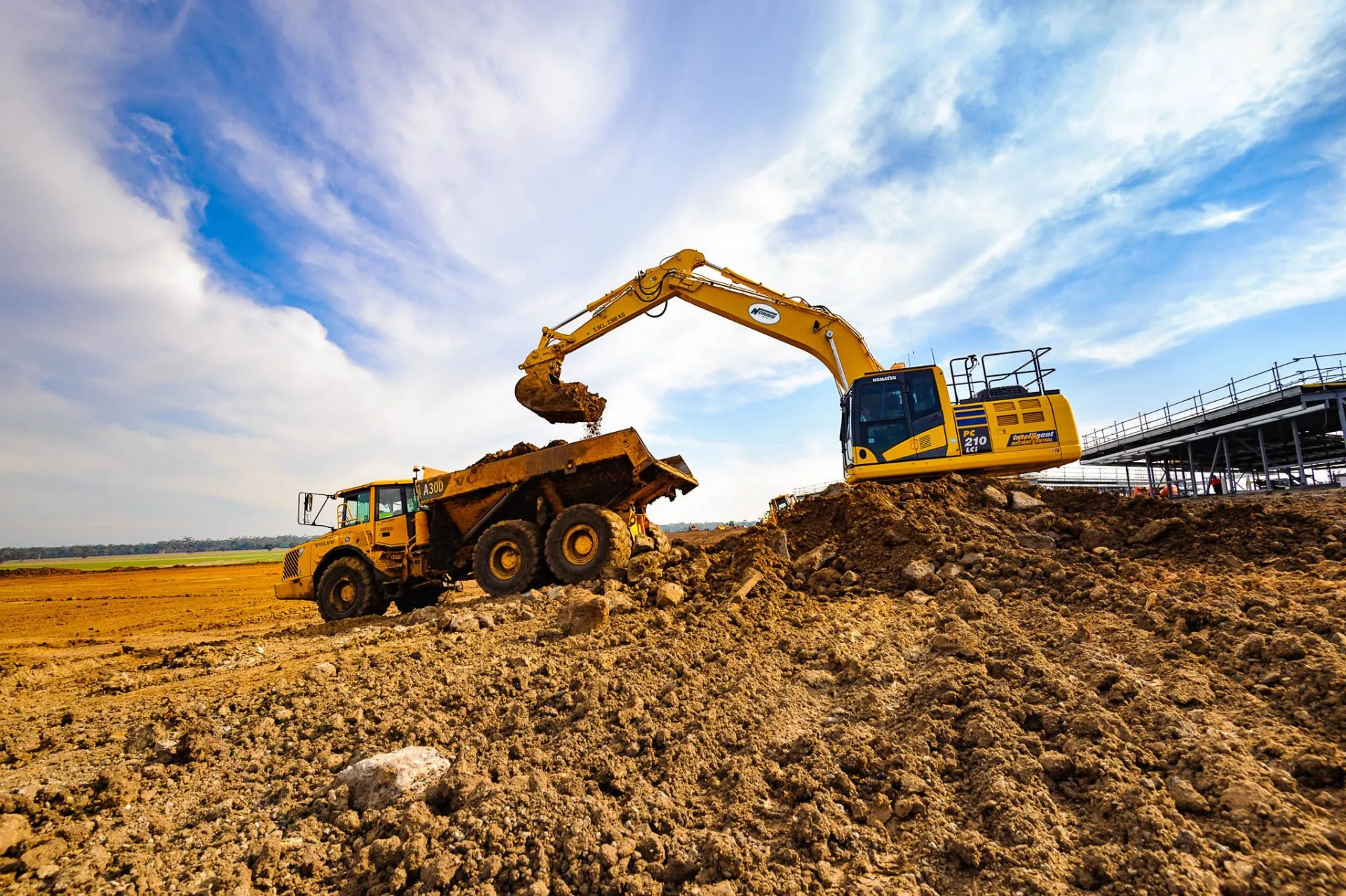
The overnight rain has stopped, but a narrow strip of water still crosses the driveway. Nearby, an owner wants to create space for a septic system, while another plans a pond behind an existing home. All three projects involve moving earth. They do not necessarily call for the same work.
Excavation or land grading is not simply a choice between heavy machines. Excavation removes or relocates soil to create a required space or depth; grading reshapes the ground surface to establish elevations, slopes, and drainage paths. Some properties need one service, while others need both in a planned sequence. The right decision begins with what must change beneath the surface and what the finished surface must do.
Key Takeaways
- Choose excavation when the project requires a hole, trench, cut, or substantial material removal.
- Choose grading when the priority is surface shape, finished elevation, or controlled runoff.
- Expect both services when a pond, septic project, road repair, or building site requires digging and surface reshaping.
- Confirm soil conditions, water movement, materials, and the intended finish before requesting site work.
What Does Excavation Actually Change?
Excavation creates space by digging through soil, rock, or existing material. The defining question is whether the project requires material to be removed from a specified area or depth.
For a new house, that might mean cutting into a hillside to form a foundation area, subject to an appropriate design. A septic project may require excavation for components shown on an approved plan. Pond construction involves creating a basin with the specified dimensions and elevations. Road repairs can require removing unsuitable material before rebuilding the base.
Excavation alone does not establish that the remaining soil is suitable for construction. Testing, engineering, replacement material, or compaction specifications may be necessary depending on the use.
When Is Land Grading the Main Need?
Land grading changes the contour of a surface. It may lower high spots, redistribute suitable soil, shape a driveway, or create a planned slope to move runoff toward an appropriate outlet. The goal is not automatically perfectly flat land. A level-looking yard that traps water against a building may be less functional than a carefully sloped one.
Rough grading establishes general elevations over a work area. Finish grading addresses the final surface profile required for the next use, such as paving, seeding, or another approved surface treatment.
Grading may include cuts and fills, so the boundary between the two services is not absolute. A project described as grading can still involve excavation, imported fill, compaction, or removal of unsuitable ground. Labels matter less than the actual scope.
Excavation vs. Land Grading: Which Does Your Property Need?
The most useful distinction is the result each operation is meant to produce.
- Create a pond
- Excavation role: Form the basin and required depths.
- Grading role: Shape banks and nearby runoff routes.
- Likely scope: Both.
- Prepare a septic installation
- Excavation role: Dig for approved system components.
- Grading role: Restore and shape disturbed ground.
- Likely scope: Often both.
- Address surface ponding
- Excavation role: Dig only if another element is needed.
- Grading role: Redirect water through designed slopes.
- Likely scope: Grading first to assess.
- Repair a failing road base
- Excavation role: Remove failed or unsuitable material.
- Grading role: Rebuild the specified profile and crossfall.
- Likely scope: Potentially both.
- Prepare a building location
- Excavation role: Cut or remove ground as designed.
- Grading role: Establish working and final elevations.
- Likely scope: Often both.
Can Land Grading Fix Drainage Problems Without Excavation?
Water is a major reason owners request grading, but not every drainage problem can be corrected by pushing soil downhill. A surface slope must lead to an acceptable discharge location without creating problems for adjacent property, roads, foundations, or sensitive areas.
A 2022 U.S. Geological Survey study of urban watersheds in Hampton Roads, Virginia, found that median direct-runoff ratios across monitored stations ranged from 10 to 72 percent of precipitation. They underscore that runoff depends on land cover, drainage infrastructure, slopes, and soil conditions.
An owner with water pooling in a low lawn may need a surface evaluation first. Water emerging from a slope, collecting near a foundation, or returning after previous grading deserves broader investigation. Excavating a ditch without establishing its outlet can move a problem rather than resolve it.
How Do Septic, Pond, and Road Projects Differ?
A septic project is directed by the approved system design and applicable review, not merely the easiest location to dig. Excavation may create the required space, while grading addresses finished elevations and the treatment of surrounding ground. Owners should confirm who is responsible for approvals, inspection coordination, and limits on vehicle traffic near sensitive system areas.
A pond calls for attention to basin geometry, suitable soil, water supply, overflow, erosion, and the destination of excavated material. Grading can shape banks and approaches, but a smooth bank cannot compensate for unsuitable pond conditions or an unreviewed outlet. Depending on location and design, specialist input and permits may be necessary.
For roads and driveways, symptoms guide the initial discussion. Ruts may suggest a surface-profile issue, but repeated sinking, soft spots, or material pumping can point toward problems below the surface. A surface-only grading pass may not address a failing base. The proposed repair should identify whether removal, replacement, drainage work, and final shaping are needed.
Use the Depth, Shape, and Water Test
Instead of asking which machine will arrive, the owner can describe the problem using three questions. Depth: must material be removed to a known elevation, trench, or cavity? Shape: must the surface be reprofiled for access, use, or a specified finish? Water: where will runoff or collected water go after the work?
These questions create a useful starting point for discussing excavation versus land grading. If depth is the main issue, excavation may lead. If surface shape is the issue, grading may lead. If both change, the work may need to be sequenced so the excavated area is not finished before another phase disturbs it.
Charles Eames said, “The details are not the details. They make the design.” In earthwork, seemingly minor details such as a discharge point, finished elevation, or material destination determine whether a proposal actually addresses the owner's goal.
What Should an Owner Confirm Before Work Starts?
A useful pre-work review should explain the existing condition and the desired finished condition without assuming every problem needs the same treatment. The owner can use these questions during a site discussion:
- What specific area must be dug, cut, filled, or reshaped?
- Which elevations, depths, slopes, or design documents control the work?
- Where will removed soil go, and what material will replace it if needed?
- What happens to runoff during construction and after the site is finished?
- Which utility checks, permissions, inspections, or specialist reviews are relevant?
- Is final grading, compaction, stabilization, and surface restoration included?
Written answers help define responsibilities. A site may need an investigation before anyone can specify final quantities or choose a method. That uncertainty should be identified rather than hidden behind a broad promise to level or dig the property.
A Roadside Problem That Needed More Than Grading
Imagine a hypothetical rural property where a delivery truck regularly leaves deep ruts near a culvert crossing. The owner initially asks for grading to smooth the driving surface. A closer review reveals that the ruts return because a wet section of the base lacks adequate support, while runoff is concentrating at the shoulder.
In this example, simply redistributing the top layer would address the appearance but not the underlying concern. The proposed scope could instead include investigating drainage, removing unsuitable material where necessary, rebuilding the affected base to an appropriate design, and grading the final road profile.
It illustrates why the visible symptom should not dictate the service name before ground conditions are understood.
Excavation and Land Grading Dos and Don'ts Before Work Begins
- Do – Define the Desired Outcome: Describe the intended result, whether it involves a usable road surface, approved septic area, pond basin, or drainage route. Ask the contractor to distinguish excavation from surface grading in the written scope.
- Don't – Assume One Service Solves Every Problem: Grading cannot necessarily correct unstable ground, and excavation alone does not guarantee a properly draining surface. Avoid choosing a service based solely on the equipment being used.
- Do – Confirm the Project Scope and Responsibilities: Review soil reuse or disposal, restoration boundaries, and responsibility for surveys, permits, utility notifications, and inspections. Establish how unexpected site conditions and additional work will be handled.
- Don't – Begin Work Without Proper Planning: Avoid redirecting water toward neighboring properties or starting major excavation based only on a rough sketch. Confirm relevant site restrictions, design requirements, and necessary approvals before work begins.
Owners who can describe both the underground work and final surface condition are better prepared for a meaningful project discussion.
Conclusion: Match the Work to What the Land Needs
Excavation changes the space beneath a site; grading controls the usable shape of its surface. For many projects, they are complementary operations rather than competing choices. The priority is to understand what must be removed, what must be formed, and how the property should function when the equipment leaves.
A sound plan also recognizes limits. Soil suitability, drainage outlets, underground infrastructure, and design approvals can affect whether one service is enough or a coordinated sequence is needed. Those questions deserve attention before the scope is finalized.
For property owners considering excavation for a pond, septic-related groundwork, or site preparation, J.C. Contracting & Excavating Inc. can be contacted to discuss the intended changes and whether the proposed work falls within its available services.
FAQ
1. Can Grading Fix Every Drainage Problem?No. Grading can change surface runoff paths, but subsurface water, inadequate outlets, or unsuitable soil may require additional assessment and other measures.
2. Does Pond Construction Need Both Services?Often. Excavation forms the basin, while grading may shape banks and surrounding surfaces. Soil suitability, overflow, and approvals still need separate consideration.
3. Which Costs More, Excavation or Grading?Neither is always more expensive. Depth, access, material disposal, imported fill, design requirements, and ground conditions influence the proposed work and its cost.
4. Can the Company Discuss Excavation for Septic Work?Property owners can describe approved system plans and site conditions when asking about available excavation support. Design, permitting, and installation responsibilities should be confirmed separately.
5. What Details Help With a Project Inquiry?Site photographs, a rough location plan, known water problems, intended elevations, and existing designs can frame an initial conversation. The scope may require further site evaluation.