Owning, handling, or even being around a firearm comes with real responsibility — and in many cases, real legal obligation. Whether you've been directed by a court, probation officer, or attorney to complete firearm safety training, or you're simply a first-time gun owner who wants to build good habits from day one, the Firearm Safety Course is designed to give you a complete, practical foundation in safe and lawful firearm ownership.
This guide breaks down everything the course covers, who it's designed for, how it fits into a broader course catalog, and what you should know before you enroll — so you can move forward with confidence, whether your reason for taking it is personal growth or a legal requirement.
Course Format and Logistics
The Firearm Safety Course is offered entirely online and is fully self-paced, meaning you can start, stop, and resume the material on your own schedule without attending in-person classes or coordinating around a fixed timetable. Course lengths range from 4 to 24 hours, and pricing runs from $25 to $125 depending on the duration you select — so it's worth checking your court order or probation paperwork closely to see if a specific number of hours is required before you choose a length.
Once you've completed all the lessons and any accompanying quizzes, you'll receive a downloadable Certificate of Completion. That certificate can be submitted to a court, probation officer, employer, or attorney as documented proof that the requirement has been fulfilled. Because the course is self-paced, most people are able to complete it in less time than the total hours listed, and the certificate becomes available as soon as all the material has been finished.
Course Category
Within the course provider's catalog, the Firearm Safety Course is listed under the Firearm and Weapon Safety section. This category also includes the related Weapon Safety Course, which broadens the scope beyond firearms to cover knives, non-lethal weapons, and general weapon-related legal topics. If you're specifically dealing with a firearm-related requirement — as opposed to weapons in general — the Firearm Safety Course is the more targeted and directly relevant option.
What the Course Covers
This course isn't just a formality designed to check a box — the curriculum combines legal knowledge with genuinely practical, real-world safety habits that are meant to stick with you well beyond course completion. Here's a closer look at each major topic area:
Basic Firearm Operation and Handling
The foundation of the course starts with the fundamentals: how to properly load, unload, and handle a firearm to avoid accidental discharge. This includes understanding how different types of firearms function, safe muzzle direction and trigger discipline, and habits that reduce risk every time a firearm is picked up or set down.
Safe Storage Practices
A large portion of firearm-related accidents happen not during use, but through improper storage. The course covers how to store firearms securely at home, how to transport them safely while traveling, and — critically — how to keep them inaccessible to children and unauthorized individuals. This section is particularly relevant for parents and guardians who keep firearms in a household with kids.
Federal and State Gun Laws
Firearm laws vary significantly depending on where you live, and this course provides an overview of licensing requirements, purchase regulations, and concealed carry rules. Because legal requirements are state-specific, the course content is tailored based on the state you select during enrollment, ensuring the legal information you're studying is actually relevant to your location.
Accident Prevention and Emergency Response
Beyond simply avoiding accidents, the course also covers what to do if something does go wrong — including how to respond to a misfire or other firearm-related emergency. This section is designed to build confidence and preparedness, not just caution.
Shooting Fundamentals
For those who will be actively using a firearm, the course touches on shooting fundamentals such as recoil management and situational awareness. These skills contribute to more controlled, accurate, and safer use in practical settings, whether at a range or in the field.
Self-Defense Strategies
Firearms are often kept specifically for personal protection, and the course addresses the ethical and legal considerations that come with that choice. This includes understanding when the use of a firearm for self-defense is legally justified and the responsibilities that come with making that decision.
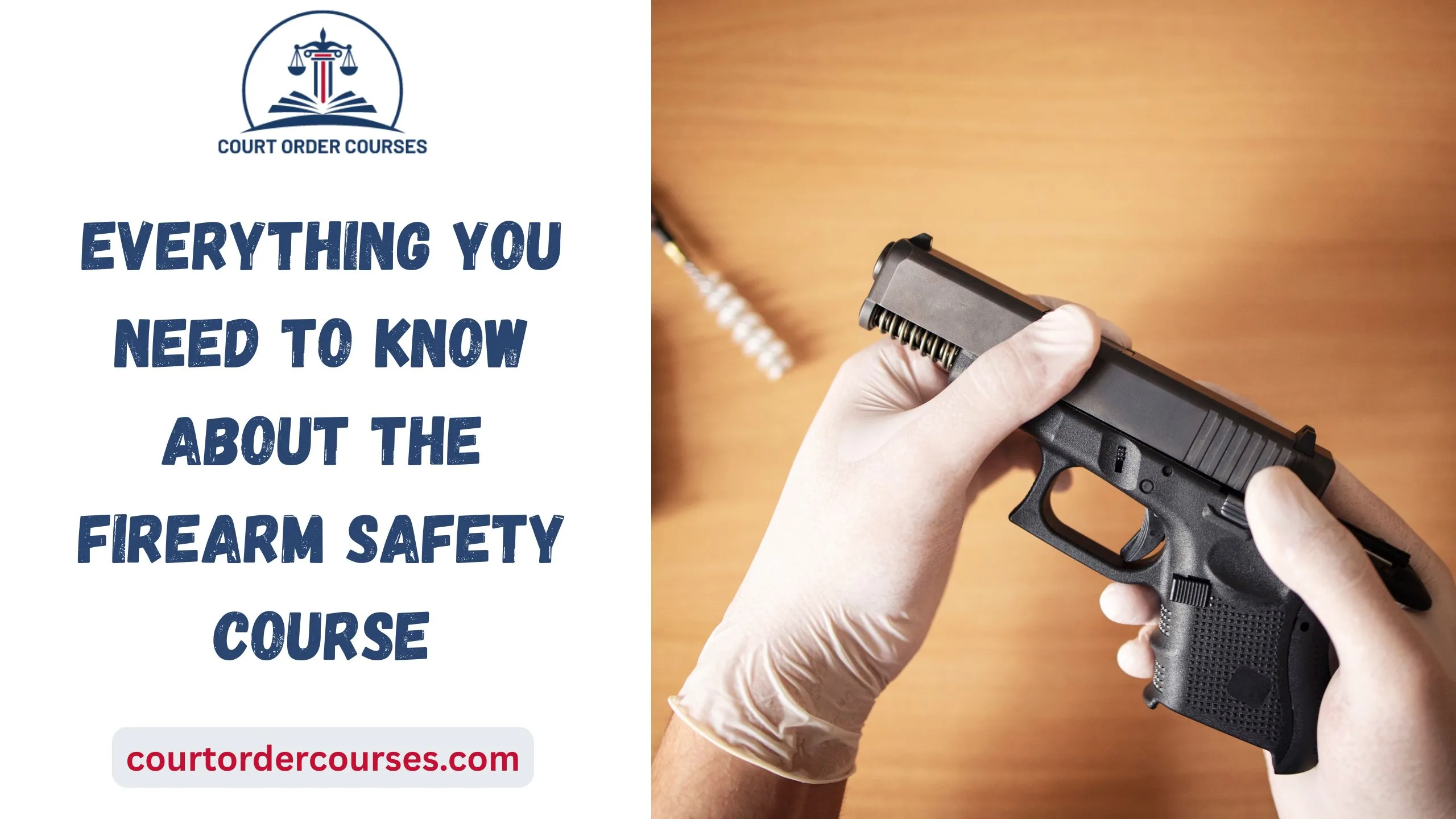
Firearm Cleaning and Maintenance
Finally, the course covers routine firearm maintenance — cleaning, inspection, and upkeep practices that keep a firearm functioning safely and reliably over time. Poorly maintained firearms are more prone to malfunction, which makes this a practical safety topic as much as a technical one.
Who Typically Needs This Course
The Firearm Safety Course is relevant to a wide range of people, not just those fulfilling a legal requirement:
- First-time gun owners who want a solid, structured foundation before handling or storing a firearm for the first time
- Security professionals and law enforcement personnel who need to complete continuing education or refresher training as part of their job requirements
- Hunters who need to meet state-specific safety regulations before hunting season or as part of a hunting license requirement
- Individuals ordered by a court to complete firearm safety training, often following an incident, citation, or legal proceeding involving a firearm
Even outside of a legal or professional obligation, plenty of people take this course simply because they've recently purchased a firearm and want to make sure they understand safe handling and storage before using it.
Other Names This Requirement May Appear Under
One of the more confusing parts of fulfilling a court-ordered or legally mandated course is that the same requirement is often described using different terminology depending on the court, county, or agency involved. If your court order, probation terms, or attorney's instructions reference any of the following, they very likely refer to this same course:
- Firearm Safety Class Online
- Firearm Training Course
- Gun Safety Course
- Handgun Safety Course
- Weapon Safety Class
- Court-Ordered Firearm Class
If you're ever unsure whether a specific course name matches what your paperwork requires, it's worth reaching out to the issuing court or your attorney directly for clarification before enrolling and paying for a course.
Important Notes Before You Enroll
Before signing up for the Firearm Safety Course, keep the following points in mind:
- The certificate is for educational and court-ordered purposes only. It is not valid for purchasing a firearm, and it does not serve as a substitute for obtaining a concealed carry permit or any other firearm-related license.
- Confirm acceptance with your court or attorney first. Because requirements can vary significantly by state, county, and even by individual judge, it's important to verify that an online, self-paced course will satisfy your specific order before you enroll.
- Select your state during enrollment. Since firearm laws differ from state to state, the course content is tailored to reflect the legal information relevant to where you live.
- Match the required course length. If your court order or probation terms specify a particular number of hours, be sure to select that exact duration when signing up, rather than defaulting to the shortest or most affordable option.
- Save your certificate immediately after completion. Once you finish all lessons and any required quizzes, download your Certificate of Completion right away so it's ready to submit to the court, probation officer, or agency requesting proof.
Frequently Asked Questions
Do I have to spend the full number of hours listed on the certificate? No. Most learners complete the material in less time than the total course length listed. Once all lessons and any quizzes are finished, the certificate becomes available for download.
Can I start the course immediately after enrolling? Yes. The course is available instantly after registration, so there's no waiting period before you can begin.
Will my court definitely accept this certificate? The course is designed to meet common court and legal requirements, but acceptance ultimately depends on your specific jurisdiction. It's best to confirm with your court, probation officer, or attorney before enrolling, especially if your order names a particular program or accreditation.
What if my court doesn't accept the course I completed? Refunds are available in certain circumstances. Review the provider's refund policy and reach out to support with documentation if your court declines to accept a completed course.
Is this course only for people with a legal requirement? Not at all. Many people take the course voluntarily as first-time gun owners or as a refresher, independent of any court order or legal obligation.
Final Thoughts
Whether you're fulfilling a court order or simply want to become a safer, more informed firearm owner, the Firearm Safety Course covers the essential knowledge needed to handle, store, and use a firearm responsibly. From basic operation and safe storage to legal considerations and emergency response, the course is built to give you information you can genuinely use — while providing a clear, downloadable certificate to show proof of completion whenever it's needed.