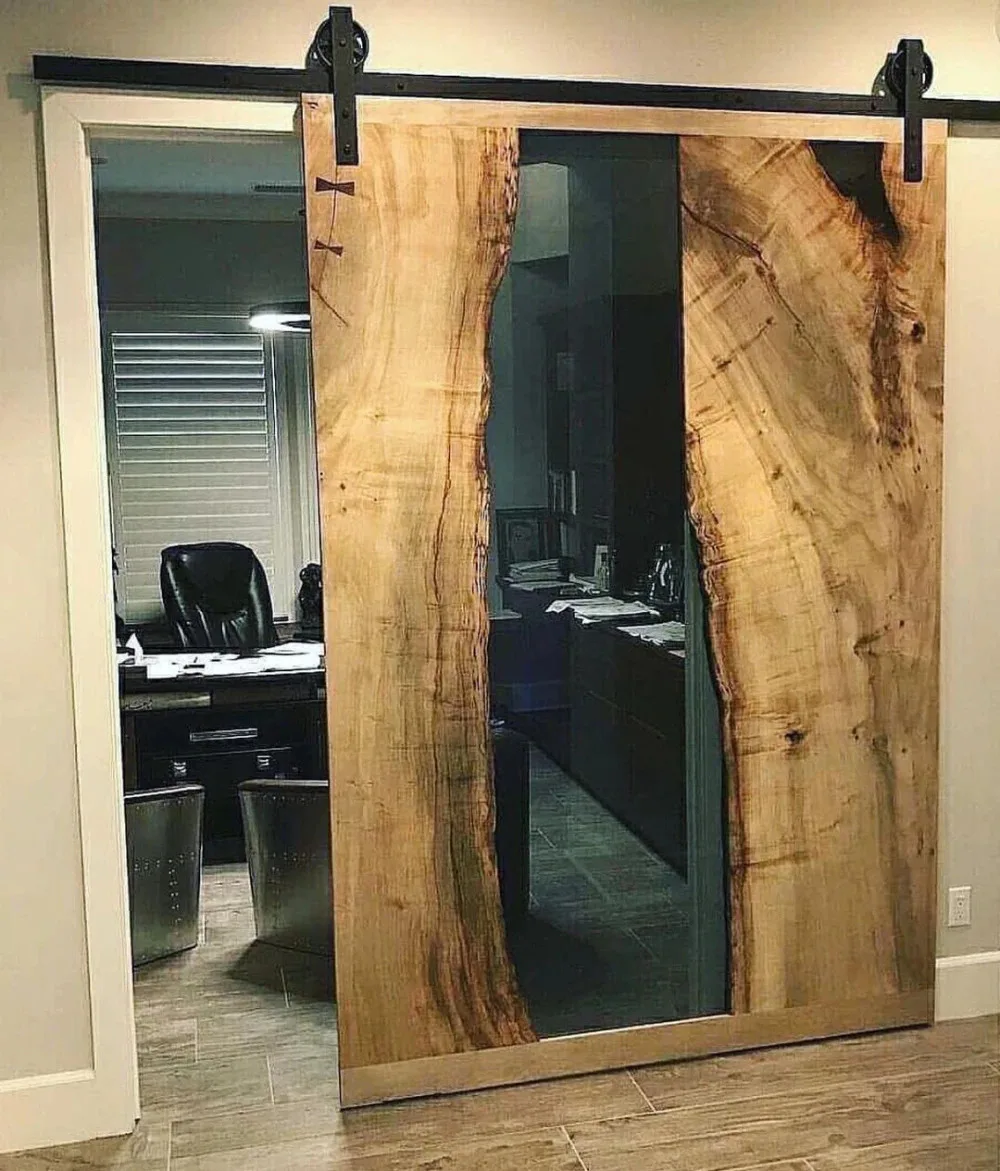
Buying an epoxy resin door is different from picking a standard door off a shelf. It is a handcrafted piece, often made to order, and the choices you make early on shape how it looks, how long it lasts, and how happy you are with it years later.
This guide walks through the 15 most important questions to ask before you order, with plain answers to help you decide with confidence. It works whether you are furnishing a home, designing a hotel, or sourcing doors for a project.
1. What Exactly Is an Epoxy Resin Door?
It is a solid wood door in which carved channels, natural cracks, or gaps are filled with colored or clear epoxy. Once cured, the resin forms a hard, glossy, glass-like surface. The best-known style is the epoxy river resin door, where a winding channel of resin separates two timber sections like a stream through a forest.
2. Is It Made from Solid Wood?
This is the most important question to ask. A solid wood epoxy resin door uses real hardwood throughout, which keeps it stable, strong, and refinishable. Some cheaper products use veneers, MDF, or engineered cores under a resin finish. These can warp, swell, or peel over time, and cannot easily be repaired.
Ask for the wood species, and confirm that the core is solid timber.
3. Which Wood Should I Choose?
- Teak: golden tones, naturally moisture-resistant, ideal for entrances
- Sheesham: rich, varied grain with deep brown tones
- Walnut: dark and luxurious, makes bright resin glow
- Acacia and mango: lighter, playful grain for casual or coastal looks
Choose the wood first, since it sets the mood and affects how the resin appears.
4. What Resin Colors Are Available?
Most makers can tint resin to almost any shade. Popular options include ocean blue, teal, emerald green, black, smoky grey, clear, white, pearl, and metallic gold or copper. If your interior has a set color palette, ask for a sample or reference image before the pour, since resin is difficult to change once cured.
5. Which Design Style Suits My Space?
- Full river: a channel running top to bottom, with the strongest visual impact
- Partial panel: a resin section across part of the door for a subtler effect
- Geometric channel: sharper lines for modern interiors
- Live-edge detail: natural slab edges beside the resin for a rustic feel
A river resin wooden door in a full-river style is the most popular, but partial designs can be a smart choice for bedrooms and studies.
6. Do I Need a Single or Double Door?
Single doors suit standard openings. For wide foyers, villas, banquet halls, and hotel lobbies, a modern epoxy resin double door lets one river flow across both leaves, creating a seamless pattern when closed. Double doors need precise alignment at the center joint and a strong frame, so plan this early.
7. Will It Work Outdoors?
It can, with the right specification. Exterior doors need moisture-resistant timber, UV-stabilized epoxy, sealed edges, and a protective topcoat. Placement under a porch or canopy extends life considerably. For interior use, the requirements are more relaxed. Always tell your maker where the door will be installed.
8. How Heavy Is It?
Heavier than a standard door. Solid hardwood plus resin adds real weight, especially for oversized and double doors. Plan for:
- A strong, correctly sized frame
- Heavy-duty hinges, at least three for a standard leaf
- Hardware suited to the door’s thickness and weight
- A professional installer familiar with solid wood doors
9. How Long Does It Take to Make?
Custom work takes several weeks, mainly because epoxy needs proper curing time between pours and before sanding. Deeper channels are poured in layers, which adds days. Rushed curing causes problems such as soft surfaces, cloudiness, and internal stress, so be wary of unrealistically short timelines.
10. How Do I Judge Quality?
What to checkWhat good looks likeResin clarityEven and clear, with no cloudy patches or bubblesWood-resin edgeTight and flush, no gaps or liftingFlatnessNo twist or warpSurface finishSmooth, consistent glossHardware fittingAligned, secure, and reinforcedAsk for photos of completed doors, and look at them in person where possible.
11. How Do I Choose a Manufacturer?
Look for a maker who is open about materials and process. A good epoxy resin door manufacturer will tell you:
- Which wood species they use and how it is seasoned
- What type of epoxy they use and whether it is UV-stabilized
- How many pour layers they apply for deep channels
- How long production and curing take
- What warranty and after-sales support is included
A manufacturer who answers these questions clearly is usually one who takes quality seriously.
12. What If I Need Multiple Doors?
For hotels, apartment developments, restaurants, or retail chains, consistency becomes important. A dependable epoxy resin door supplier can deliver matching color and finish across a batch, handle custom sizes, and plan packing and delivery for large orders. Approve a sample first, then confirm that production units will match it.
13. What Will It Cost?
Price depends on several factors:
- Wood species: teak and walnut cost more than sheesham or mango
- Size and thickness: double doors and oversized pivots need more material and labor
- Resin complexity: wide, deep, or multi-color pours take more time
- Customization: bespoke designs cost more than standard patterns
- Hardware and finishing: premium fittings raise the total
Request quotes for two or three design options so you can compare value rather than just price. Remember that the door often replaces both a standard door and a decorative feature.
14. How Do I Care for It?
Care is simple:
- Wipe with a soft, damp microfiber cloth and mild soap
- Avoid ammonia, bleach, and abrasive pads
- Limit long exposure to harsh direct sunlight
- Polish the wooden areas once or twice a year
- Buff light scratches early with a resin-safe polish
Exterior doors benefit from periodic inspection of edges and coatings.
15. Can I Match It with Other Furniture?
Yes, and this is one of the nicest advantages. Wood and resin can be coordinated with river dining tables, console tables, and wall panels for a consistent look. Many designers use the same timber and resin color across several pieces to tie a whole room together. A solid wood river epoxy door paired with a matching table makes a strong design statement.
Common Mistakes to Avoid
- Choosing on looks alone. A beautiful surface means little if the core is weak.
- Skipping the sample. Colors can differ from screens and photos.
- Ignoring weight. Heavy doors need proper frames and hinges.
- Overlooking placement. Strong sun and rain demand a tougher specification.
- Rushing the timeline. Resin work needs time to cure properly.
- Forgetting the hardware. Handles, locks, and hinges affect both looks and function.
Quick Pre-Order Checklist
- Solid wood core confirmed
- Wood species and resin color chosen
- Design style and size approved
- UV-stabilized epoxy confirmed, especially for entrances
- Frame and hardware planned for the door’s weight
- Production and delivery timeline agreed
- Warranty and after-sales support understood
Final Thoughts
A good epoxy resin door is a long-term investment in craftsmanship. If you start with solid timber, choose colors that suit your space, and work with a maker who is open about their process, the result will be a door that looks remarkable and lasts. To explore designs, woods, and finishes, browse the collection of handcrafted epoxy resin doors and take the first step toward an entrance that is truly your own.