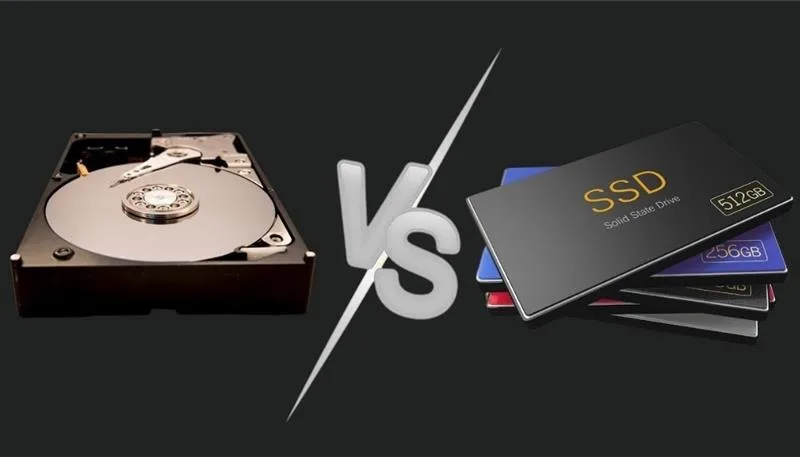
As businesses continue to generate larger amounts of data and adopt increasingly demanding applications, storage decisions have become more important than ever. Enterprise environments require solutions that not only meet immediate performance needs but also provide long-term value. While both enterprise Solid-State Drives (SSDs) and Hard Disk Drives (HDDs) remain widely used, determining which option offers the greatest return over time depends on several factors.
Although cost is often the first consideration, businesses should also evaluate performance, reliability, scalability, and total cost of ownership before making a decision.
Understanding Enterprise SSDs and HDDs
Enterprise HDDs use spinning magnetic disks to store and retrieve data. They have long been a popular option because they provide large storage capacities at a lower cost.
Enterprise SSDs use flash memory and do not rely on moving mechanical components. This allows them to access and process data much faster while delivering improved efficiency and durability.
Both technologies continue to play important roles in business environments, but their strengths vary depending on workload requirements and long-term objectives.
Performance Over Time
Performance is one of the biggest differences between SSDs and HDDs.
Enterprise SSDs offer significantly faster read and write speeds, lower latency, and improved responsiveness. This can directly affect system performance for workloads involving databases, analytics platforms, virtualization environments, and high-traffic applications.
Faster storage often leads to:
- Reduced application loading times
- Faster data processing
- Improved workflow efficiency
- Better user experiences
- Reduced operational bottlenecks
Enterprise HDDs, while slower, remain suitable for workloads that prioritize capacity over speed.
Businesses working with performance-intensive systems often find that the productivity gains from SSD technology create substantial long-term value.
Providers such as StateDrives help organizations identify storage solutions that align with operational requirements and performance expectations.
Initial Cost vs Total Cost of Ownership
At first glance, enterprise HDDs typically appear more affordable because they offer lower cost per gigabyte.
For businesses storing large volumes of data, this can be attractive from an initial budget perspective. However, focusing only on purchase price can overlook long-term operational costs.
Enterprise SSDs often provide value through:
- Lower power consumption
- Reduced cooling requirements
- Faster operational efficiency
- Less maintenance needs
- Improved employee productivity
Over time, these advantages can offset the higher initial investment associated with SSD technology.
Evaluating the total cost of ownership provides a more accurate picture of long-term value.
Reliability and Durability
System reliability directly affects business continuity and productivity.
Because enterprise SSDs do not contain moving parts, they are generally more resistant to physical wear and mechanical failure. This often results in greater durability and reduced downtime risks.
Enterprise HDDs remain dependable but contain mechanical components that naturally experience wear over extended periods of operation.
For businesses running critical systems around the clock, minimizing unexpected failures can become a significant advantage.
StateDrives supports businesses with enterprise-grade storage solutions designed to deliver reliability and long-term operational stability.
Scalability for Future Growth
As organizations grow, storage requirements increase. Businesses need infrastructure capable of supporting future expansion without creating costly limitations.
Enterprise SSDs continue to evolve rapidly, offering increased capacities and stronger performance capabilities. They support modern workloads that require speed and scalability.
Enterprise HDDs still provide valuable large-capacity storage for archival data, backups, and less performance-sensitive environments.
Many organizations adopt hybrid strategies that combine both technologies to maximize efficiency.
Choosing the Right Option for Your Business
The best choice often depends on workload requirements.
Enterprise SSDs are ideal for:
- Virtual environments
- Databases
- Cloud applications
- Real-time analytics
- High-performance workloads
Enterprise HDDs are ideal for:
- Backup systems
- Long-term archival storage
- Large data repositories
- Cost-sensitive storage environments
A balanced approach frequently allows businesses to optimize both performance and cost.
Conclusion
When evaluating long-term value, the decision between enterprise SSDs and HDDs extends beyond initial purchase price. While HDDs continue to provide affordable high-capacity storage, enterprise SSDs offer performance, efficiency, and reliability advantages that can generate stronger long-term returns.
By understanding operational requirements and growth plans, businesses can implement storage strategies that support both immediate needs and future expansion. With solutions from trusted providers like StateDrives, organizations can build scalable storage environments designed for long-term success.