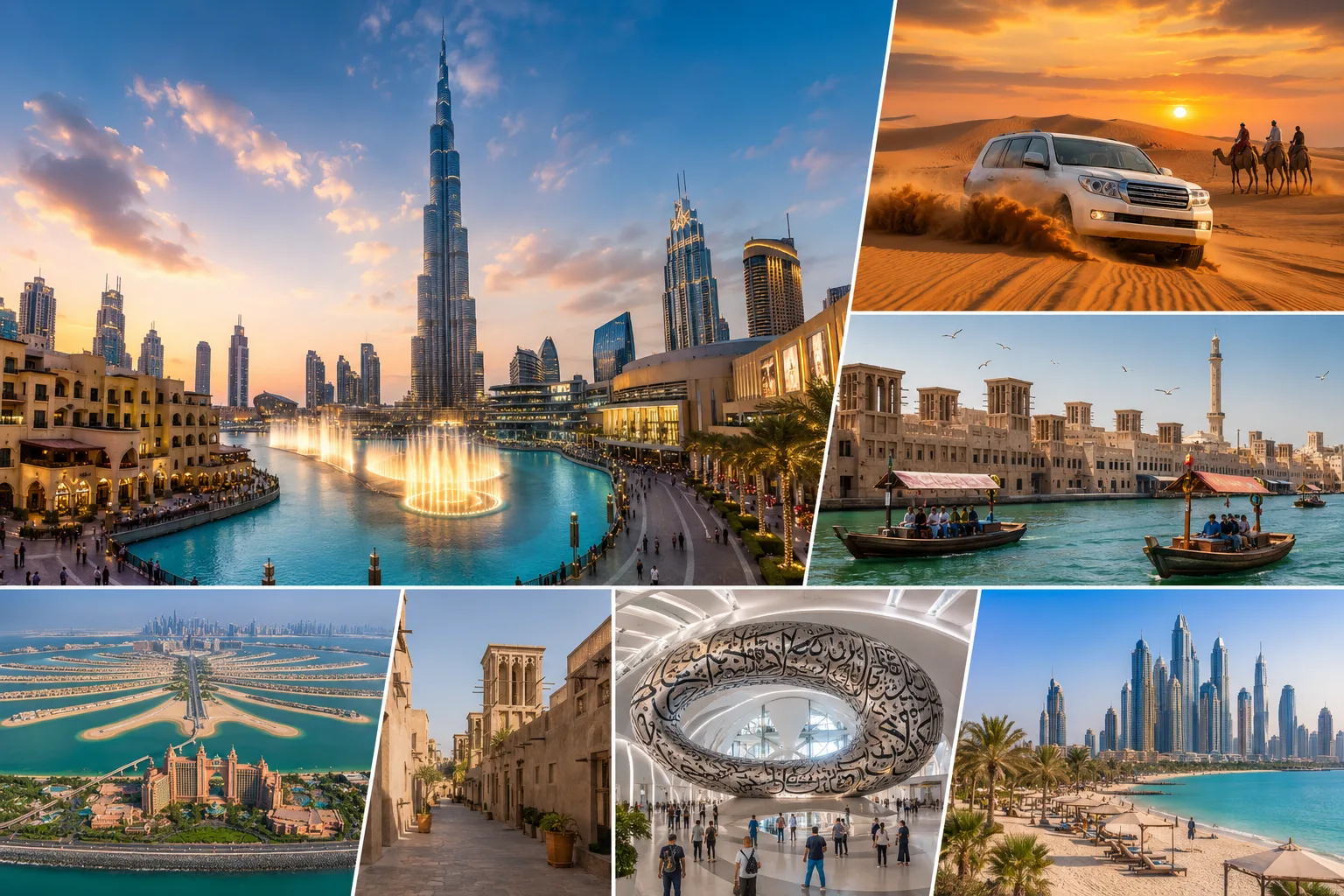
After 20 years of realising its dreams on the infrastructural skyline, Dubai in 2026 is more refined, more well connected and more welcoming to travellers than ever before. From soaring heights of skyscrapers to tranquil stretches of golden sand and from diverse ethnic cuisines to an authentic global food market, Dubai has so many experiences in such a small space. Regardless of where in the world you are coming from, this guide will lead you through the major attractions in the city, provide some planning advice and offer you an example of how you can plan your trip around the city.
Why Dubai Belongs on Your 2026 Travel List
The charm of Dubai is derived from its contrasts. In just one day, you can experience the world's highest building, explore Dubai Creek for centuries old souks, and be awe-struck by the sunset over rolling desert dunes. This diversity is easily accessible in the city – a modern metro system, inexpensive taxis, and marbed highways link all the major districts. English is widely spoken, the city is regarded as one of the safest cities for tourists and its local currency, UAE Dirham (AED), is stable and readily accepted. Dubai's tourism authority has also been furiously upgrading visa-on-arrival facilities for dozens of countries, and airlines have been making direct flights from Dubai International Airport (DXB) and Al Maktoum International Airport to almost every continent, making it one of the most easy-to-reach long-haul destinations in the world.
Top Attractions in Dubai
Burj Khalifa and Downtown Dubai
Visiting Dubai wouldn't be complete without climbing the world's tallest tower, the Burj Khalifa, which stands at more than 828 meters. The elevated observatories on floors 124, 125 and 148 have citywide views, with on-clear-days vistas out to the Gulf. Book your tickets ahead of time and particularly for sunset hours, as these tend to sell out quickly. The Dubai Mall, Dubai Fountain shows and a wide array of restaurants and cafes with views of the skyline are located in the heart of Dubai around the tower.
Desert Adventures: Safaris and Dunes
After all, a Dubai Desert Safari is one of the most popular tourist attractions here, and that's for a good reason. Most tours begin in the late afternoon, bringing guests to the Al Marmoom or Lahbab desert conservation areas to have a dune bashing, camel riding, sandboarding and overnight camp featuring a barbecue dinner and entertainment. A Dubai Jeep Safari changes up the concept of sharing a jeep to offer travelers a more personalized 4x4 experience for a more adrenaline-filled experience, allowing them greater control over their own pace and photo stops as they travel through the dunes. Generally these are half day or evening adventures and easily made available by the concierge at the hotel as well as from a good local tour operator. Sunrise desert tours and hot air balloon rides are also a great way to experience the desert in a more relaxed atmosphere, at cooler temperatures and with less crowds, than the evening safari.
Old Dubai and the Creek
To discover the city's history, visit Al Fahidi Historical Neighbourhood and Dubai Creek. On one side of the creek, there is a souk for gold and spices while on the other side is a promenade along the water. Wooden abras (water taxis) still cross the creek for a few dirhams to connect the Gold Souk and Spice Souk to the Al Seef waterfront promenade. Before you head out to explore the rest of Dubai, don't forget to learn some history at the Dubai Museum in the Al Fahidi Fort.
Palm Jumeirah and the Coastline
Palm Jumeirah is an architectural landmark in itself and features luxury resorts, The Pointe waterfront dining district and one of the largest fountains in the world, Palm Fountain. For those who wish to enjoy the sun and sea without the resort day pass, nearby are the public beaches at both La Mer and Jumeirah Beach, where visitors can enjoy water sports and beachfront cafes
Museums, Culture, and New Landmarks
The Museum of the Future and the Etihad Museum are both great indoor experiences to escape the heat of the day, combining Emirati history, design and technology. Alserkal Avenue in Al Quoz has emerged as the new hub for contemporary art in the city and the rotating exhibitions in the galleries are well worth an afternoon.
Practical Travel Tips
- Best time to visit: November to March with temperatures between 20-30°C (68-86°F) are the most comfortable times to visit. The summer months (June - September) are very hot and offer reduced hotel prices and reduced crowd.
- Getting around: Dubai Metro is clean, cheap and has a wide coverage of the tourist attractions. A Nol card is valid throughout metro, buses and trams. There are lots of taxis and ride-hailing alternatives available, and they're relatively affordable.
- Dress code: Dubai is a relatively relaxed place for a Gulf city, but small, modest clothes are welcomed in malls, markets and religious institutions. Swimwear is permissible at beaches and pools, but must otherwise be covered.
- Currency and Costs: UAE Dirham (AED) is fixed to the USD dollars. There's plenty to do in Dubai for every kind of budget, from street food to public beaches, to 5-star resorts and fine dining.
- Public holidays and Ramadan: In the event of a public holiday and/or Ramadan, avoid eating or drinking in public during the day-time hours and some attraction hours may be adjusted.
- When booking desert tours, consider hiring a well-reviewed and licensed operator, ensure they have good reviews, book ahead for meals and pick up dates and check on the type of tour that's best for your group size and budget, such as a Dubai Jeep Safari or a standard shared Dubai Desert Safari.
Working With a Local Destination Management Company
For those who are traveling with groups, corporate incentives, weddings, or more than a day or two in Dubai, it is better to deal with an operator of a Destination Management Company Dubai. The local DMC can arrange private transfers, arrange venues, arrange the guides, arrange permits to stay in the desert, arrange desert activities, yacht charters and more, and can make it according to the budget, group size and culture needs. Whether you're traveling across the emirates or have a complicated itinerary that requires assistance on the ground, this local knowledge can make the difference between a stress-free trip and one riddled with hassles
A Sample 5-Day Dubai Itinerary
Day 1: Arrival and Downtown
Check in into your hotel and visit Downtown Dubai in the late afternoon. If not already done, view the Dubai Fountain show, visit Dubai Mall and book a sunset slot at the Burj Khalifa.
Day 2: Old Dubai and the Creek
In the morning visit Al Fahidi and the souks, cross the creek by abra and visit the Dubai Museum. Al Seef is a wonderful place to dine in the waterfront area in the evening.
Day 3: Desert Day
Set aside the afternoon and evening for a trip to the desert, either a Dubai Desert Safari – which includes a memorable dinner under the stars or a Dubai Jeep Safari – for those who want to get even more active.
Day 4: Beach and Palm Jumeirah
Spend the morning soaking up the sun at Jumeirah Beach or La Mer and the evening enjoying the exploration of Palm Jumeirah, The Pointe and the Palm Fountain.
Day 5: Culture and Departure
Before heading to places where you'll be shopping for the last time or dining as you leave, visit the Museum of the Future or Alserkal Avenue; then head to the airport for a final goodbye.
Final Thoughts
Even in 2026, Dubai will continue to pay off visitors who balance its big-name events with some lesser-known local entertainments. There is so much to offer here, be it the skyline, the desert, coast of the sea or the old city that can satisfy both the first time and repeat travelers. Dubai is still one of the best places to include in a travel 2026 itinerary, if you plan somewhat and have the right kind of support from locals that is, if you are travelling with more than just a solo city break.