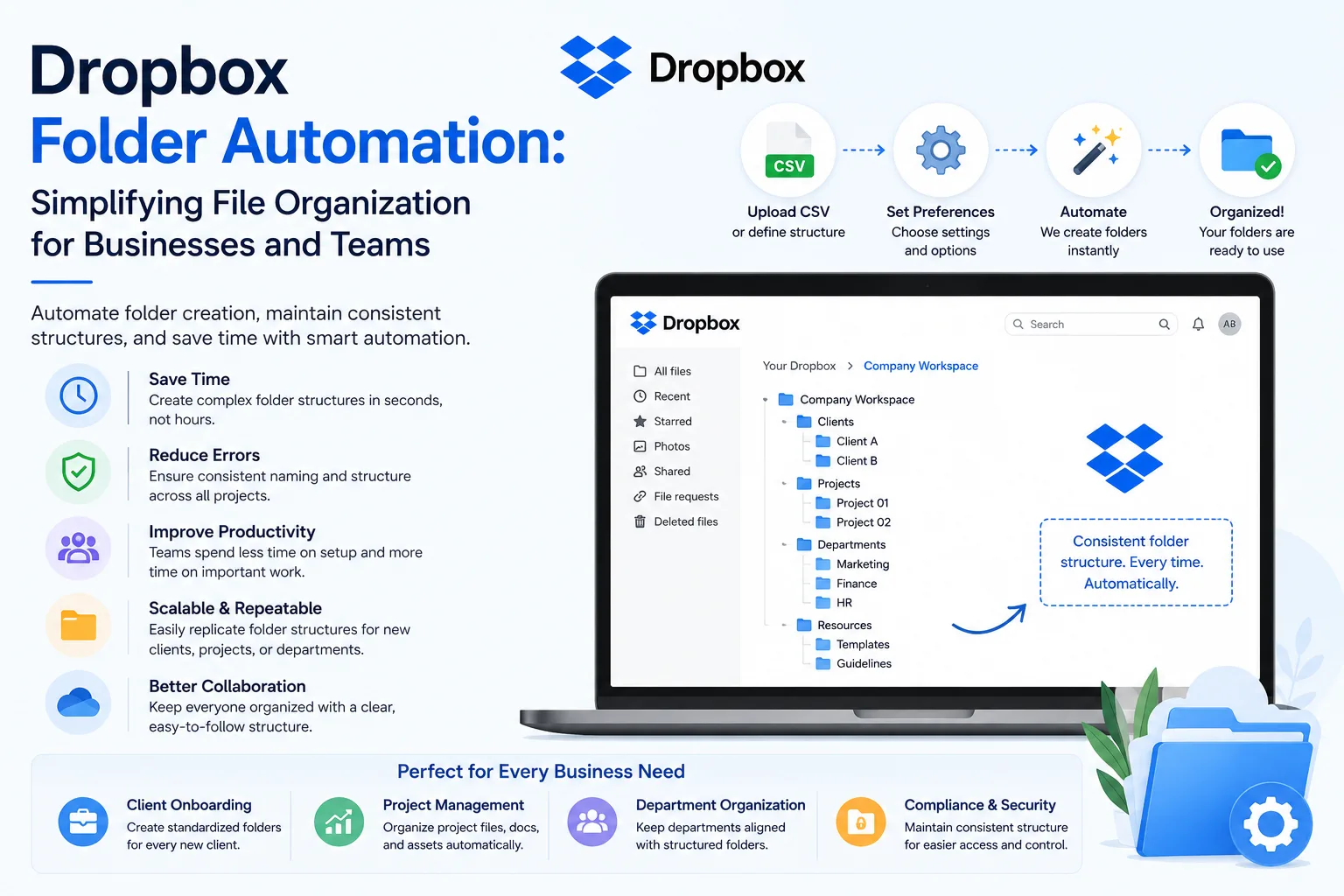
Cloud storage has transformed the way businesses manage their digital information. Platforms like Dropbox allow teams to store, share, and access files from anywhere, making collaboration easier than ever before.
However, as businesses grow and the number of files increases, maintaining an organized Dropbox workspace can become challenging. Creating folders manually, managing repeated structures, and keeping files organized across multiple projects can consume valuable time.
Automation provides a smarter way to manage digital organization by reducing repetitive tasks and creating consistent folder systems.
Why Dropbox Organization Matters
A well-organized cloud storage system helps businesses improve productivity and collaboration. When files are arranged properly, employees can quickly locate documents, share information efficiently, and avoid confusion.
Poor file organization can lead to:
- Difficulty finding important documents
- Duplicate files across folders
- Confusion among team members
- Wasted time searching for information
- Inconsistent project structures
For companies managing multiple clients, teams, or projects, maintaining a clear folder system is essential for smooth operations.
The Challenges of Manual Dropbox Folder Management
Creating folders manually in Dropbox may be simple for small projects, but it becomes inefficient when managing large amounts of information.
Businesses often need similar folder structures for:
- New client accounts
- Project documentation
- Marketing campaigns
- Employee records
- Product resources
- Business operations
Repeating the same folder creation process again and again can slow down workflows and increase the chances of mistakes.
As digital workloads expand, businesses need better ways to create and maintain organized storage environments.
Making Cloud Organization More Efficient
Automation helps businesses move away from repetitive manual processes and create more efficient workflows. Instead of spending time building the same folder structures repeatedly, teams can use smarter approaches to generate organized systems faster.
Using Dropbox folder automation allows businesses to streamline folder creation, improve consistency, and manage large amounts of information more effectively.
Whether setting up folders for new projects, organizing client files, or preparing structured workspaces, automation helps create a cleaner and more reliable Dropbox environment.
Benefits of Automating Dropbox Folder Management
Saves Time on Repetitive Tasks
Creating multiple folders manually requires unnecessary effort. Automation speeds up the process and allows employees to focus on higher-value activities.
Maintains Consistent Folder Structures
A standardized organization system ensures that every project or client folder follows the same format, making files easier to manage.
Improves Team Collaboration
When teams use consistent folder structures, employees can quickly understand where documents are stored and how information should be accessed.
Supports Business Growth
As companies expand, their digital storage requirements increase. Automated folder management provides a scalable solution for handling larger volumes of files.
Reduces Organizational Errors
Manual folder creation can lead to incorrect names, missing folders, or inconsistent layouts. Automation helps maintain accuracy across Dropbox storage.
Practical Uses of Dropbox Folder Automation
Client Management
Businesses can quickly create organized folders for each customer, including contracts, reports, communication records, and project files.
Marketing Operations
Marketing teams can structure folders for campaigns, graphics, social media content, advertising materials, and performance reports.
Project-Based Businesses
Companies handling multiple projects can create repeatable folder templates that improve workflow efficiency.
Remote Teams
Distributed teams benefit from clear file organization because everyone can access information through the same structured system.
The Future of Cloud File Management
As businesses continue adopting cloud-based workflows, efficient file management will become increasingly important. Organizations need systems that allow them to manage growing amounts of data without increasing complexity.
Automation is helping businesses create smarter digital environments by reducing manual work and improving information management.
Future-ready companies will rely on structured, automated workflows to keep their files organized, accessible, and secure.
Final Thoughts
Managing Dropbox files efficiently requires more than simply storing documents-it requires a system that supports productivity and collaboration.
Dropbox folder automation helps businesses save time, maintain consistent structures, and create organized digital workspaces that can grow with their needs.
By adopting smarter file management practices, teams can reduce repetitive tasks, improve efficiency, and spend more time focusing on important business goals.