
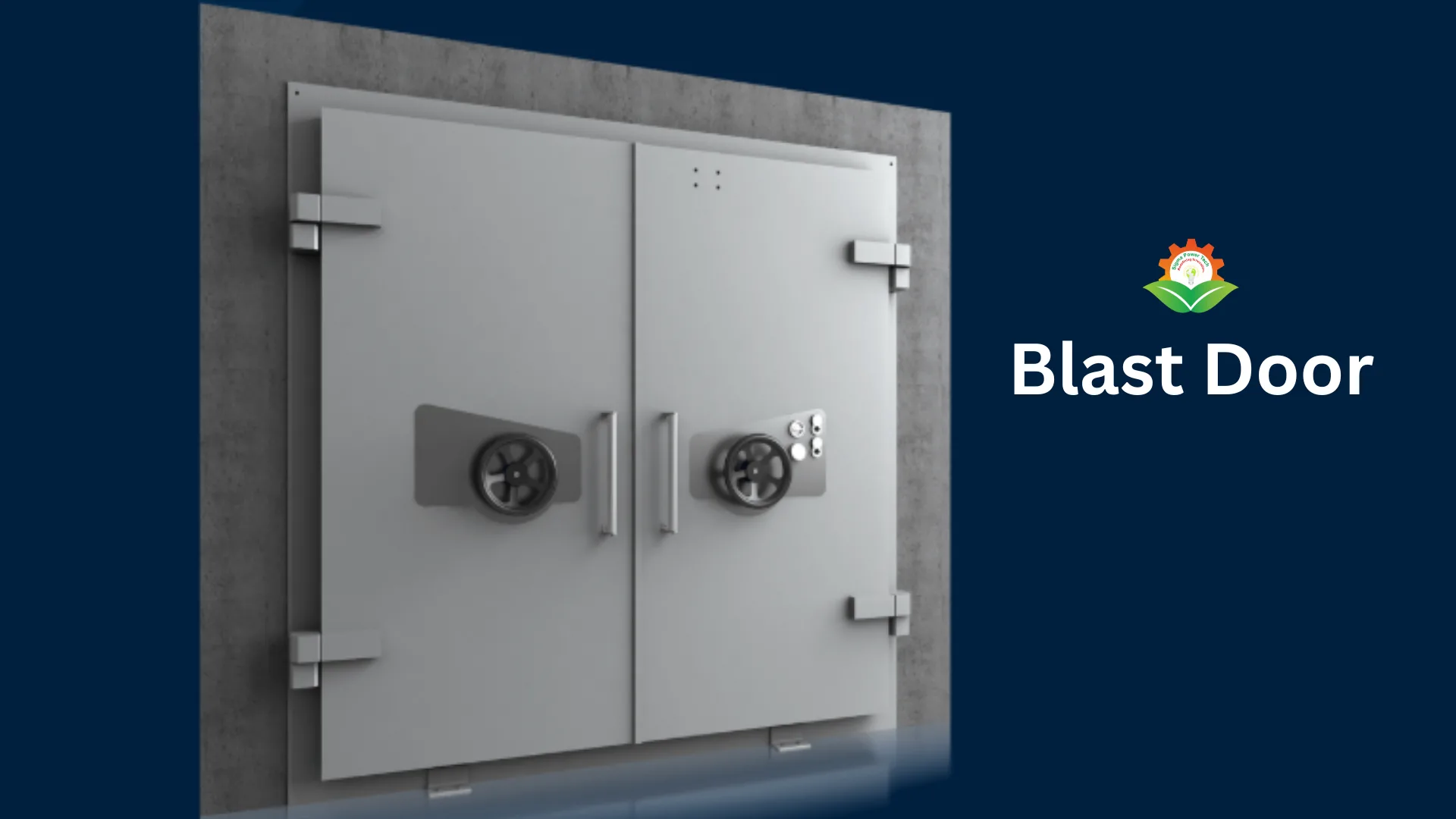
A government security facility experiences a powerful external explosion caused by an accidental blast in a nearby industrial zone. The shock wave reaches the protected building within seconds, placing enormous pressure on the entrance system. While ordinary doors fail under such conditions, a professionally engineered blast proof door remains intact, helping protect personnel, critical infrastructure, and sensitive equipment. This level of protection is possible only when the door has been designed, manufactured, and tested according to recognized international standards.
Modern high-security facilities rely on blast-resistant construction to minimize damage from explosions. A blast proof door is not simply a reinforced steel door—it is an engineered structural system developed to withstand specified blast loads while maintaining its protective function. Whether installed in defence facilities, embassies, petrochemical plants, or power stations, compliance with international standards plays a crucial role in ensuring predictable performance during real-world blast events.
Do Blast Proof Doors Meet International Standards?
Yes, professionally engineered blast proof doors are designed to comply with internationally recognized blast resistance and structural performance standards. Compliance demonstrates that the door has undergone engineering analysis, controlled manufacturing, and performance testing to verify its ability to withstand specified explosive pressures.
International compliance typically considers:
- Blast pressure resistance
- Structural deformation limits
- Door operability after blast exposure
- Frame and anchoring performance
- Fire resistance where required
- Material quality and manufacturing consistency
- Installation procedures
- Long-term operational reliability
Leading Blast proof door manufacturers in India increasingly design products to satisfy both Indian project specifications and globally accepted engineering requirements for critical infrastructure.
What is a Blast Proof Door and How Is It Engineered?
Unlike conventional industrial doors, blast resistant doors are engineered as complete protective assemblies. Every component contributes to resisting the extreme forces generated by an explosion.
The door leaf is fabricated using heavy-duty steel plates reinforced with internal stiffeners that distribute blast energy across the entire structure. Heavy-duty hinges, reinforced locking mechanisms, and specially designed frames prevent catastrophic failure during sudden pressure loading.
Blast Proof Door Design for International Compliance
Effective Blast door design focuses on much more than steel thickness. Engineers evaluate anticipated blast scenarios, reflected pressure, impulse duration, rebound forces, and structural interaction with surrounding walls.
Modern Blast resistant door systems are engineered using finite element analysis, structural calculations, and controlled fabrication processes to ensure predictable performance under design blast conditions.
Blast Pressure Ratings and Certification
One of the most important aspects of international compliance is blast rating.
Rather than claiming to withstand "any explosion," certified doors are designed for specific pressure levels and impulse values established during engineering analysis.
Testing may include:
- Static structural verification
- Dynamic blast simulation
- Shock wave exposure
- Structural deformation measurement
- Functional inspection after testing
- Hardware integrity verification
Compliance often references internationally accepted engineering practices alongside applicable project specifications, military requirements, and industrial safety guidelines.
Structural Performance Under Explosive Pressure Waves
An explosion creates an extremely fast-moving pressure wave followed by negative pressure.
A compliant blast proof door must absorb these forces without allowing structural collapse or uncontrolled fragmentation. Controlled deformation is acceptable in many applications, provided the protective barrier remains functional and occupant safety is maintained.
Structural performance depends on:
- Reinforced steel construction
- Internal stiffener configuration
- Weld quality
- Multi-point locking systems
- High-strength hinges
- Proper energy distribution
The surrounding wall structure is equally important because the strongest door cannot perform properly if its supporting structure fails.
&n