DIY closed-cell spray foam insulation in Angel Park, NV, can help homeowners seal air leaks and improve energy efficiency, but proper application requires the right materials, equipment, and safety precautions. In Angel Park’s hot desert climate, effective insulation is important for keeping indoor spaces comfortable and reducing unwanted heat gain. However, a DIY spray foam kit is not suitable for every project, especially when large areas, roof assemblies, or hidden building issues are involved.
In this guide, we’ll explain how closed-cell spray foam works, its benefits and drawbacks, the importance of R-value, and the safety steps to consider before starting a DIY insulation project. You’ll also learn when professional installation from Supreme Spray Foam LV may be the better option for your home or commercial property.
Can You Install Closed Cell Spray Foam Insulation Yourself?
Yes, some homeowners can apply closed-cell spray foam using a small DIY kit. However, the work is more demanding than it looks. The two chemicals must mix correctly, surfaces must meet the product’s temperature and moisture requirements, and installers must use proper protective equipment and ventilation.
For homeowners in Angel Park, Nevada, the goal is usually to reduce heat transfer, seal air leaks, and improve indoor comfort during hot summers. This guide explains where DIY insulation may make sense, the benefits and risks of closed-cell foam, how R-value works, and when professional installation is the safer choice.
Why Consider Closed-Cell Spray Foam Insulation?
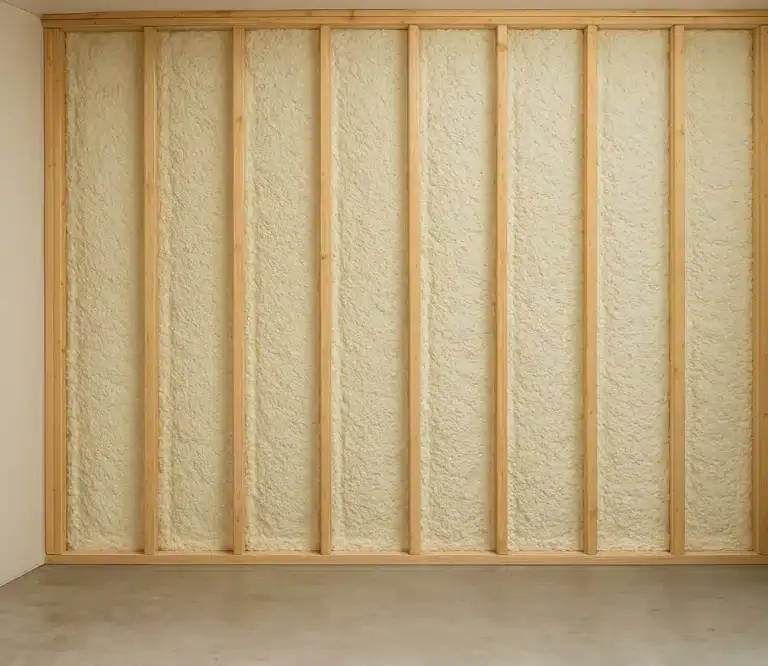
Closed-cell spray foam expands after application and hardens into a dense layer. When installed correctly, it can reduce air leakage and provide insulation in one application. Its structure also resists water absorption better than many open-cell foam products, although it does not eliminate every moisture problem.
In Angel Park, insulation may be useful in attic areas, roof assemblies, exterior walls, and other spaces where heat enters the home. The right solution depends on the building design, existing insulation, ventilation, and the source of the heat gain.
Key Benefits
- High insulating value: Closed-cell foam typically provides more R-value per inch than open-cell foam, making it useful where cavity space is limited.
- Air sealing: Properly applied foam can close gaps around framing and other suitable areas, reducing unwanted air movement.
- Moisture resistance: Its dense structure resists liquid water absorption, but leaks and trapped moisture still need to be addressed.
- Structural performance: Depending on the product and assembly, closed-cell foam can add rigidity. It should not be treated as a substitute for required structural components.
DIY Kits vs. Professional Spray Foam Installation
Not every insulation project needs the same equipment or level of expertise. A small kit may be practical for a limited area, while large or complex spaces often require professional equipment and a planned installation process.
FactorDIY Closed-Cell Foam KitProfessional InstallationBest suited forSmall, clearly defined projects approved for the kitLarge areas, whole-home projects, and complex assembliesEquipmentDisposable or limited-use spray equipmentProfessional proportioning and application equipment, as neededApplication controlMore limited, with greater risk of uneven coverageExperienced installers can better manage coverage and thicknessSafetyHomeowner must manage chemical exposure and ventilationA qualified crew should follow product safety procedures and job-site controlsQuality checksDepends heavily on the user's skill and inspectionCan include planned thickness checks and review of the completed workCostMay reduce labor costs on small jobsHigher upfront labor cost, with professional assessment and applicationPractical rule: Consider DIY only when the product is designed for the intended application, and you can meet every safety and installation requirement. Hire a qualified installer for extensive coverage, roof assemblies, hard-to-reach areas, or projects involving electrical, combustion, or moisture concerns.
Pros and Cons of DIY Closed-Cell Foam
DIY installation may appear less expensive, but material cost is only part of the project.
Pros
- You may save on labor when insulating a small, accessible area.
- A kit can be convenient for suitable, limited applications.
- You can plan the work around your schedule if conditions and safety requirements allow it.
Cons
- Incorrect mixing, poor surface preparation, or unsuitable temperatures can cause weak adhesion or poor foam quality.
- Chemical exposure can pose serious health risks. Isocyanates used in many spray polyurethane foam systems can irritate the skin and respiratory system and may cause sensitization. Homeowners should review guidance on isocyanate exposure and workplace safety before handling products containing these chemicals.
- Excessive application thickness, hidden gaps, or poor detailing can reduce performance and lead to expensive corrections.
- Foam can complicate future access to wiring, plumbing, roof components, or other concealed building systems.
Before starting, read the product label, technical data sheet, and safety data sheet. Follow the specified protective equipment, ventilation, application limits, and re-entry instructions. Do not assume that a dust mask or an open window is adequate protection.

Common Insulation Problems in Angel Park Homes
Southern Nevada’s hot, sunny climate can place a heavy cooling load on homes. Attics and roofs can become major sources of heat gain, especially when insulation is thin, uneven, or poorly installed.
A homeowner may notice that an upstairs room stays hot even while the air conditioner runs. The cause might be inadequate attic insulation, air leakage, duct problems, solar heat gain, or a combination of factors. Spraying foam over the first visible gap may not solve the underlying issue.
Other common concerns include:
- Gaps around framing: Missed sections can allow air movement and create uneven insulation performance.
- Roof or plumbing leaks: Foam should not be used to cover an unresolved leak. Repair the source and assess damaged materials first.
- Uneven application: Foam that is too thin in some areas may not deliver the intended insulation value.
- Hidden equipment: Covering junction boxes, vents, or components that require access can create safety and maintenance problems.
A professional assessment can help determine whether closed-cell foam, another insulation material, air sealing, or duct improvements are the better first step. Homeowners can also review the U.S. Department of Energy's guidance on where to insulate a home to understand common insulation locations and how building design affects insulation decisions.
How Angel Park Weather Affects Spray Foam Application
Hot desert weather does not automatically make every day suitable for spraying foam. Product performance depends on the temperature of the chemicals, the substrate, and the surrounding air, along with humidity and surface conditions. Summer heat can push roof decks and attic surfaces above a product’s permitted application range. Cold mornings or winter conditions can also affect chemical temperature and adhesion. Follow the manufacturer’s limits rather than relying on the outdoor temperature alone.
The best time to install foam is when the actual job-site conditions fall within the product’s specified range. The surface must also be clean, dry, and suitable for bonding. Never spray over wet materials or ignore ventilation requirements because the weather is hot.
Understanding R-Value in Closed-Cell Foam
R-value measures resistance to heat flow. In general, a higher R-value means better insulating performance, but the finished assembly also depends on coverage, installation quality, thermal bridging, and air leakage.
Closed-cell spray polyurethane foam commonly provides around R-6 to R-7 per inch, although the exact value depends on the product. Use the manufacturer’s published data for the specific foam being installed.
For example, a product rated at R-6.5 per inch would provide a nominal R-13 across two inches under the stated test conditions. That calculation does not mean every installed wall or roof assembly will achieve the same performance.
Nevada’s applicable energy-code requirements depend on the project and jurisdiction. Check current local requirements before deciding how much insulation to install. More foam is not automatically better if it creates moisture, ventilation, fire-safety, or roof-assembly problems.
Why Consider Supreme Spray Foam LV?
Choosing the right insulation involves more than selecting a foam kit. The installer needs to understand the building assembly, identify air-leakage paths, prepare surfaces, apply the material within product limits, and account for ventilation and fire-safety requirements.
Supreme Spray Foam LV helps residential and commercial customers evaluate spray foam insulation options for their properties. If you are weighing DIY closed-cell spray foam in Angel Park, a professional conversation can help clarify the scope of work, the insulation target, and any site-specific concerns before you commit to materials or labor.
Before hiring any contractor, ask about relevant experience, product specifications, preparation and ventilation procedures, application thickness, and how the completed work will be checked.
Conclusion: Make the Right Insulation Decision
DIY closed-cell spray foam may be an option for a small, suitable project, but chemical safety, surface preparation, application conditions, and consistent coverage all matter. In Angel Park, the aim should be to reduce heat gain without creating hidden moisture or building-safety problems.
If you are unsure which insulation method fits your home or commercial property, get advice before purchasing a kit. A careful assessment can help you compare DIY materials with professional installation and choose a solution that fits the building.
Contact Supreme Spray Foam LV
Discuss your insulation needs with Supreme Spray Foam LV and ask about available options to find the right solution for your property.
- Phone: (702) 904-9895
- Email: [email protected]
Frequently Asked Questions
Is Closed-Cell Spray Foam Suitable for DIY Installation?
Some small applications may be suitable for a consumer kit if the manufacturer permits the use and all safety requirements can be met. Large, enclosed, or complex projects are better evaluated by a trained professional.
Is Closed-Cell Foam Better Than Open-Cell Foam?
Neither is best for every building. Closed-cell foam generally provides higher R-value per inch and greater resistance to liquid water absorption. Open-cell foam is less dense and may suit other applications. The right choice depends on climate, building design, moisture control, budget, and local code requirements.
Does Closed-Cell Spray Foam Stop Water Leaks?
No. It can resist water absorption, but it should not be used as a substitute for repairing a roof, plumbing, or exterior leak. Find and fix the water source before insulating.
Can I Apply Spray Foam During an Angel Park Summer?
Possibly, but only when the chemical and surface temperatures, humidity, and other conditions meet the product’s requirements. Hot attic surfaces may exceed the permitted range even when the foam kit itself seems ready to use.
How Much R-Value Does Closed-Cell Spray Foam Provide?
Many closed-cell products provide approximately R-6 to R-7 per inch. Check the exact product data sheet and confirm the required insulation level for your building assembly and jurisdiction.
What Safety Equipment Does DIY Spray Foam Require?
Requirements vary by product and application. Follow the label and safety data sheet for respiratory protection, eye and skin protection, ventilation, and restricted access or re-entry. Do not begin if you cannot meet the manufacturer’s safety instructions.
Author and Reviewer
Author: Victor Ramirez
Victor Ramirez is the owner of Supreme Spray Foam LV and has more than 10 years of experience in the insulation industry. He focuses on quality spray foam services, energy efficiency, and dependable results for residential and commercial customers. His approach emphasizes professionalism, careful planning, and attention to detail.
Reviewer: Michael Carter
Michael Carter reviewed this article using insight gained over 12 years in the spray foam business. His feedback focuses on clear, practical communication that helps contractors reach customers without making technical information harder to understand.