
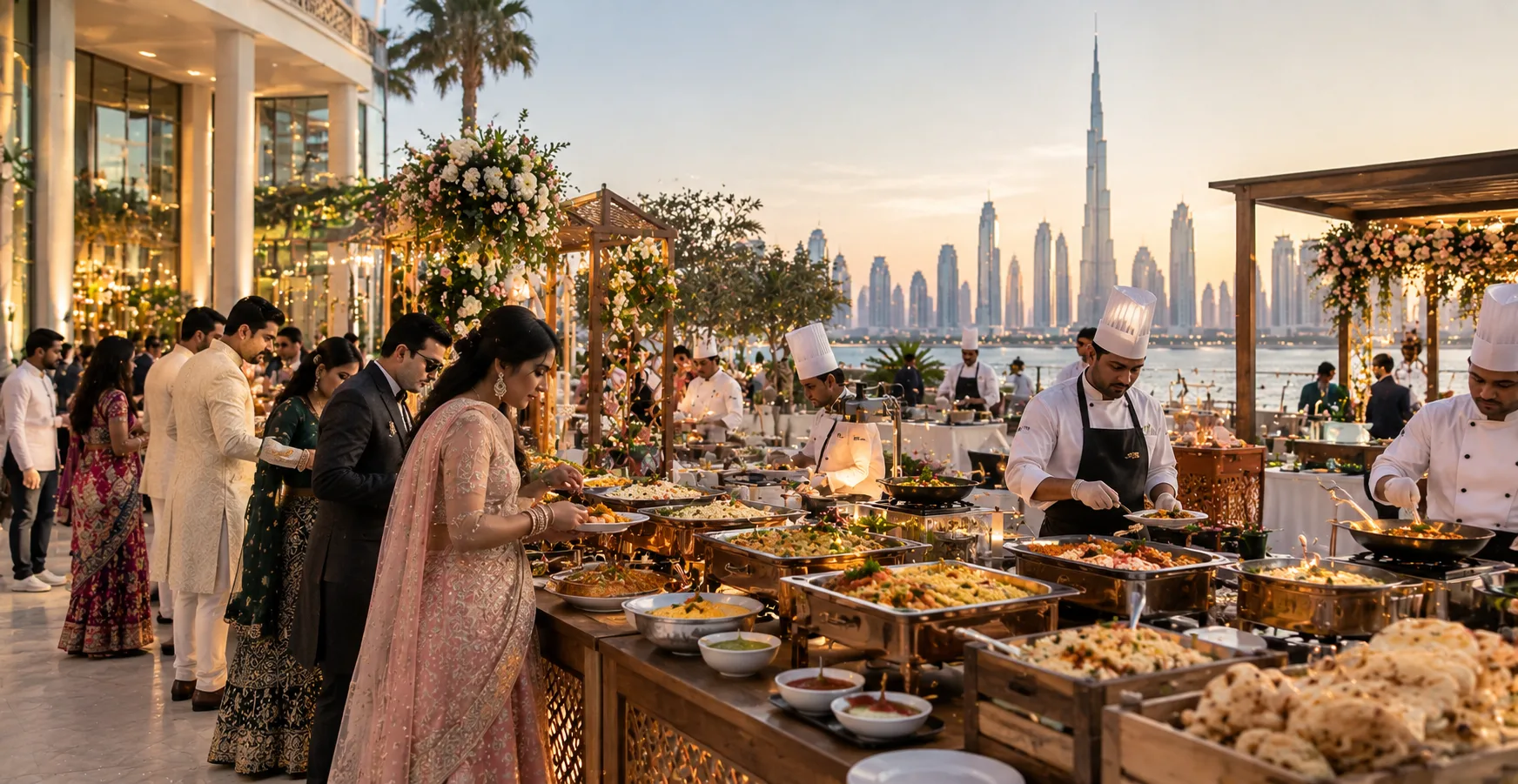
Planning a destination wedding in Dubai involves more than choosing a beautiful venue and arranging accommodation. Food is equally important, especially when guests are travelling from India with different regional tastes, religious preferences and dietary requirements. Some guests may prefer pure vegetarian food, while others may need Jain meals, vegan options or specific regional Indian cuisines.
If the catering arrangements are not planned properly, guests may struggle to find suitable food during wedding functions. The best approach is to understand your guests' preferences in advance and work with a Dubai wedding caterer who has experience handling Indian wedding menus. This guide explains how to manage food preferences and create a comfortable dining experience for everyone.
1. Collect Guests' Food Preferences Before the Wedding
The first step is to understand what your guests eat. Do not assume that everyone will be comfortable with the same menu simply because they belong to the same family or community.
Create a short food preference form when sending wedding invitations or collecting RSVPs.
Ask guests about:
- Vegetarian or non-vegetarian preferences
- Jain food requirements
- Vegan meals
- Food allergies and intolerances
- Regional cuisine preferences
- Children's meal requirements
- Special religious or dietary restrictions
For example, guests from Gujarat may prefer Gujarati vegetarian dishes, while guests from Punjab may enjoy North Indian food, tandoori starters and traditional curries.
Practical tip: Share the final dietary requirements with your caterer well before the wedding. Keep a separate list of guests who need special meals so their requirements are not missed.
2. Include Vegetarian, Jain and Vegan Food Options
Indian weddings often include guests who follow different dietary practices. Providing suitable alternatives is important, particularly when the celebration takes place outside India.
Vegetarian Food
Include familiar Indian vegetarian dishes such as:
- Paneer tikka
- Dal makhani
- Shahi paneer
- Vegetable biryani
- Malai kofta
- Fresh Indian breads
Jain Food
Jain guests may avoid onion, garlic and root vegetables, depending on their individual practices. Confirm the exact requirements with each guest instead of assuming that every Jain guest follows identical dietary rules.
Ask the caterer to prepare clearly identified Jain dishes separately and avoid cross-contact with ingredients that guests do not consume.
Vegan Food
Some guests may avoid all animal-derived ingredients, including dairy products, butter, ghee and honey.
Offer options such as vegetable curries prepared without dairy, vegan pulao, salads, lentil dishes and dairy-free desserts.
Important: Ask your catering team to confirm the ingredients of every special meal. A dish labelled vegetarian or vegan should meet the guest's actual dietary requirements.
3. Choose Indian Catering That Understands Regional Tastes
Dubai has an international food culture, but Indian wedding guests may still expect familiar flavours during important celebrations.
When selecting a caterer, ask whether they can prepare authentic Indian dishes and manage different regional menus.
Consider including:
Guest preferenceSuggested food optionsNorth IndianDal makhani, paneer tikka, naan, butter chickenSouth IndianDosa, idli, sambar, coconut-based curriesGujaratiDhokla, Gujarati kadhi, undhiyu, theplaRajasthaniDal baati churma, gatte ki sabziJainJain paneer dishes, suitable lentil preparationsVeganDairy-free curries, vegetable pulao, saladsYou do not need to serve every regional cuisine at every function. Instead, select dishes according to the preferences of your actual guest list.
4. Plan Different Menus for Each Wedding Function
Serving the same menu at every function can make the dining experience repetitive. Create different food arrangements for mehendi, haldi, sangeet and the wedding reception.
Mehendi
Choose a relaxed menu with chaat counters, light snacks, mocktails and vegetarian starters. Live food stations can make the function more interactive.
Haldi
Serve refreshing drinks, light Indian snacks, fruit counters and easy-to-eat dishes. Keep the food convenient because guests may be participating in outdoor activities.
Sangeet
Offer a combination of Indian starters, popular main-course dishes, live counters and desserts. Consider the timing of performances when planning food service.
Wedding Reception
A reception can include a larger selection of North Indian, South Indian and international dishes. Keep vegetarian and non-vegetarian sections clearly separated.
This approach allows couples to offer variety without unnecessarily increasing catering expenses.
5. Check Halal Food and Dietary Requirements
Dubai has a large Muslim population, and halal food is widely available. However, Indian wedding families may have guests who follow additional dietary requirements.
Before confirming the menu, discuss the following with your caterer:
- Whether meat is halal-certified where required
- Whether vegetarian and non-vegetarian preparation areas are separated
- Whether alcohol is used in any food preparation
- Whether food contains nuts, dairy, gluten or other common allergens
- Whether special meals can be prepared separately
Do not rely only on menu labels. Request ingredient information and explain any strict requirements to the catering manager.
6. Manage Food Allergies and Special Dietary Restrictions
Food allergies need more attention than ordinary food preferences. Even a small amount of an allergen can cause a serious reaction in some people.
Ask guests to identify allergies such as peanuts, tree nuts, shellfish, dairy, eggs and gluten.
Share this information with the caterer and request:
- Ingredient lists for relevant dishes.
- Separate preparation arrangements where necessary.
- Clear food labels at buffet counters.
- Staff who understand how to handle allergy-related requests.
If a guest has a serious allergy, confirm the caterer's ability to prevent cross-contact rather than relying only on a separate label.
7. How to Control Indian Wedding Catering Costs in Dubai
Food expenses can become a significant part of a destination wedding budget, particularly when you have multiple functions and a large guest list.
Use these practical strategies:
- Finalise the guest count: Avoid paying for unnecessary meals by confirming attendance early.
- Select a focused menu: Choose popular dishes instead of offering too many options.
- Use shared ingredients: Plan menus with ingredients that can be used across different dishes without compromising dietary requirements.
- Compare catering packages: Request itemised quotations from different venues and caterers.
- Check minimum guarantees: Ask how many meals you must pay for even if fewer guests attend.
- Review additional charges: Confirm taxes, service fees, live-counter charges and special meal costs.
Always request a tasting session before finalising the menu. It helps you check food quality, portion sizes, spice levels and presentation.
8. Questions to Ask Your Dubai Wedding Caterer
Before booking a caterer, ask these important questions:
- Can you prepare authentic North Indian, South Indian and Gujarati food?
- Do you provide separate Jain and vegan menus?
- Can you accommodate allergies and food intolerances?
- Are halal food options available where required?
- Can we arrange a menu-tasting session?
- Are live food counters included in the package?
- Can you provide separate vegetarian and non-vegetarian serving areas?
- Are special dietary meals charged separately?
Getting clear answers in writing helps prevent misunderstandings during the wedding.
Frequently Asked Questions
1. Can Indian wedding caterers in Dubai provide Jain food?
Yes, some Dubai caterers can prepare Jain meals. Confirm the specific ingredient restrictions and preparation arrangements with the caterer before booking.
2. Can we arrange pure vegetarian catering for an Indian wedding in Dubai?
Yes. You can discuss a completely vegetarian menu with your selected hotel or catering company. Confirm food preparation arrangements and menu options in advance.
3. How can we manage different regional food preferences at a Dubai wedding?
Collect guest preferences before the event and include a selection of popular regional dishes. You can also arrange different food counters across wedding functions.
4. Should we arrange separate food counters for vegetarian and non-vegetarian guests?
Separate counters are a practical way to help guests identify suitable dishes. For strict dietary requirements, also confirm separate preparation and serving arrangements.
5. How much should we budget for Indian wedding catering in Dubai?
The cost depends on the caterer, venue, guest count, menu selection, number of functions and service requirements. Request an itemised quotation rather than relying on a general per-person estimate.
6. Can Dubai wedding venues arrange food for guests with allergies?
Many venues and catering providers can discuss special dietary arrangements, but their ability to prevent cross-contact varies. Confirm the arrangements directly with the catering manager.
Final Thoughts
Managing food preferences is an essential part of planning a successful destination wedding in Dubai. From Jain and vegetarian meals to regional Indian dishes, vegan options and food allergies, every guest should have suitable choices.
Start by collecting dietary information, select an experienced Indian wedding caterer, plan different menus for each function and confirm all special requirements in writing. With proper preparation, you can create a memorable wedding celebration where guests enjoy both the destination and the food.
At Dubai Weddings, couples can explore suitable wedding venues and catering arrangements to plan celebrations that reflect their family's food preferences and cultural traditions.