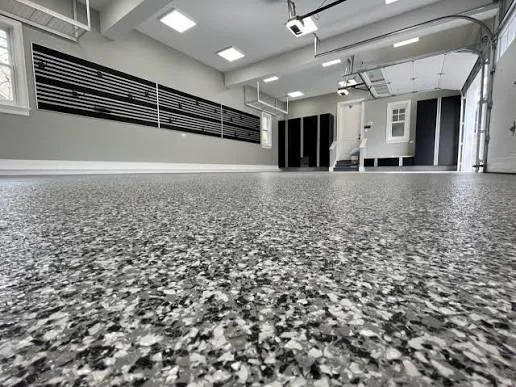
Walk into any well-maintained garage, and there's a good chance the floor is what catches your eye first. A quality garage epoxy floor gives concrete a clean, durable finish that stands up to vehicles, tools, oil spills, and everyday wear. It looks professional, sure—but that's only part of the story.
Here's what I've noticed after looking at countless epoxy flooring projects. When people say, "Epoxy doesn't last," they're usually pointing at a floor that wasn't installed properly. The coating gets the blame, even though the real problem started long before the first layer was rolled on.
An epoxy floor isn't forgiving. Skip the prep work, ignore moisture, or rush the curing process, and problems almost always show up sooner than expected. The good news? Most of those issues are completely avoidable if you know what causes them in the first place.
Let's look at the most common problems and, more importantly, how to keep them from happening.
The Coating Starts Peeling
This is probably the biggest disappointment homeowners face.
The floor looks flawless after installation. A few months later, though, you notice the coating lifting around the tires or along the edges. Before long, larger sections begin peeling away.
Most people assume the epoxy failed.
It usually didn't.
Concrete naturally collects dust, grease, moisture, and tiny contaminants that aren't always visible. If those aren't removed completely, the epoxy bonds to dirt instead of the concrete itself. Eventually, normal traffic breaks that weak bond.
I've even seen beautiful-looking installations fail simply because the installer skipped mechanical grinding to save time.
How to avoid it
- Mechanically grind or shot-blast the concrete.
- Remove oil stains completely.
- Repair damaged concrete before coating.
- Vacuum every trace of dust.
- Never apply epoxy over old paint or failing sealers.
The coating only performs as well as the surface underneath it.
Bubbles Appear After the Floor Cures
Tiny bubbles scattered across the finish might not seem like a major issue, but they tell you something went wrong during installation.
Here's what's actually happening.
Concrete isn't completely solid. It contains thousands of microscopic pores filled with trapped air. Once epoxy is applied, that air begins escaping through the coating. If the floor is warm from direct sunlight, even more air rises to the surface.
That's why installers often avoid coating concrete during the hottest part of the day.
How to avoid it
- Apply epoxy when the concrete temperature is stable.
- Use a primer before the main coating.
- Roll slowly instead of aggressively.
- Pass a spiked roller through fresh epoxy to release trapped air.
Small details like these make a noticeable difference in the finished appearance.
Moisture Causes Blisters
Here's the tricky part about concrete.
Even if it looks completely dry, moisture can still be moving upward through the slab.
When that moisture gets trapped beneath an epoxy coating, pressure builds underneath the surface. Eventually, you'll notice bubbles, soft spots, or sections lifting away from the floor.
This is one of the most expensive problems to fix because the damaged coating usually has to be removed completely.
How to avoid it
Always test the slab before installation.
Professional moisture testing takes very little time compared to replacing an entire floor. If moisture levels are too high, a moisture-mitigating primer can create a much stronger foundation for the epoxy.
Cracks Reappear
A common misconception is that epoxy hides every flaw.
It doesn't.
Small cosmetic cracks may become less noticeable, but structural movement underneath the concrete doesn't stop simply because there's a coating on top.
Seasonal expansion, vehicle weight, and shifting foundations can reopen untreated cracks months later.
That's why experienced installers repair the concrete first rather than expecting the epoxy to solve everything.
How to avoid it
- Fill cracks with quality repair materials.
- Allow repairs to cure fully.
- Address structural movement before installing the coating.
A smoother slab almost always produces a longer-lasting finish.
The Floor Turns Yellow
Many homeowners don't think about sunlight until it's too late.
Standard epoxy products aren't designed to handle constant UV exposure. Over time, sunlight can gradually change the color, especially near garage doors and windows.
The floor still works perfectly fine.
It just doesn't look as clean as it once did.
How to avoid it
If your garage receives regular sunlight, finish the epoxy with a UV-resistant topcoat such as polyurethane or polyaspartic coating. That extra layer protects both the appearance and the surface underneath.
Hot Tires Pull Up the Coating
This problem has a strange name—hot tire pickup—but it's surprisingly common.
After driving, vehicle tires become extremely warm. When those tires sit on an epoxy coating that hasn't fully cured or wasn't installed correctly, they can pull pieces of the finish away as the vehicle moves.
It's frustrating because the damage often appears in exactly the places you see every day.
How to avoid it
- Allow the coating to cure for the full recommended time.
- Choose products designed specifically for garage traffic.
- Don't rush to park your vehicle after installation.
Waiting an extra day or two is much cheaper than repairing damaged sections later.
Scratches and Scuff Marks Build Up
No flooring material is completely scratch-proof.
An epoxy floor handles daily vehicle traffic exceptionally well, but dragging heavy cabinets, steel toolboxes, ladders, or machinery across the surface will eventually leave marks.
The funny thing is, most scratches don't come from cars. They come from everything else stored inside the garage.
How to avoid it
Simple habits make a bigger difference than people expect.
Use rubber feet beneath heavy equipment, lift instead of dragging tools whenever possible, and sweep away sand or gravel regularly. Those tiny particles act like sandpaper every time you walk or drive across them.
Chemical Stains Become Permanent
People often hear that epoxy is chemical-resistant.
That's true—but resistance has limits.
Motor oil usually wipes away without much effort. Battery acid, brake fluid, paint thinner, and harsh industrial cleaners are another story. Left sitting long enough, they can dull the finish or leave permanent stains.
How to avoid it
Treat spills like you would on any premium surface.
Clean them promptly using a soft cloth or mop and a pH-neutral cleaner. Quick cleanup helps preserve both the color and the protective coating.
Final Thoughts
A professionally installed garage epoxy floor isn't just about making a garage look better. It's about protecting the concrete for years while creating a surface that's easier to clean, more resistant to wear, and better suited for everyday use.
What I've learned is this: almost every major epoxy floor problem starts long before the coating cures. Poor preparation, hidden moisture, rushed installation, or low-quality materials create issues that no amount of maintenance can fix later.
Take the time to prepare the concrete properly, choose the right products for your environment, and follow the recommended curing schedule. Those extra steps may not seem exciting, but they're the reason one epoxy floor lasts three years while another still looks impressive after fifteen. That's the difference that really matters.