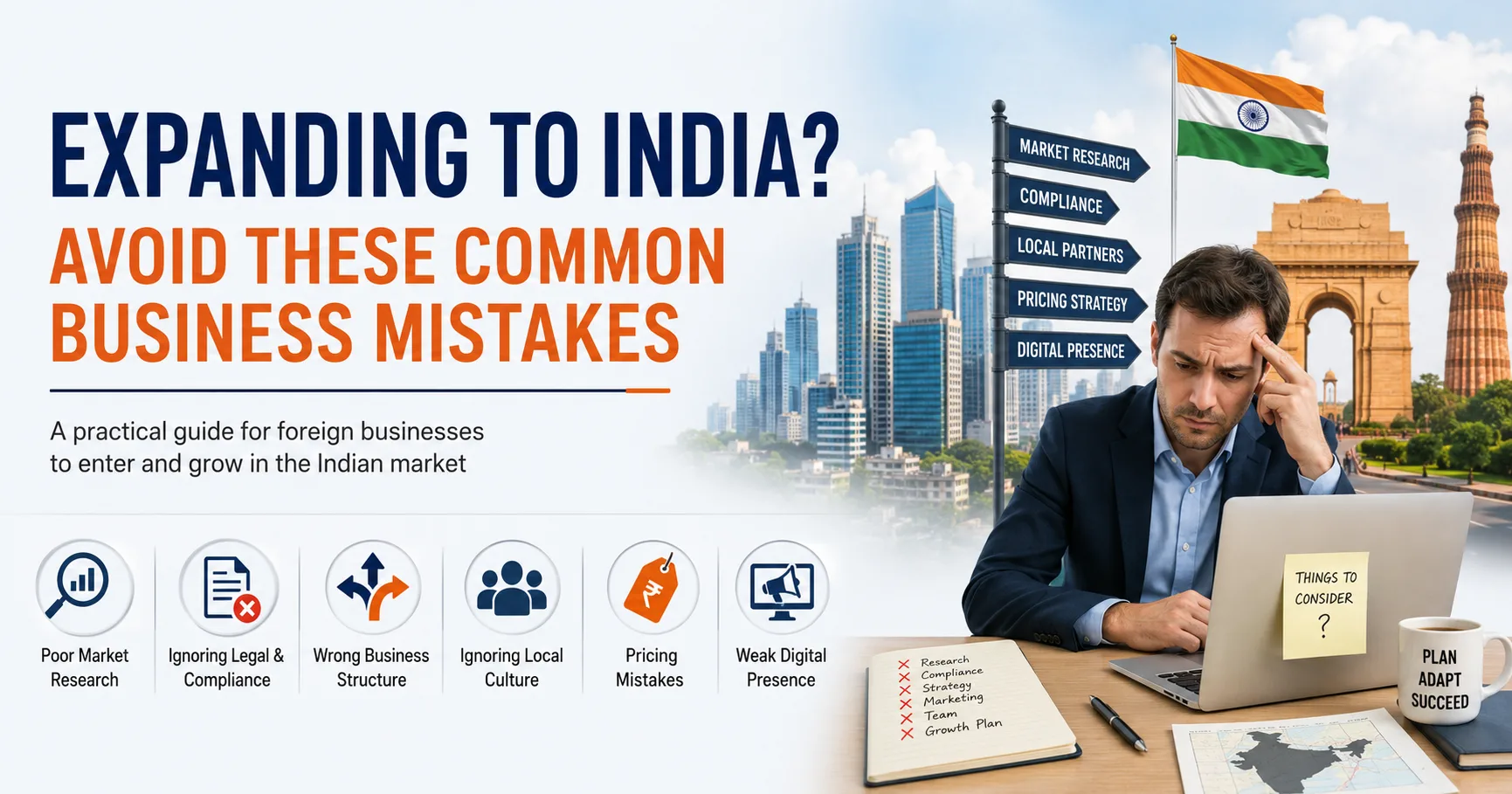
India is one of the fastest-growing markets in the world. With a large consumer base, rising digital adoption, skilled workforce, and growing economy, many foreign businesses see India as a strong opportunity for expansion. From manufacturing and retail to technology and consulting, companies from across the globe are entering the Indian market to grow their business.
But entering a new country is never as simple as opening an office and starting operations. Many foreign companies struggle because they underestimate the Indian market or follow the same strategies they used in their home country. Small planning mistakes in the beginning can lead to delays, extra costs, compliance problems, and slow business growth later.
Understanding the common mistakes businesses make during India expansion can help companies avoid unnecessary challenges and build a smoother market entry strategy.
1. Entering India Without Proper Market Research
One of the biggest mistakes foreign companies make is assuming that India is a single, uniform market. In reality, India is highly diverse. Customer behavior, language, pricing expectations, culture, and buying patterns can change from one state or city to another.
A product or service that works well in one region may not perform the same way in another. Businesses that fail to study local demand often struggle with poor sales and low customer engagement.
Before entering India, companies should understand:
- Customer preferences
- Local competition
- Pricing trends
- Regional demand
- Industry regulations
- Distribution channels
Good market research helps businesses make better decisions and reduce risk during expansion.
2. Ignoring Legal and Compliance Requirements
India has specific rules for foreign businesses. Many companies face delays because they do not fully understand registration processes, tax rules, licenses, or foreign investment regulations.
Some businesses enter the market quickly without proper legal guidance and later face issues related to:
- Company registration
- GST compliance
- RBI approvals
- Employment laws
- Import-export regulations
- Tax filings
Even small compliance mistakes can create operational problems and financial penalties.
Working with local consultants and legal experts can help businesses complete the setup process correctly and stay compliant from the beginning.
3. Choosing the Wrong Business Structure
Foreign companies often choose a business structure without understanding its long-term impact. In India, businesses can enter through different models such as:
- Private Limited Company
- Liaison Office
- Branch Office
- Joint Venture
- Wholly Owned Subsidiary
Each structure has different rules, tax implications, operational flexibility, and compliance requirements.
Choosing the wrong setup can affect future expansion, investment opportunities, and daily business operations. Companies should carefully evaluate their business goals before deciding on a structure.
4. Underestimating Cultural Differences
Business culture in India can be different from Western countries. Companies that fail to understand local work culture and communication styles often face internal and external challenges.
For example:
- Building relationships is important in business discussions
- Decision-making processes may take longer
- Customer trust develops gradually
- Regional languages and communication styles vary
Foreign companies that adapt to local culture usually build stronger relationships with employees, partners, and customers.
Hiring local talent and understanding cultural expectations can improve communication and business growth.
5. Setting Unrealistic Expectations
Some companies expect quick profits immediately after entering India. While India offers large opportunities, market growth usually takes time.
Businesses often need to invest in:
- Brand awareness
- Team building
- Local partnerships
- Customer trust
- Distribution networks
India is a competitive market. Companies that focus only on short-term gains may become frustrated with slower initial growth.
Successful businesses usually enter India with a long-term strategy and realistic expectations.
6. Using the Same Marketing Strategy From Other Countries
Marketing strategies that work in Europe, the USA, or other regions may not work the same way in India.
Indian consumers respond differently to messaging, pricing, offers, and digital campaigns. A lack of localization is a common reason why foreign brands fail to connect with their audience.
Some common marketing mistakes include:
- Using complex messaging
- Ignoring regional languages
- Not optimizing for mobile users
- Pricing products too high
- Failing to understand local festivals and shopping seasons
India has one of the largest mobile and internet user bases in the world. Businesses should create localized digital marketing strategies that match Indian consumer behavior.
7. Hiring Too Fast or Too Slowly
Building the right team is important during expansion. Some companies hire aggressively without clear planning, while others delay hiring and overload small teams.
Both approaches create problems.
Hiring without understanding local salary structures, employee expectations, and skill availability can increase operational costs. At the same time, delayed hiring can slow business growth and affect productivity.
Foreign businesses should focus on:
- Hiring experienced local professionals
- Creating clear HR policies
- Understanding Indian labor laws
- Building strong management teams
A balanced hiring approach helps companies grow more smoothly.
8. Not Building Local Partnerships
Many foreign companies try to manage everything independently during the early stages of expansion. While this may seem efficient, it often slows down market entry.
Local partners can help businesses with:
- Distribution networks
- Vendor connections
- Government processes
- Market understanding
- Customer acquisition
Partnerships with local consultants, agencies, distributors, or advisors can reduce operational challenges and help companies adapt faster.
9. Ignoring Pricing Sensitivity
Pricing plays a major role in India. Even customers with higher purchasing power often compare prices carefully before making decisions.
Some foreign brands enter India with premium pricing without adjusting to local market expectations. As a result, customers may choose more affordable local alternatives.
Businesses should understand:
- Local purchasing behavior
- Competitor pricing
- Value perception
- Regional income differences
Offering flexible pricing models or localized product versions can improve market acceptance.
10. Overlooking Digital Presence and Online Visibility
Today, Indian customers search online before making buying decisions. Companies that ignore digital visibility often struggle to generate leads and build trust.
A weak online presence can affect:
- Brand credibility
- Customer reach
- Lead generation
- Business awareness
Foreign businesses should invest in:
- A mobile-friendly website
- SEO optimization
- Content marketing
- Social media presence
- Online advertising
Digital marketing helps businesses reach Indian customers more effectively and compete in the market.
11. Expanding Too Quickly
Some businesses try to enter multiple Indian cities at once without testing operations first. This can create management issues, increased costs, and operational confusion.
India is a large market, and expansion should happen step by step.
Starting with one or two major cities allows businesses to:
- Understand customer behavior
- Improve operations
- Build local teams
- Test products and services
Once the business gains stability, expansion into additional regions becomes easier.
12. Not Understanding Competition
Many foreign companies underestimate local competitors. Indian businesses often understand customer preferences better and operate with lower costs.
Without proper competitor analysis, foreign brands may struggle with pricing, positioning, and customer retention.
Businesses should regularly study:
- Competitor pricing
- Service quality
- Marketing strategies
- Customer reviews
- Distribution methods
Understanding the competitive landscape helps businesses build stronger strategies.
Final Thoughts
India offers strong growth opportunities for foreign businesses, but successful expansion requires careful planning, local understanding, and patience. Companies that focus on compliance, localization, digital visibility, and long-term strategy are more likely to succeed in the Indian market.
Working with experienced business setup consultants in India can also help foreign companies avoid costly mistakes and simplify the market entry process. With the right support and strategy, India can become a valuable long-term growth market for global businesses.