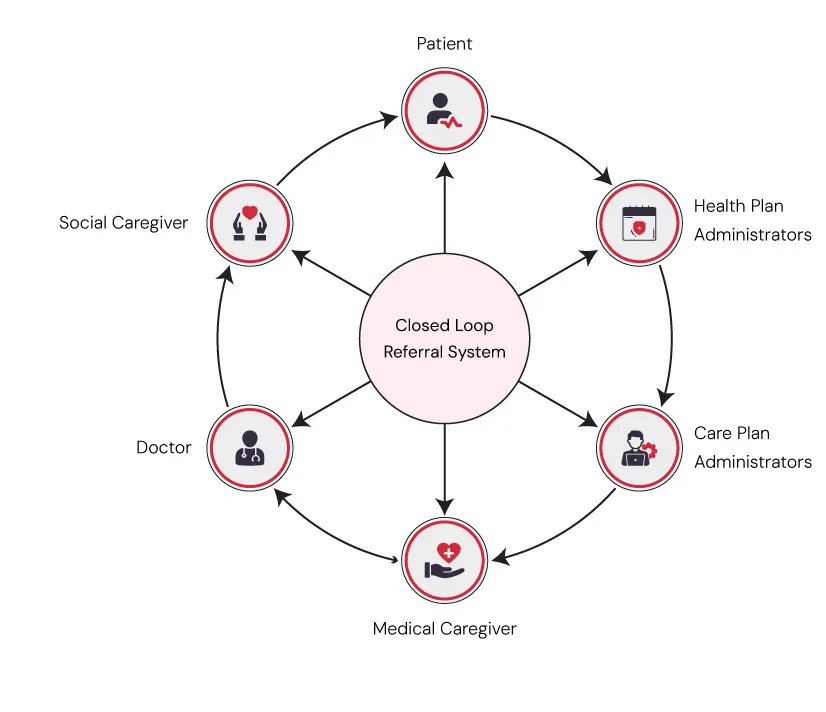
Modern healthcare challenges extend beyond medical treatment. Individuals often require support from multiple organizations, including healthcare providers, nonprofit agencies, social service groups, and community resources. However, disconnected systems and inefficient communication methods can prevent people from receiving timely assistance. A closed loop referral system offers a powerful solution by creating a coordinated network where referrals can be managed, tracked, and completed with complete visibility. Instead of allowing requests to disappear after being sent, this approach ensures that every referral follows a structured journey from identification of need to successful service delivery.
The increasing focus on whole-person care has made referral coordination more important than ever. Healthcare organizations are recognizing that medical outcomes are influenced by social conditions such as housing stability, food accessibility, transportation availability, employment support, and behavioral health resources. A connected referral process allows organizations to address these factors more effectively by bringing different service providers together through a unified workflow.
The Growing Need for Connected Referral Networks
Traditional referral processes often depend on manual communication methods such as phone calls, emails, spreadsheets, and paper-based records. While these methods may work for simple cases, they become challenging when multiple organizations and complex community needs are involved.
A referral that is sent without proper tracking can create uncertainty for both service providers and individuals seeking assistance. Healthcare teams may not know whether a person received support, while community organizations may lack the information needed to respond effectively.
Connected referral networks solve these issues by introducing transparency and accountability. Every stage of the referral process can be monitored, allowing organizations to understand what happens after a request is submitted. This visibility improves communication between partners and creates a stronger foundation for coordinated care.
Understanding How Closed-Loop Referral Workflows Operate
A closed-loop referral workflow creates a complete cycle of communication between the organization identifying a need and the organization providing assistance. The process begins when a healthcare provider, community worker, or care coordinator identifies a requirement.
The referral is then securely transferred to an appropriate service provider. The receiving organization can review the request, accept the referral, provide updates, and confirm when services have been delivered.
This continuous communication eliminates uncertainty and ensures that referrals do not become incomplete transactions. Instead, they become active processes focused on achieving positive outcomes.
A successful closed-loop workflow generally includes:
- Identification of individual needs
- Connection with appropriate resources
- Referral acceptance and status tracking
- Communication between participating organizations
- Confirmation of completed services
- Measurement of referral outcomes
By maintaining visibility throughout the process, organizations can provide better support and improve overall service effectiveness.
Improving Social Care Coordination Through Technology
Social care requires collaboration between various organizations that often operate independently. A person may need assistance from healthcare providers, housing agencies, food programs, transportation services, and community support groups at the same time.
Without effective coordination, individuals may struggle to navigate available resources. They may receive repeated assessments, experience long waiting periods, or fail to access services completely.
Digital referral solutions help overcome these challenges by connecting organizations through shared communication channels. Providers can identify available resources, send referrals efficiently, and monitor progress without relying on fragmented systems.
Technology-driven coordination allows organizations to focus on improving outcomes rather than managing administrative barriers. Teams can spend more time supporting individuals and less time searching for information or following up manually.
Supporting Better Outcomes Through Social Determinants of Health Management
Healthcare outcomes are strongly influenced by social and environmental factors. Many individuals face challenges that cannot be solved through clinical care alone.
For example, a patient managing a chronic condition may also require transportation assistance, nutritional support, or access to safe housing. Without addressing these underlying challenges, medical treatment may become less effective.
Closed-loop referral models help organizations create stronger connections between healthcare and social services. When providers can quickly connect individuals with appropriate resources and confirm successful service delivery, they can address the broader factors influencing health.
This approach supports a more complete model of care where organizations work together to improve long-term well-being.
Increasing Efficiency for Healthcare Organizations and Nonprofits
Administrative complexity is one of the biggest challenges faced by healthcare and community service organizations. Staff members often spend significant time coordinating referrals, searching for resources, and communicating updates.
A centralized referral platform simplifies these responsibilities by organizing information within a structured environment. Teams can manage requests, track progress, and maintain communication more efficiently.
Improved efficiency creates benefits across the entire ecosystem:
- Healthcare providers gain better visibility into community support options.
- Nonprofit organizations receive clearer referral information.
- Care coordinators reduce manual follow-up efforts.
- Individuals experience faster access to services.
By reducing operational challenges, organizations can increase their capacity and serve more people effectively.
Building Accountability Across Care Partnerships
Strong partnerships require trust and reliable communication. When organizations collaborate without shared processes, accountability can become difficult to maintain.
Closed-loop referral solutions establish clear responsibilities for every participant. Referring organizations can monitor whether requests are accepted and completed, while service providers can communicate progress and outcomes.
This shared accountability encourages stronger partnerships and improves confidence among organizations. Each participant understands their role and contributes to a coordinated support system.
For community networks, this creates an environment where organizations are not working separately but functioning as connected members of a larger care ecosystem.
Using Referral Data to Drive Strategic Improvements
Data plays an essential role in improving community health initiatives. Organizations need accurate information to understand service demand, identify challenges, and optimize their programs.
Referral management platforms provide valuable insights into important performance areas, including:
- Number of referrals created
- Types of services requested
- Response and completion times
- Common community needs
- Partnership effectiveness
These insights allow organizations to make informed decisions. Leaders can identify resource gaps, strengthen successful programs, and improve areas where delays occur.
Data-driven improvement helps organizations become more responsive to changing community needs while maximizing available resources.
Enhancing the Individual Experience Through Seamless Support
At the center of every referral process is the individual seeking assistance. Complex systems can create frustration when people must repeatedly explain their situations or search for help independently.
A connected referral approach creates a smoother experience by allowing organizations to coordinate support behind the scenes. Individuals can receive guidance from trusted providers while partner organizations manage communication and service delivery.
This human-centered approach improves accessibility and helps ensure that support reaches people when they need it most.
When individuals experience reliable assistance, they are more likely to engage with healthcare services, community programs, and preventive resources.
Preparing Communities for the Future of Integrated Care
The future of healthcare depends on collaboration, innovation, and connected systems. As communities continue facing complex social and health challenges, organizations need solutions that support coordinated action.
Closed-loop referral technology provides the infrastructure needed for stronger partnerships between healthcare providers and community organizations. It transforms referrals from simple transfers of information into measurable pathways toward better outcomes.
Organizations that adopt connected referral strategies can improve efficiency, strengthen relationships, and create more responsive support networks.
Conclusion: Creating a More Connected Healthcare Ecosystem
Effective care coordination requires more than identifying community needs. It requires reliable communication, shared responsibility, and continuous tracking to ensure every individual receives appropriate assistance.
A closed loop referral system enables organizations to overcome traditional referral challenges by creating transparent workflows, improving collaboration, and ensuring that services are completed successfully. By connecting healthcare providers, nonprofits, and community resources, these solutions help build stronger networks focused on better outcomes.
As healthcare continues moving toward value-based and community-centered models, connected referral systems will become essential tools for improving accessibility, efficiency, and the overall quality of care. Organizations that embrace this approach can create a future where no referral is overlooked and every individual has a clearer path toward the support they need.