The Turning Point: A World Reimagining Waste as Resource
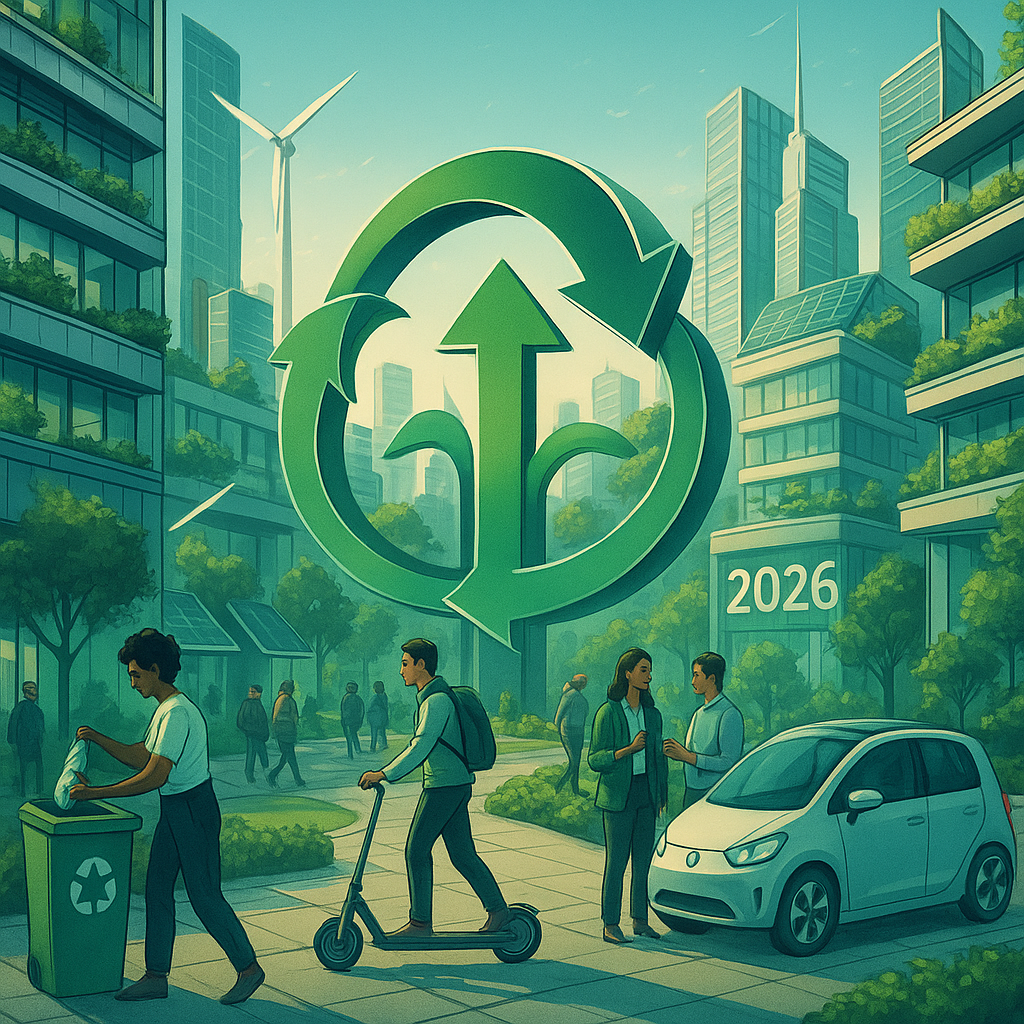
In the early months of 2026, a breakthrough report from the Global Environmental Policy Institute revealed that over 45% of the world’s industrial material flows now operate within circular economy frameworks, a steep rise from just 20% in 2020. This seismic shift marks a critical turning point in how industries, governments, and consumers perceive sustainability—not as a peripheral concern but as a core economic driver. The streets of Amsterdam, Copenhagen, and Seoul, for example, now pulse with innovations in waste-to-resource technologies and urban mining initiatives that transform discarded materials into valuable commodities. This tangible rethinking of waste challenges traditional linear consumption models, where extraction, manufacture, use, and disposal follow a one-way street. Instead, 2026 is witnessing the maturation of circularity as an economic norm, supported by policy, technology, and social buy-in.
Consider the bustling industrial hubs of Shenzhen and Rotterdam, where companies have integrated digital tracking systems to optimize material reuse, reducing raw material imports by up to 35% year-over-year. This integration of IoT and blockchain creates transparent supply chains, where every component's lifecycle is monitored to maximize reuse and minimize environmental harm. Such systems underpin a broader sustainability renaissance, fundamentally reshaping global production and consumption.
"Circular economy is no longer an aspirational goal. It’s the foundation of resilient economies that can thrive under resource constraints and climate challenges," stated Dr. Helena Sørensen, Chief Sustainability Officer at Nordic GreenTech Alliance.
From Linear Legacy to Circular Breakthrough: How Did We Get Here?
Tracing the roots of 2026’s sustainability trends requires revisiting the last decade's mounting pressures. The 2010s and early 2020s exposed the unsustainability of linear economic models, which contributed heavily to resource depletion, pollution, and biodiversity loss. The wake-up call came with consecutive climate disasters, supply chain disruptions during the COVID-19 pandemic, and escalating commodity prices. Governments worldwide responded by tightening regulations on waste management, carbon emissions, and resource extraction.
Simultaneously, advances in materials science, digital technology, and renewable energy converged to make circular models both viable and profitable. Pioneering companies like Interface, a global carpet tile manufacturer, demonstrated how closed-loop production could slash carbon footprints by over 60%. Meanwhile, emerging economies embraced circularity to reduce dependence on volatile raw material markets.
The interplay of these forces culminated in the landmark 2024 United Nations Circular Economy Framework Agreement, ratified by 94 countries as of June 2026. This agreement harmonizes standards on product design, material recovery, and extended producer responsibility. It also mandates transparent reporting on circularity metrics, accelerating global adoption.
"The 2024 UN Circular Economy Framework was a catalyst that transformed incremental sustainability efforts into systemic change," explains Professor Luis Martínez, author of "Circular Futures: Economic Models for a Resource-Constrained World."
Data-Driven Insights: Measuring the Impact of 2026’s Sustainability Trends
Quantifying the progress and impact of sustainability trends in 2026 requires a multi-dimensional approach. According to Statista data, global resource productivity—the ratio of GDP generated per unit of resource consumed—has improved by 18% since 2022. This gain reflects increased material reuse, energy efficiency, and waste reduction.
Key sectors leading this transformation include electronics, fashion, and construction:
- Electronics: Over 60% of smartphones and laptops sold in 2026 feature modular designs facilitating repair and component recycling. Companies like FairTech and ReGen Electronics have pioneered leasing models where devices are returned, refurbished, and resold, cutting e-waste volumes by 40% compared to 2020.
- Fashion: The global market for circular fashion grew to $120 billion in 2026, spurred by brands embedding recycled fibers and biodegradable materials. Innovations in textile recycling, such as chemical depolymerization, enable fiber renewal with minimal quality loss.
- Construction: Urban mining of demolition waste has become standard practice, with 70% of concrete, steel, and glass reused in new builds. This practice has cut construction sector carbon emissions by 30% globally.
Moreover, the proliferation of digital tools has enhanced transparency and accountability. Life Cycle Assessment (LCA) platforms now integrate real-time data from sensors and supply chains, enabling companies to precisely monitor sustainability performance. This progress aligns with findings from TheOmniBuzz’s report on 2026 sustainability progress, which highlights how data-driven decisions are central to scaling circular initiatives.
Current Developments: The Technologies and Policies Shaping 2026
Technological innovation in 2026 is accelerating circular economy adoption. Advanced AI algorithms optimize resource flows by predicting demand and streamlining inventory, reducing waste. For instance, AI-powered platforms now assist manufacturers in designing products for disassembly, a principle known as Design for Circularity.
On the policy front, governments are increasingly embedding circular economy principles into national climate strategies. The European Union’s Circular Economy Action Plan 3.0, launched in late 2025, mandates that all member states achieve at least 50% circularity in key industrial sectors by 2030. In Asia, China’s Circular Economy Promotion Law has expanded incentives for sustainable manufacturing clusters, fostering regional hubs for material recovery.
Financial markets are also evolving to support sustainability. Green and circular economy bonds have surpassed $1 trillion in issuance, offering capital for projects that enhance resource efficiency. Institutional investors, guided by frameworks like the Task Force on Climate-related Financial Disclosures (TCFD), increasingly demand circularity metrics as part of environmental, social, and governance (ESG) criteria.
Business models are transforming as well. Subscription and product-as-a-service models are proliferating beyond electronics and fashion into appliances, automotive, and even furniture, reflecting a shift from ownership to access. This trend mitigates waste creation by extending product lifespans and ensuring end-of-life material recovery.
These developments echo insights from TheOmniBuzz’s analysis of breakthrough sustainability trends, underscoring the convergence of technology, policy, and finance in driving systemic change.
Expert Perspectives: Industry Leaders Weigh In on Circularity’s Promise and Challenges
Industry experts agree that circular economy approaches present transformative potential but caution against underestimating implementation complexity. Dr. Ravi Patel, CEO of EcoMaterials Inc., points to supply chain fragmentation as a key hurdle: "Closing the loop requires unprecedented collaboration across suppliers, manufacturers, and recyclers. Data interoperability and trust are critical."
Similarly, Maria Chen, Sustainability Director at Global Fashion Collective, highlights consumer behavior as a pivotal factor: "While younger generations embrace circular consumption, scaling impact demands educating broader demographics and making sustainable choices affordable and convenient."
Regulators emphasize the need for robust standards and enforcement. The International Resource Panel recently recommended expanding global certification schemes for recycled content and product durability to curb greenwashing.
At the corporate level, circularity is increasingly integrated into core business strategies rather than treated as CSR add-ons. As Dr. Sørensen notes, "Leading companies now measure success not only by profit but by material circularity ratios and carbon intensity, signaling a fundamental shift in how value is created." This sentiment echoes the broader sustainability dialogue explored in TheOmniBuzz’s exploration of 2026’s green future.
What to Watch: Future Trajectories and Strategic Takeaways
Looking ahead, several key themes will shape sustainability trajectories beyond 2026:
- Deepening digital integration: The fusion of AI, blockchain, and IoT will enhance circular supply chain visibility, enabling real-time optimization and compliance verification.
- Material innovation: Next-generation bio-based and regenerative materials will reduce reliance on finite resources and enhance product biodegradability.
- Policy harmonization: Greater international alignment on circular economy standards and reporting will facilitate cross-border trade and investment in sustainable goods.
- Consumer empowerment: Digital platforms will increasingly provide consumers with transparent product lifecycle information, influencing purchasing decisions.
- Financial innovation: Expansion of circular economy-specific financial instruments will unlock capital for scaling sustainable infrastructure and startups.
These trajectories suggest a future where circularity is embedded across economic systems, not just an environmental initiative. Companies and policymakers alike must prioritize systemic collaboration and data-driven strategies to accelerate progress.
For stakeholders aiming to navigate this landscape, actionable steps include investing in circular design capabilities, engaging in multi-stakeholder partnerships, and adopting rigorous sustainability metrics. Such approaches will be critical for resilience amid ongoing resource volatility and climate uncertainty.
In summary, 2026 marks a pivotal year where sustainability transcends rhetoric, becoming an operational and strategic imperative centered on circular economies. This shift offers a pathway to reconcile economic growth with planetary boundaries, provided that innovation, policy, and behavior evolve in concert.