
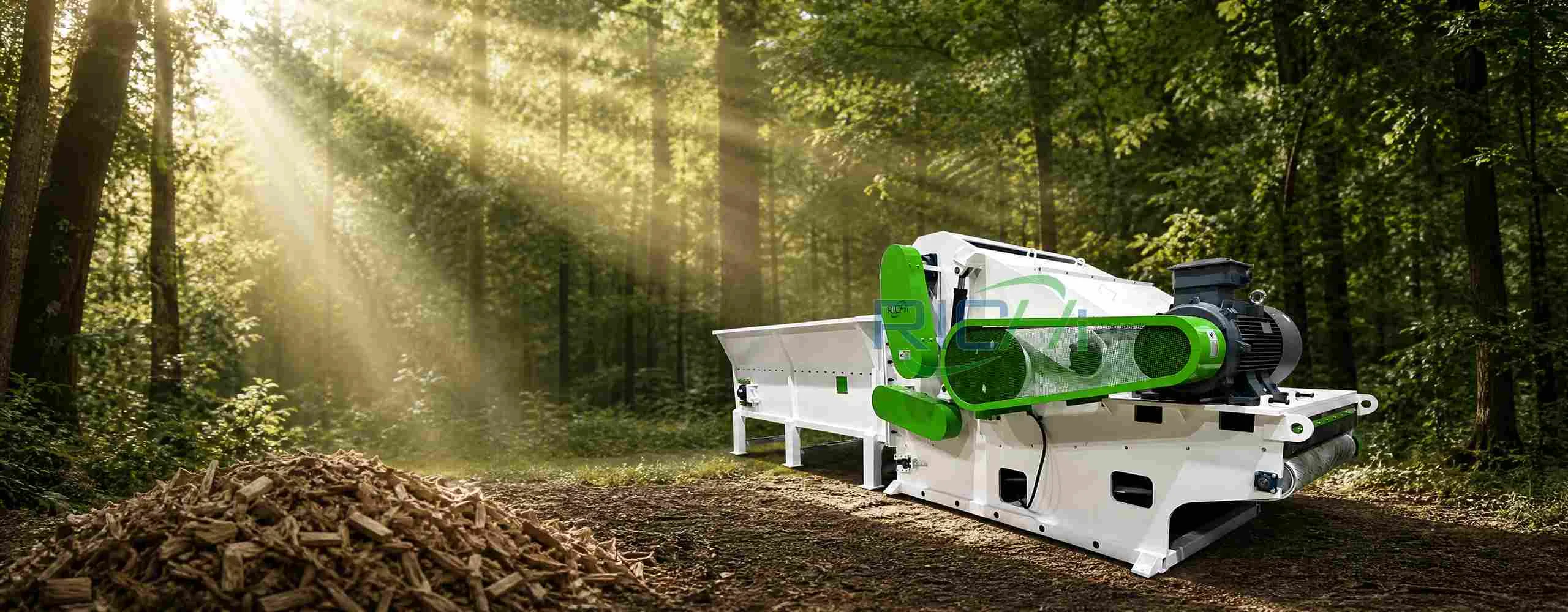
Choosing an Industrial System for Waste Wood Processing
SEO Title: Industrial Wood Crushing for Efficient Waste Recycling
Meta Description: Explore industrial wood crushing systems, key equipment features, capacity planning, and applications for recycled wood materials.
Wood waste is generated in large quantities by pallet manufacturers, logistics centers, furniture factories, sawmills, and timber processing businesses. When production facilities handle bulky wooden pallets, crates, boards, and offcuts, manual disposal becomes increasingly difficult. An industrial crushing system can reduce these materials into smaller pieces, making storage, transportation, and further recycling more manageable.
An industrial pallet crusher is designed for demanding wood-processing applications where equipment must handle regular material flows and different sizes of wooden waste. Selecting the right system requires an understanding of the incoming materials, production targets, and the quality of the final output.
1. Why Do Businesses Need Industrial Pallet Crushing?
Compared with small workshops, industrial recycling facilities often process larger volumes of wood waste. They need equipment that can operate continuously and connect with upstream and downstream machinery.
A suitable crushing system can offer several practical benefits:
- Reduced material volume: Crushing bulky pallets and wooden boards makes storage and transportation easier.
- More efficient handling: Smaller wood pieces can move through conveyors and feeding systems more consistently.
- Improved resource recovery: Suitable wood waste can become raw material for biomass fuel or other recycling applications.
- Less manual handling: Mechanical feeding and conveying can reduce the amount of direct material handling required.
- Flexible production: Different crushing and screening stages can be configured to meet different output requirements.
The actual benefits depend on the condition of the incoming wood, equipment configuration, and operating practices.
2. What Materials Can an Industrial Crusher Handle?
Industrial wood recycling facilities may receive several types of waste material:
Used wooden pallets: Broken pallets, damaged boards, pallet blocks, and discarded shipping platforms are common materials. They may contain nails, screws, or metal fittings that require removal.
Wooden crates and packaging: Logistics and manufacturing businesses often generate large wooden boxes, frames, and packaging materials that can be processed for recycling.
Furniture and wood-processing waste: Clean offcuts, discarded wooden components, and production residues may also be suitable, depending on their coatings, adhesives, and contamination levels.
Sawmill residues: Slabs, wood strips, and irregular offcuts can enter a suitable wood-crushing system after material inspection.
Before processing, operators should separate reusable wood and remove unsuitable materials. Painted, chemically treated, or contaminated wood should be assessed according to the intended recycling application and local environmental requirements.
3. How to Configure an Industrial Crushing System
A complete system usually includes more than one machine. Its configuration depends on the size of the incoming material and the required output.
Material feeding: Whole pallets and large wooden pieces may need a suitable feeding platform or conveyor. The feeding arrangement should match the crusher opening and avoid overloading.
Primary crushing: The primary crusher reduces bulky wood into manageable chips. Equipment selection should consider the maximum material dimensions, wood type, and expected throughput.
Metal separation: Used pallets frequently contain nails and other metal parts. A magnetic separator installed at an appropriate position can help remove ferrous contaminants and protect downstream equipment.
Secondary grinding: If smaller particles are required, a secondary grinder can further reduce the wood chips. A sawdust pellet mill for sale may be relevant when a project also plans to convert properly prepared wood material into biomass pellets, although grinding and drying requirements must be evaluated separately.
Screening and storage: Screens classify the processed material by size. Qualified particles can then be transferred to storage or the next production stage, while oversized pieces return for further processing.
4. Important Factors When Selecting Equipment
Before purchasing an industrial crusher, buyers should evaluate several technical and operational details.
Selection factorWhat to checkProcessing capacityAverage and peak hourly material volumeFeeding dimensionsMaximum pallet and wood-piece sizeWood conditionMoisture, hardness, and contaminationOutput sizeRequired chip dimensions and uniformityMetal separationMagnetic separation and foreign-object handlingMaintenanceCutting tools, wear parts, and service accessSystem integrationConveyors, grinders, screens, and storageCapacity should be based on actual material availability rather than an estimated maximum alone. A facility receiving irregular batches may need a buffer area or storage system to maintain stable crusher operation.
Blade condition also affects performance. Regular inspection, timely replacement, and proper feeding practices help maintain crushing efficiency and reduce unnecessary downtime.
5. Connecting Wood Crushing with Biomass Production
Some businesses want to do more than reduce the volume of waste wood. They intend to convert suitable wood residues into a marketable biomass product.
In this case, the crushing system can become the first stage of a larger production process. Depending on the raw material, the following stages may include magnetic separation, secondary grinding, drying, pelletizing, cooling, screening, and packaging.
The moisture content and particle size of the prepared material are especially important for pellet production. If the wood chips are too large or too wet, additional processing may be necessary before pelletizing.
RICHI provides equipment and production-line solutions for biomass processing. When planning a project, buyers should provide information about the raw material, expected capacity, required output, and existing factory conditions. These details help determine whether a standalone crusher or an integrated processing system is more appropriate. For more equipment information, visit the Richi Manufacture Pellet Machinery Factory resource and click here to find out more.
Conclusion
Industrial wood crushing helps recycling facilities manage bulky pallet waste, manufacturing residues, and other suitable timber materials. The most effective solution is not necessarily the largest machine, but the system that matches the incoming material, required output, and production schedule. Careful material sorting, metal separation, appropriate secondary processing, and regular maintenance all contribute to reliable long-term operation.