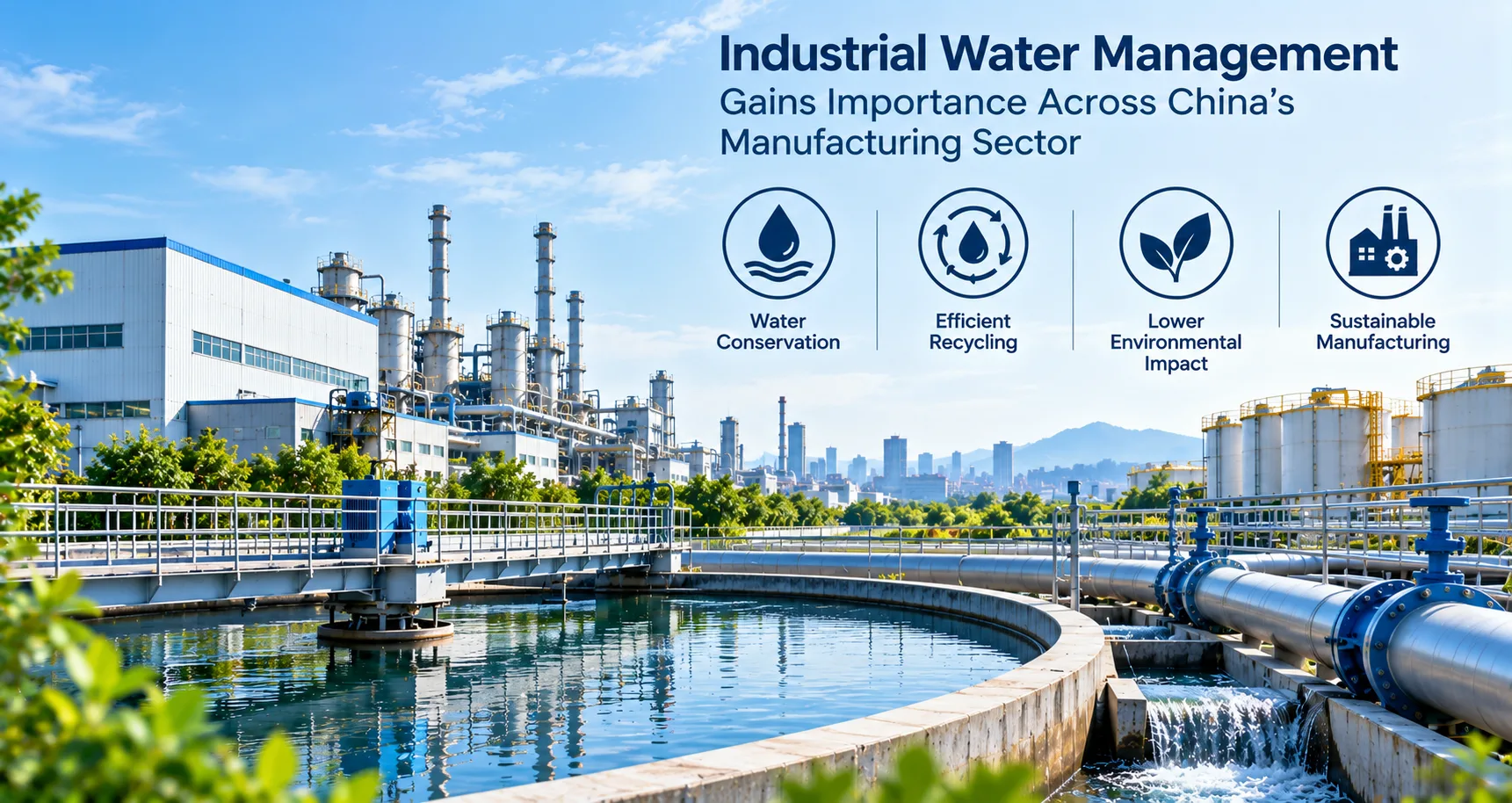
China’s industrial expansion is increasing the importance of reliable process-water treatment, recycling, and management infrastructure. Industries such as chemicals, petrochemicals, steel, power generation, electronics, and pharmaceuticals depend on consistent water supplies to maintain production quality and operational efficiency. At the same time, growing pressure on freshwater resources and stricter industrial water-efficiency requirements are encouraging manufacturers to invest in advanced purification, wastewater treatment, and water-reuse technologies.
According to the China Industrial Process Water Market report by Markntel Advisor, the sector was valued at USD 7.12 billion in 2025 and is projected to reach USD 8.98 billion in 2026 and USD 13.29 billion by 2032, registering a CAGR of 6.75% during 2026–2032. Water treatment equipment and systems represent the leading offering segment, accounting for approximately 52% of the sector in 2026, while chemical and petrochemical industries account for around 26.5% of end-user demand. These figures highlight the importance of industrial treatment infrastructure and water-intensive manufacturing activities in shaping demand.
Industrial Water Efficiency Drives Infrastructure Investment
China’s industrial sector requires substantial volumes of water for manufacturing, cooling, cleaning, processing, and steam generation. According to the Ministry of Industry and Information Technology (MIIT), industrial water consumption reached approximately 97.1 billion cubic meters in 2024, representing around 16% of the country's total water use. This consumption base creates recurring requirements for water treatment, filtration, conditioning, and recycling systems.
Government initiatives are also encouraging industries to improve water-use efficiency. China's Industrial Water Efficiency Improvement Action Plan established a target of reducing water consumption per unit of industrial value added by 16% by 2025 compared with 2020. It also aimed to increase the industrial water reuse rate among enterprises above the designated size to approximately 94%. The official industrial water-efficiency action plan emphasizes industrial wastewater recycling, advanced water-saving technologies, and improved digital water management.
These requirements are encouraging manufacturers to upgrade conventional treatment facilities and introduce closed-loop systems that reduce freshwater intake while maintaining production continuity.
Water Treatment Equipment and Systems Lead Demand
Water treatment equipment and systems account for approximately 52% of the sector in 2026. Industrial facilities require integrated treatment infrastructure, including filtration units, membrane systems, ion-exchange equipment, disinfection technologies, and chemical-dosing installations.
Membrane-based treatment is particularly important for applications requiring the removal of dissolved contaminants, suspended solids, and other impurities. Reverse osmosis and ultrafiltration systems can support industrial water purification and wastewater recovery, while ion-exchange and demineralization technologies help produce water suitable for boilers and other sensitive industrial processes.
Equipment investments are also supported by the need to replace aging systems and improve treatment performance. Large manufacturing facilities increasingly require integrated solutions that combine treatment equipment, monitoring instruments, automated controls, and maintenance services.
Chemical and Petrochemical Industries Represent a Major End-User Segment
The chemical and petrochemical industry represents approximately 26.5% of end-user demand in 2026. These facilities use water across cooling towers, boilers, chemical processing, steam generation, and equipment cleaning. Their wastewater can contain complex contaminants, requiring specialized treatment processes and carefully designed recovery systems.
Water treatment chemicals, including coagulants, flocculants, biocides, corrosion inhibitors, and scale inhibitors, help maintain system performance and protect industrial equipment. Appropriate chemical treatment can reduce scaling, corrosion, biological growth, and operational disruptions.
Steel manufacturing, oil and gas refining, power generation, textiles, pharmaceuticals, and food processing also contribute to demand. Each industry has different water-quality requirements, making application-specific treatment systems important for achieving reliable operating performance.