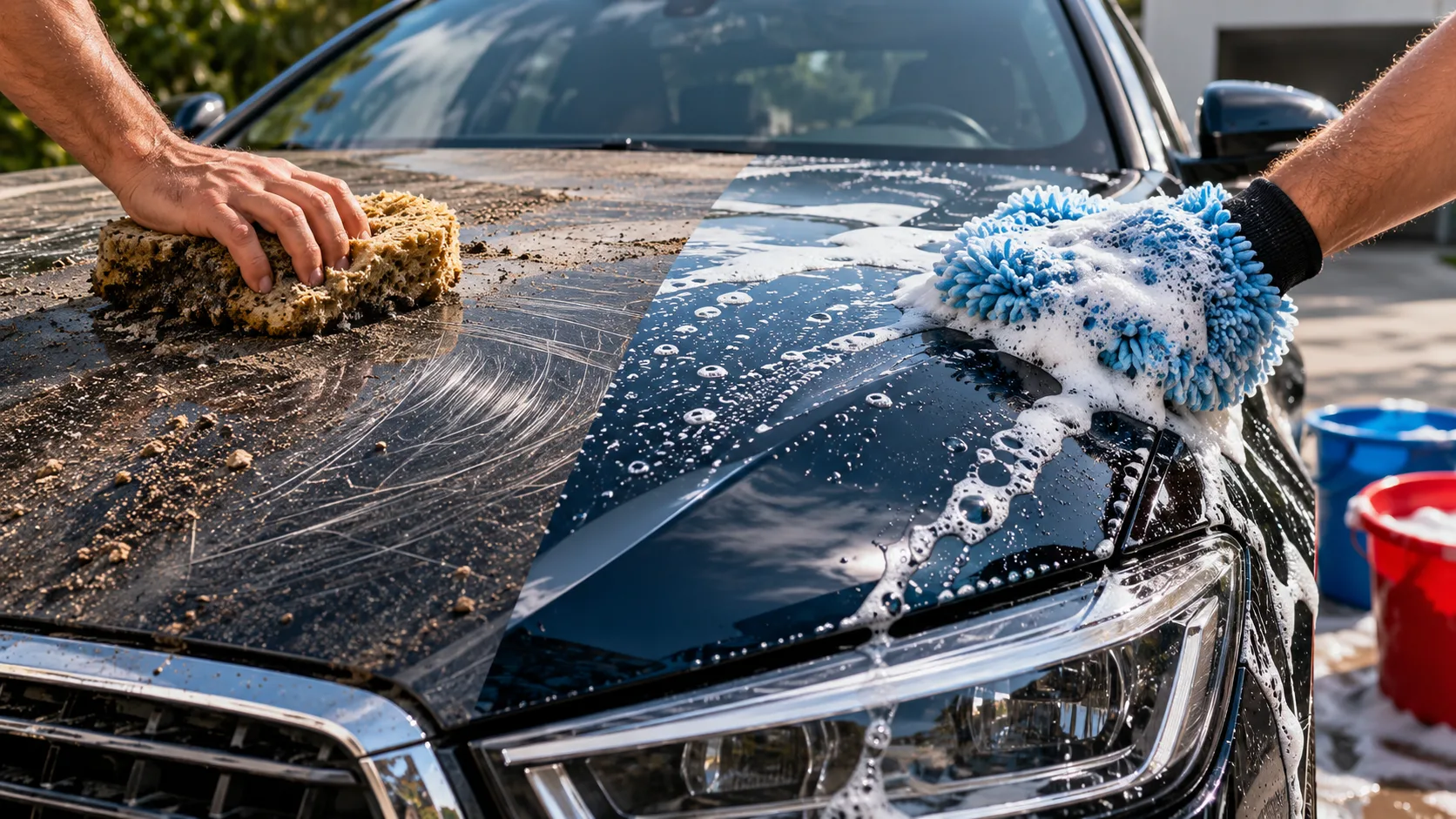
A car can look clean from a distance and still be collecting scratches every time you wash it. The damage often starts with something ordinary, a sponge that picked up grit, a bucket of dirty water, or a towel dragged across the bonnet to remove stubborn dust.
These car washing mistakes are easy to overlook because the results aren't always visible immediately. Over time, though, repeated washing with the wrong tools or techniques can leave the paintwork covered in fine scratches, swirl marks, water spots, and dull patches.
Modern automotive paint isn't indestructible. Its clear coat provides protection and gloss, but it can still be scratched, stained, or degraded by poor maintenance. The good news is that protecting it doesn't require expensive detailing products or a professional wash every week. It starts with understanding what actually causes damage.
1. Washing a Dry, Dusty Car Without Pre-Rinsing
One of the most damaging habits is putting a sponge or wash mitt straight onto a dusty car.
Road dust isn't always harmless powder. It can contain sand, fine grit, brake dust, and other abrasive particles. When you rub these particles across the paint, they can leave fine scratches in the clear coat. Those marks often appear as circular swirls under direct sunlight.
The mistake becomes especially obvious on dark-coloured cars, where even minor surface defects stand out.
What to do instead: Rinse the car thoroughly before touching the paint. A pressure washer can help loosen dirt, but keep the nozzle at a sensible distance and avoid directing a concentrated jet at damaged paint, loose trim, or vulnerable seals.
Pay particular attention to the lower doors, wheel arches, rear bumper, and rocker panels. These areas collect road grime that can easily contaminate your wash mitt.
If the car is heavily soiled, don't assume a quick splash of water has removed everything. The aim is to loosen and remove as much loose contamination as possible before making contact with the paint.
2. Using the Same Sponge for the Entire Car
That old household sponge might seem perfectly adequate for washing a car. Unfortunately, its ability to hold dirt can work against you.
As you clean the lower bodywork, the sponge collects grit from the dirtiest parts of the car. Move it straight to the bonnet or roof, and you're potentially dragging that contamination across cleaner paint.
A similar problem occurs when the same wash mitt is used on the wheels and bodywork. Wheels collect brake dust, road grime, and stubborn deposits that shouldn't be transferred to painted panels.
What to do instead: Use a dedicated automotive wash mitt and separate tools for the wheels. Microfibre wash mitts are a practical choice because they can hold plenty of soapy water and help lift dirt away from the surface.
Rinse the mitt frequently. A two-bucket method, using one bucket for shampoo solution and another for rinsing the mitt, can help reduce the amount of dirt returned to the paint.
It isn't a guarantee against scratches, but it gives you better control over contamination. That's what matters.
3. Washing With Dish Soap or Household Cleaners
When car shampoo runs out, reaching for dishwashing liquid might seem like a sensible shortcut. After all, it cuts through grease on plates, so why shouldn't it clean a car?
The problem is that household cleaners aren't necessarily formulated for automotive paint, waxes, sealants, or other protective products. Depending on the formulation, they may strip some existing protection or leave residues that affect the finish.
Strong household chemicals and abrasive cleaning products can create bigger problems, particularly when used repeatedly or without checking their suitability.
What to do instead: Choose a car shampoo designed for automotive finishes. Follow the dilution instructions on the bottle rather than assuming more product means a better clean.
If your car has a wax or sealant applied, check whether the shampoo is compatible with that protection. Some products are designed for routine washing, while others are intended to remove old protection before a fresh application.
There's little benefit in spending money on paint protection and then using a cleaning product that undermines the result.
4. Washing the Car in Direct Sunlight
A sunny driveway might look like the ideal place to wash your car, but direct sunlight can make the job harder.
When the bodywork is hot, shampoo and rinse water can dry before you've finished washing the panel. That leaves mineral deposits behind, particularly in areas supplied with hard water. Under certain conditions, these deposits can become stubborn water spots or etch the finish.
The risk increases when you wash the entire car before rinsing it. By the time you reach the other side, the first panels may already be drying.
What to do instead: Wash in the shade whenever possible, preferably when the bodywork is cool. If that's not practical, work on one section at a time and rinse it promptly.
Don't forget the glass and mirrors. Water spots can be particularly distracting on windows, especially when driving towards low sunlight at dawn or dusk.
If water has already dried on the paint, avoid attacking the marks with an abrasive pad. Start with an appropriate automotive cleaning product and a soft microfibre towel. Persistent deposits may need a dedicated water-spot remover, used according to its instructions.
5. Scrubbing Bird Droppings and Bug Splatter
Bird droppings and insect residue are more than cosmetic annoyances. Leaving them on the paint for extended periods can lead to staining or etching, particularly under hot conditions.
The wrong response is to scrub them aggressively with a dry cloth. Dried deposits can contain abrasive particles, and rubbing them against the paint can create scratches while you're trying to remove the stain.
Bird droppings can also affect the finish through their chemical composition and interaction with heat. Once the paint has been etched, simply washing the car may not restore its original appearance.
What to do instead: Remove droppings and bug residue as soon as practical. Soak the affected area with an automotive-safe cleaner or a damp microfibre towel to soften the deposit before wiping it away gently.
Never scrape dried contamination with your fingernail, a plastic card, or a hard-edged tool. If the residue doesn't come away easily, give the cleaner more time to work.
If a mark remains after cleaning, inspect it in good light. It may be staining or clear-coat damage rather than dirt. More aggressive rubbing won't necessarily fix it and could make the problem worse.
6. Drying With an Old Bath Towel
Washing isn't the only stage where scratches happen. Drying can cause damage too, especially when you use a rough towel or drag a contaminated cloth across the paint.
Household bath towels may have a texture or construction that isn't ideal for automotive finishes. More importantly, any towel that has collected dirt can become an abrasive tool.
The common mistake is to wipe repeatedly over a panel to remove every last drop, applying pressure as the towel moves across the surface.
What to do instead: Use a clean, soft, automotive-grade microfibre drying towel. Blotting or gently drawing the towel across the surface with minimal pressure can reduce unnecessary friction.
Keep a separate towel for the wheels and lower bodywork. Don't use a towel that has fallen on the ground until it has been properly washed and inspected.
Also, avoid leaving the car to air-dry if your water supply leaves mineral deposits. A clean, controlled drying process helps prevent water spots and gives you a chance to inspect the paint as you work.
7. Ignoring the Wheels and Lower Bodywork
Wheels, tyres, and lower panels are usually the dirtiest parts of a car. They're also where many owners make a simple mistake: using the same cleaning equipment everywhere.
Brake dust can contain abrasive particles, while road grime may include oil, tar, and other contaminants. Moving a wheel brush or dirty cloth onto the painted bodywork can introduce material that scratches the finish.
Another problem is choosing a wheel cleaner without checking whether it's suitable for the wheel's finish. Painted, polished, chrome-plated, and other wheel surfaces can have different care requirements.
What to do instead: Clean the wheels before washing the bodywork, using dedicated brushes and products suitable for the wheel material. Follow the manufacturer's instructions, and don't allow cleaning chemicals to dry on the surface.
For tar or stubborn road deposits on painted panels, use a product specifically formulated for automotive paint rather than an improvised solvent.
Keep the dirtiest tools separate from anything that touches the bonnet, roof, or doors. It's a small change that can prevent a surprisingly large amount of damage.
8. Using a Pressure Washer Too Aggressively
A pressure washer can save time, particularly when removing mud from wheel arches or loosening dirt from the lower body. But more pressure isn't automatically better.
Holding the nozzle too close can damage vulnerable areas, lift loose paint, or force water into places it shouldn't reach. Existing chips, peeling clear coat, damaged seals, and exposed edges deserve particular care.
Pressure washers also don't eliminate the need for proper washing. A jet may remove loose dirt, but bonded contamination can remain on the surface.
What to do instead: Follow the washer manufacturer's guidance for the appropriate nozzle, pressure, and working distance. Keep the spray moving and avoid concentrating it on one spot.
Be cautious around cameras, sensors, badges, damaged paint, and weathered trim. If the car has a known paint defect, don't use high-pressure water to test whether the affected area is secure.
Use the washer as a tool for rinsing and loosening dirt, not as a substitute for a careful wash.
9. Washing Too Infrequently, Then Scrubbing Too Hard
Leaving a car dirty for weeks can allow bird droppings, bug splatter, tree sap, and road contaminants to remain on the paint for longer than necessary. Yet washing an excessively dirty car with a single aggressive pass creates its own problems.
The answer isn't to wash every day. Frequent washing with poor technique can cause more wear than a less frequent wash performed properly.
Your washing schedule should reflect how and where you drive. A car parked under trees may need prompt attention for sap and droppings. One driven regularly on salted winter roads benefits from timely rinsing of exposed areas and the underbody. In dry, dusty climates, removing accumulated grit before contact washing is especially important.
What to do instead: Check the car's condition rather than following a rigid calendar. Remove damaging contamination promptly and give the paint a proper wash when dirt builds up.
A compatible wax or paint sealant can make routine cleaning easier, although neither makes the surface scratch-proof. If the paint already has significant swirl marks, consider a professional assessment before attempting machine polishing yourself.
Make Every Wash Count
You don't need a cabinet full of detailing products to keep your paint in good condition. You need clean tools, suitable shampoo, a thorough pre-rinse, and enough patience to avoid rubbing dirt across the bodywork.
The most useful habit is to separate cleaning from scrubbing. Loosen contamination first, remove it with the right products, and use minimal pressure when washing and drying. That approach reduces the risk of adding new defects during routine maintenance.
Before your next wash, check three things: whether the bodywork is cool, whether your wash mitt and drying towel are clean, and whether you've separated your wheel-cleaning tools from your paint-care equipment.
Those checks take seconds. Repairing scratched or etched paint can take considerably more time, and paint correction may remove some clear coat in the process. Preventing the damage is usually the smarter choice.
FAQs
1. Can washing a car cause scratches?
Yes. Dirt trapped in a sponge, wash mitt, or towel can scratch the clear coat when rubbed against the paint. Rinse the car first, use clean automotive washing tools, and avoid applying unnecessary pressure during washing and drying.
2. Is dish soap safe for washing a car?
Dish soap isn't the ideal choice for routine car washing because it's not formulated specifically for automotive finishes. Depending on its ingredients, it may affect wax or sealant protection. Use a car shampoo designed for painted automotive surfaces instead.
3. Why should you avoid washing a car in direct sunlight?
Direct sunlight heats the bodywork and causes water and shampoo to dry quickly. This can leave mineral deposits and stubborn water spots on the paint. Wash in the shade when possible, and rinse each section before the water evaporates.
4. How should you remove bird droppings from car paint?
Soak the affected area with an automotive-safe cleaner or a damp microfibre towel to soften the deposit. Wipe gently without scraping or dry rubbing. Remove droppings promptly because prolonged exposure can stain or etch the clear coat.
5. Does waxing prevent scratches on car paint?
Wax can add a protective layer and help water and dirt release more easily, but it doesn't make paint scratch-proof. Clean washing tools and careful technique remain essential. Existing scratches may require professional assessment and paint correction to improve their appearance.
Stay connected with AutoVoB for the latest in the automotive world.