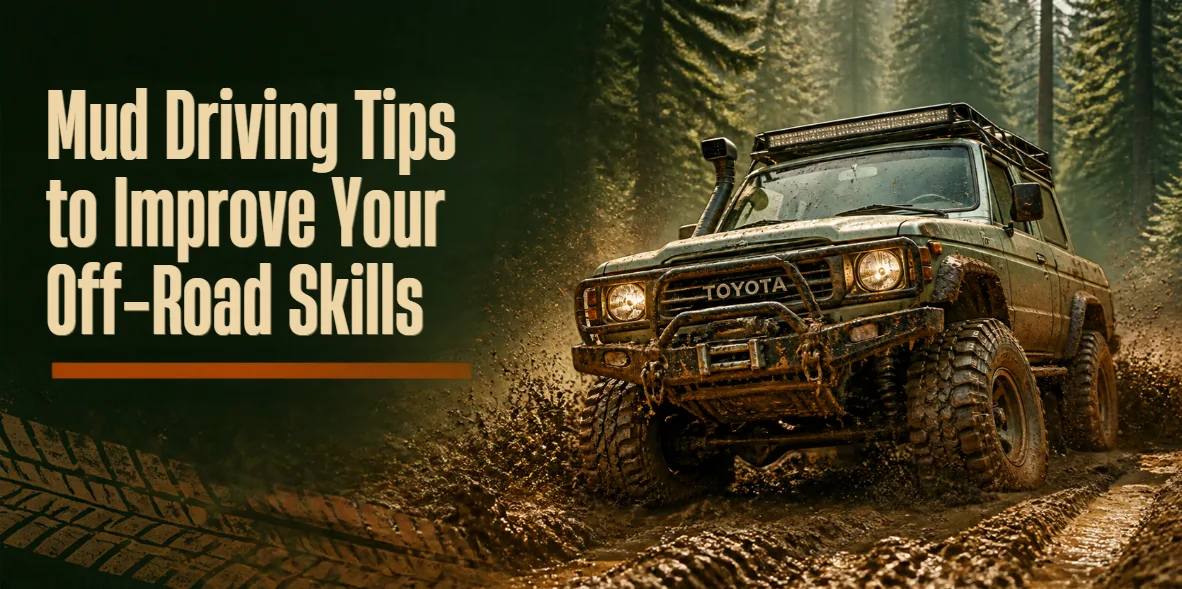
Muddy trails can quickly turn a fun off-road trip into a tough recovery. You might be enjoying the scenery, then suddenly your tires are spinning, and your truck is stuck. To handle these situations, you need more than just a good 4x4. Preparation, smart driving, and the right gear are key.
The good news is you don’t need years of experience to get better at driving in mud. If you learn how to read the terrain, keep traction, and deal with surprises, you’ll feel more confident on tough trails. But before you start, watch out for a common mistake that can get you stuck right away.
Assess the Terrain Before Driving Into the Mud
One of the best things you can do before driving in mud is to check the trail first. Mud can hide rocks, roots, deep holes, and other things that might damage your vehicle or get you stuck.
Look at how deep and thick the mud is. Shallow mud on hard ground is usually easier to cross, but deep, soft mud can trap your tires fast. Tire tracks might show a good path, but don’t just follow deep ruts—they can trap your vehicle.
Deep ruts can lower your ground clearance and make your undercarriage drag. If you’re not sure about the trail, check it out safely or pick another way. Sometimes, turning around is the smartest move.
Engage Four-Wheel Drive and Choose the Right Gear
Four-wheel drive (4WD) sends power to all four wheels, which helps you keep traction on slippery ground. But the right setting depends on the trail and what your vehicle can handle.
Use 4-High (4H) for easier muddy trails where you can keep a steady speed. For deep mud, steep hills, or tricky spots where you need to go slow, 4-Low (4L) gives you better control.
Whenever you can, switch to the right setting before you hit tough terrain, and follow your vehicle’s instructions. Picking the right gear helps you use power smoothly and keeps your wheels from spinning too much.
Keep in mind that 4WD doesn’t always mean you’ll have grip or stop faster on slippery ground. Drive carefully and give yourself space to react to changes.
Maintain Steady Momentum Without Losing Control
Keeping a steady pace can help you avoid getting stuck in soft mud. But going faster isn’t always the answer. Aim for a speed that matches the trail and lets you stay in control.
Press the gas pedal smoothly instead of flooring it. Spinning your wheels too much can dig you in deeper and make it harder to get out. Avoid sudden braking, sharp turns, or quick bursts of speed, since these can make you lose traction.
Keep your wheels pointed where you want to go, and make small changes as needed. Slow down for hidden obstacles or tight spots, and don’t try to power through areas you haven’t checked out first.
Choose Tires Designed for Muddy Trails
Your tires make a big difference in how your vehicle handles mud. Mud-terrain tires have large tread blocks and wide grooves that grip soft ground and throw off packed mud as they spin.
All-terrain tires are a good middle ground if you drive on both roads and moderate trails. Mud-terrain tires are better for people who often face deep mud and tough off-road spots, but they can be noisier and less comfortable on pavement.
If you’re thinking about upgrading, the Nitto Tires Mud-Grappler is one option to look at. It’s made for tough off-road use and might be a good fit if you often drive on hard trails. Before you buy, check the sizes, fit for your vehicle, load rating, and whether it works with your wheels and suspension. Also, think about road noise if you use your truck every day.
No matter the brand, pick tires that match your vehicle’s weight and how you plan to use it. Quality mud tires help with traction, but they can’t make up for risky driving or trails that are too tough for your vehicle.
Adjust Tire Pressure for Better Traction
Sometimes, letting a little air out of your tires can help them grip better by making more contact with the ground. The right pressure depends on your tires, your vehicle’s weight, your load, and the trail.
Don’t let out too much air, since it can damage the tire’s sidewalls or cause it to come off the wheel. Check your tire maker’s advice to find the best pressure for your setup.
Always bring a tire gauge and a portable air compressor when you go off-road. If you let air out for the trail, pump your tires back up to the right pressure before driving on the road again.
Learn How to Handle Slippery Ruts and Muddy Hills
Ruts and muddy hills need careful planning. Pick a path that keeps you out of deep grooves and gives your vehicle enough clearance underneath. Tracks from other vehicles can help, but always check their depth before following.
Before you try to climb a muddy hill, look at the slope, the surface, and where you’ll exit. If it’s safe, drive straight up and keep a steady pace. Don’t hit the gas suddenly or make sharp turns, since that can make you lose grip.
If the hill looks risky or your vehicle is having trouble, don’t push it. Look for a safer way if you can. Never drive across a steep slope at an angle, since that can make your vehicle tip over.
Know What to Do When Your Vehicle Gets Stuck
If your tires spin without moving the vehicle forward, ease off the throttle. If your tires are spinning but you’re not moving, let off the gas. Pushing harder will just dig you in deeper. Clear mud around the tires and place traction boards beneath them to create a firmer surface. Depending on your vehicle and conditions, gently rocking between forward and reverse may also help. Follow the manufacturer's instructions and stop if the technique isn't working.
Bring key recovery gear like a shovel, strong recovery straps, the right shackles, and a winch if needed. Make sure you know how to use everything before you go on tough trails.
Keep people away from recovery straps and where they attach. Only use gear that’s rated for your vehicle and the right recovery points, and never stand near a tight strap or cable. If you’re not sure how to recover your vehicle safely, ask someone with experience for help.
Inspect and Clean Your Vehicle After Mud Driving
Mud can accumulate around your wheels, brakes, suspension, and undercarriage. After an off-road trip, rinse away the buildup and inspect accessible components for damage.
Check your tires for cuts, embedded debris, and other signs of wear. Look for loose components, underbody damage, and clogged drainage areas. Inspect the brakes and make sure they function normally before returning to regular driving.
If you hear strange noises, feel vibrations, or your brakes don’t work well, have a professional check your vehicle. Pump your tires back up to the right pressure if you let air out for the trail. Cleaning and regular checks help you catch problems early and keep your vehicle ready for your next trip.
Turn Mud into Your Playground and Level Up Your Off-Road Skills
Getting better at driving in mud takes practice, planning, and smart choices. If you check the terrain, keep steady momentum, pick the right tires, and know how to recover safely, you’ll feel more confident on muddy trails. Before your next trip, check your vehicle, gather your recovery gear, and make sure your tires are right for the job. Upgrade your setup if needed, plan your route, and use these tips to make your next muddy adventure safer and more fun.