
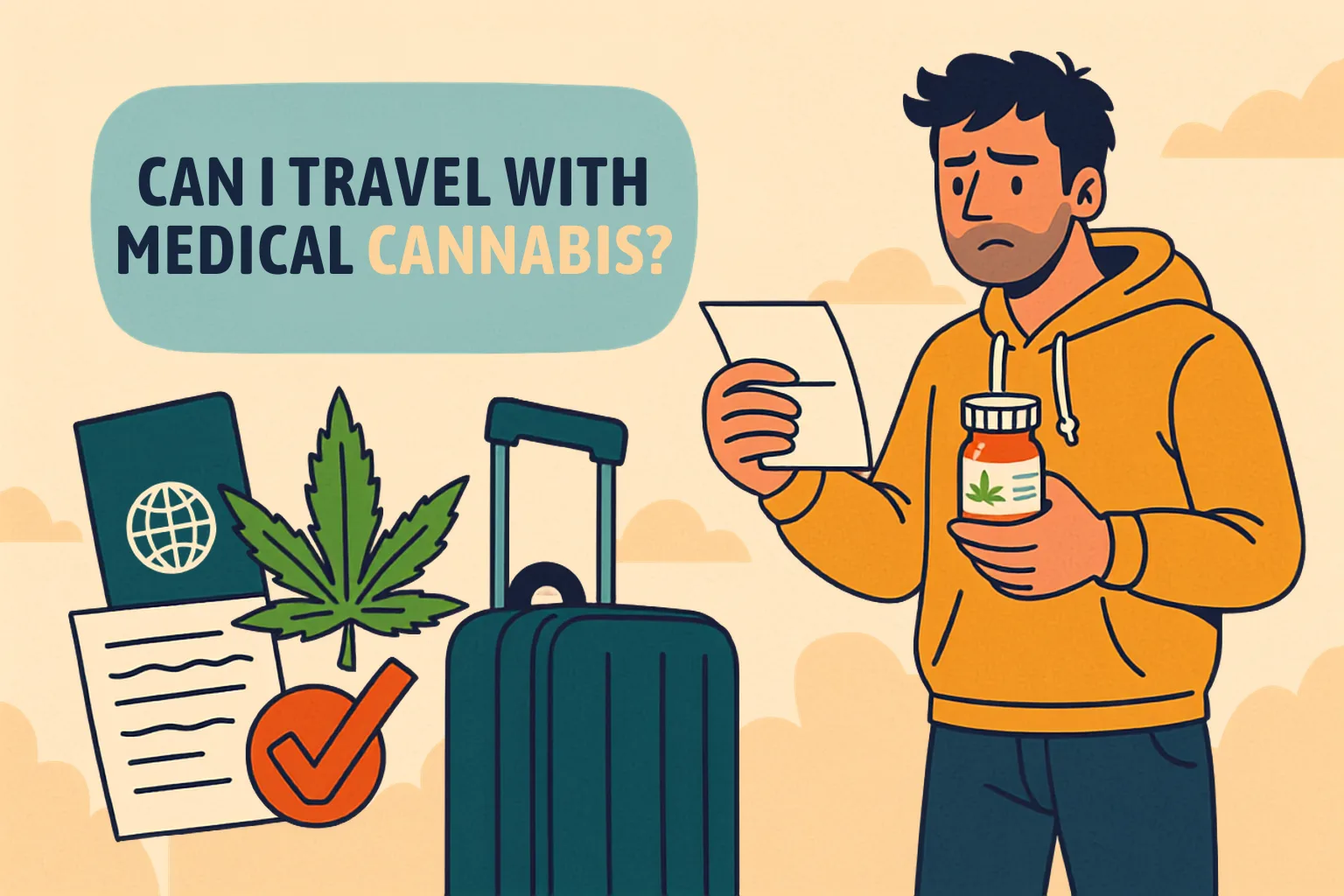
For millions of Americans managing chronic pain, anxiety, or sleep disorders, medical cannabis has become a vital part of their daily wellness routine. For years, however, a trip to the airport meant facing a stressful legal gray area, a feeling often described as an ongoing indignity for legitimate patients. Recent headlines in early 2026 suggested a massive shift in federal policy, leading many to believe that flying with their medicine was finally fully legal.
If you have visited the Transportation Security Administration (TSA) website lately, you might have seen a surprising "Yes" next to medical marijuana in the "What Can I Bring?" tool. While this looks like a green light, the reality is much more nuanced. As an expert in this space, I want to help you cut through the clickbait and understand the actual legal considerations before you pack your bags.
The Great TSA Update: Fact vs. Fiction
The confusion began in late April 2026 when the TSA quietly updated its website. For the first time, the "What Can I Bring?" page listed medical marijuana as "Yes (Special Instructions)" for both carry on and checked bags. Previously, the site gave a flat "No".
However, despite the buzz on social media, the TSA’s formal policy has not actually changed. A spokesperson for the agency clarified that the update was intended only for "clarity and conciseness" and does not offer new legal protections. The "Special Instructions" simply point back to the existing legal and regulatory context that has been in place for years. Essentially, the agency updated its page, but not its core rules.
Understanding the Rescheduling Shift
To understand why this is happening now, we have to look at the federal level. In April 2026, a federal rescheduling order took effect, moving certain cannabis products from Schedule I to Schedule III under the Controlled Substances Act. This was a historic move, as it officially acknowledged that some forms of cannabis have an accepted medical use.
The new Schedule III status applies specifically to two categories: FDA approved cannabis derived pharmaceuticals, like Epidiolex, and cannabis products regulated under qualifying state medical marijuana programs. It is important to note that recreational marijuana remains a Schedule I controlled substance. This means that while your state-licensed medical product might receive different federal treatment than it used to, recreational products purchased from the same dispensary do not. The legal status of your medicine now depends almost entirely on the paperwork and the specific state program it comes from.
What Actually Happens at the Security Checkpoint?
One of the most common questions patients ask is whether TSA agents are actively looking for their medicine. The short answer is no. TSA's screening procedures are focused on security and are designed to detect potential threats to aviation, such as explosives and weapons. They are not drug enforcement officers.
However, the "referral" rule still stands. If a TSA officer discovers any illegal substance or evidence of criminal activity during screening, they are required to refer the matter to local law enforcement. Once a police officer is involved, the outcome is out of the TSA's hands. The local authorities will decide what happens next based on the laws of that specific jurisdiction. Because of this, the final decision on whether an item is allowed through always rests with the individual TSA officer on duty.
The Patchwork of State Laws
The biggest risk for travelers is the "patchwork" of conflicting laws across the country. Even if you are flying between two states where medical use is legal, crossing state lines with cannabis is still technically a federal crime.
Furthermore, not all states recognize out of state medical cards, a concept known as reciprocity. Some states, like Maine, Nevada, and Rhode Island, offer full reciprocity, allowing you to possess and even purchase medicine. Others, like Arkansas and Hawaii, require a visitor application and a fee before you arrive.
Then there are states like Texas or Florida, which have historically been much stricter. In Texas, for example, they do not recognize out of state cards, meaning entering the state with cannabis could still be considered a crime regardless of your documentation. Always research the specific rules of your destination and any states where you have a layover.
A Word on International Travel
If you are planning an international trip, the advice is simple: do not do it. Taking cannabis across international borders remains a serious federal and international crime, even if it is legal in both the country you are leaving and the country you are visiting. Customs and Border Protection (CBP) operates under much stricter mandates than the TSA and will be looking for narcotics. Entering a country like China, Saudi Arabia, or even countries with legal medical programs can lead to severe legal consequences, including imprisonment.
Practical Tips for the Responsible Traveler
If you decide that traveling with your medicine is necessary for your health, here are several steps to minimize your risk:
Carry Documentation: Always have your medical marijuana ID card and your physician’s certification with you.
Original Packaging: Keep your products in their original packaging with the dispensary receipts attached.
Limit Quantities: Only bring what you reasonably need for the duration of your trip.
CBD Rules: You can legally fly with hemp derived CBD products that contain less than 0.3% THC. To avoid confusion, bring a Certificate of Analysis (COA) for these products.
Check Airline Policies: Some airlines, like Delta, have explicit policies stating they do not allow marijuana on their flights despite state laws.
Amnesty Boxes: If you realize you have extra medicine before you go through security, look for "amnesty boxes" at the airport to safely and legally dispose of it.
Final Thoughts
The recent changes at the TSA and the federal rescheduling move are meaningful early steps toward recognizing cannabis as a legitimate medicine. However, we aren't at the finish line yet. For now, "safe" is a relative term. Until federal law and state enforcement procedures are fully aligned, the best approach is one of extreme caution. Your peace of mind is often worth more than the risk of a legal headache. If you can, the safest route is to leave your THC products at home and find a legal way to access your medicine once you land.