
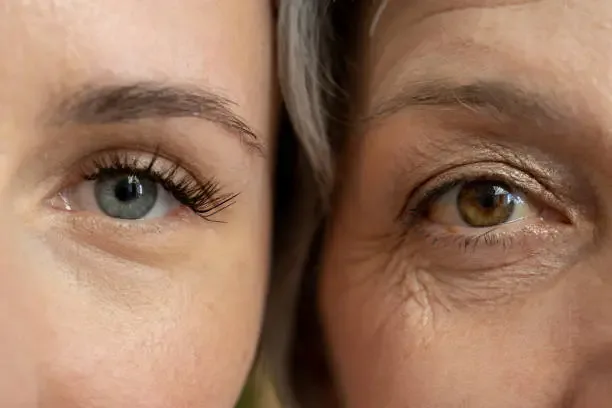
A person can be 52 years old on paper and still have the muscle strength, blood pressure, metabolic health and recovery capacity of someone younger. Another person can share the same birthday but carry a much heavier burden of inflammation, insulin resistance, frailty and cellular damage. That gap is what scientists and marketers mean by biological age.
Here is the blunt answer: biological age can probably be slowed, and some measures can move in a younger direction, but nobody has proved that a supplement, cold plunge or home test can turn back the whole human aging process. The most credible path is less glamorous. Build and preserve muscle, keep metabolic health in good shape, sleep consistently, stay socially connected and avoid treating a laboratory score as a diagnosis.
That may sound less exciting than "reverse your age by 10 years.” It is also much closer to what the evidence supports.
What is Biological Age, and How is It Different from Chronological Age?
Chronological age is simply the time since birth. Biological age estimates how old a person's tissues, systems, or physiological functions appear to be, based on selected biomarkers. It is not a universally agreed number, and no single biological-age test captures every aspect of aging.
The distinction is useful because aging is uneven. The heart, immune system, brain, muscles and metabolism do not necessarily decline at the same speed. The Mayo Clinic Press explanation of biological and chronological age makes the important point that biological age draws on multiple factors, not just a birthday. But people should not mistake the concept for a precise personal verdict.
That is the first popular assumption worth challenging. Biological age is not a hidden number a machine can reveal. It is a model built from measurements, and different models can produce different answers.
Why Do People of the Same Age, Age Differently?
People age at different rates because aging reflects several interacting processes, including accumulated cellular damage, chronic inflammation, mitochondrial changes, altered gene regulation, loss of muscle and declining metabolic resilience. Genetics matter, but they do not operate in isolation. Long-term physical activity, smoking, alcohol use, diet, sleep, stress, pollution, infections, illness and social circumstances can all shape health trajectories.
The mechanisms are real, but the popular language is often too tidy. No single “aging switch” can be turned off. Mitochondria can become less efficient, but that does not mean one product can simply “repair” them. Inflammation can become chronically elevated, but lowering one inflammatory marker does not automatically extend a person’s life. Epigenetic changes can track age, but a younger-looking methylation pattern is not the same thing as a younger body.
This is why biological age vs. chronological age is a useful comparison, while “your exact biological age” is often an overconfident sales pitch.
Can Biological Age Be Reversed?
Can biological age be reversed? In a limited sense, yes. Some biological-age measurements can decrease after recovery from acute stress or in response to an intervention. That does not prove that a person has reversed all underlying aging or gained extra years of healthy life.
A study reported by the National Institute on Aging found that DNA-methylation-based age measures rose after major physiological stress, including emergency surgery, then returned toward pre-stress levels within four to seven days. Similar patterns were observed in pregnancy and severe COVID-19. The finding is important because it shows that some age-related molecular signals are dynamic rather than fixed.
It is also easy to overread. Recovery from a stress response is not the same as rejuvenation. A clock moving backward may reflect changes in immune cells, inflammation or tissue state. It does not establish that a person’s cancer risk, cardiovascular risk, muscle function and mortality risk have all moved backward by the same amount.
The strongest human evidence so far supports slowing deterioration and improving healthspan, not making adults biologically young again.
What Lifestyle Habits Have the Strongest Case?
The most convincing interventions are not the ones with the most dramatic branding. They are the ordinary behaviours that improve several systems at once.
Strength Training Is Not Optional Aging Insurance
Muscle is not merely cosmetic tissue. It supports mobility, glucose regulation, balance and independence. Losing muscle and strength with age can make illness, falls and recovery more dangerous. That is why resistance training deserves more attention than another conversation about antioxidants.
The World Health Organization recommends at least 150 minutes of moderate activity per week for adults, along with muscle-strengthening work on two or more days. Those recommendations are not sold as an age-reversal protocol. They are better than that: public-health guidance grounded in broad evidence for cardiovascular, metabolic, and functional health.
Aerobic activity matters too. Walking, cycling, swimming and other endurance work support cardiorespiratory fitness and metabolic health. The sensible goal is not to chase a “younger” clock. It is to remain capable of climbing stairs, carrying groceries, recovering from setbacks and participating in life.
Protein And Metabolic Health Matter More Than Fasting Theatrics
Adequate protein, a nutrient-dense diet and sensible energy intake help protect muscle and metabolic function. Healthy eating patterns commonly emphasise vegetables, fruit, legumes, whole grains, nuts, fish, or other protein sources, and limit ultra-processed foods. The biological-aging benefit likely comes from combined effects on body composition, blood pressure, glucose regulation, and inflammation, not from one magical food.
Intermittent fasting is more complicated than its online reputation. A 2024 review of randomised trials found that intermittent fasting and calorie restriction can improve weight and cardiometabolic outcomes, but the approaches were often broadly similar and the evidence was heterogeneous. That is a plausible tool, not proof of reversing human ageing. For older adults, especially those vulnerable to muscle loss or frailty, aggressive restriction may be a poor trade.
The CALERIE trial analysis provides a more credible signal. In a randomised trial of 220 adults without obesity, two years of calorie restriction slowed the DunedinPACE measure of aging, but did not significantly change several other DNA-methylation age estimates. The treatment effects were small, and the researchers stressed that longer follow-up is needed to connect these molecular changes with chronic disease or mortality.
That is exactly how this evidence should be reported: promising, measurable and not yet a longevity guarantee.
Sleep, Stress and Social Connection Are Biology, Not Lifestyle Decoration
Poor sleep and persistent stress can impair metabolic, immune and cognitive function. Chronic loneliness and social isolation are also associated with poorer health outcomes. The National Institute on Aging links social disconnection with higher risks involving heart disease, depression, cognitive decline and earlier death.
The point is not that dinner with friends will reset an epigenetic clock. The point is that a healthy lifespan is not just a cellular-cleanup project. People sleep better, move more, and cope more effectively when their lives include support, purpose, and connection. Any theory of aging that ignores those conditions is biologically incomplete and socially naive.
Are Biological-Age Tests Worth Buying?
Usually, not as a one-off consumer verdict. Epigenetic clocks estimate age from DNA methylation patterns, while other tests use blood chemistry, inflammatory markers, physical performance or combinations of measures. These tools are valuable in research because they can detect patterns that chronological age misses.
But consumer tests have three major problems. First, different clocks measure different things. Some estimate chronological age; others aim to predict mortality risk or the pace of aging. Second, technical variation and changes in blood-cell composition can affect results. Third, a score may be statistically associated with risk at the population level without telling one individual what will happen next.
The 2024 research literature describes epigenetic clocks as promising but still limited in clinical translation. Even the most impressive clock is a risk signal, not a medical diagnosis. A repeat test that changes by several years may reflect biology, measurement noise or both.
So, what about a biological age vs chronological age calculator? Treat it as an educational estimate. Do not use it to decide whether to stop medication, begin a restrictive diet or buy an expensive supplement programme. Standard clinical measures, medical history, strength, fitness, blood pressure, glucose and lipids often provide more actionable information.
What About Supplements, Cold Exposure and Other Longevity Trends?
This is where the industry most often outruns the science. Supplements such as NAD-related compounds, resveratrol, senolytic candidates and other longevity products may have interesting mechanisms or early-stage data. That is not the same as demonstrating longer human healthspan. “Influences a pathway involved in aging” is a laboratory statement, not a clinical outcome.
Cold exposure is another good example. A 2025 review found plausible effects involving metabolism, inflammation and oxidative stress, but also noted major gaps in long-term human evidence and potential risks. A cold plunge may be enjoyable or useful for a specific training goal. It is not an established anti-aging therapy.
The same standard should apply to every intervention: Does it improve function, prevent disease or extend healthy life in well-designed human studies? If the answer is only that it changes a biomarker, the claim should stay modest.
The Real Target is Healthspan, Not A Younger Birthday
The most responsible position in 2026 is neither cynical nor credulous. Biological aging is a legitimate scientific field, and some measures of aging respond to stress, diet, and other interventions. Yet the public conversation repeatedly turns a complex research tool into a promise of personal rejuvenation.
A realistic programme for slowing biological aging would prioritise progressive strength training, regular aerobic activity, adequate protein, a high-quality eating pattern, restorative sleep, stress management, preventive healthcare and meaningful relationships. It would use biological-age testing, if at all, as one imperfect data point rather than a scoreboard.
The winning question is not, “How young can I make my cells look?” It is, “How long can I preserve the ability to think clearly, move confidently, recover from illness and live a socially connected life?”
That is health span. It is less marketable than immortality, but it is the outcome human evidence can actually defend.