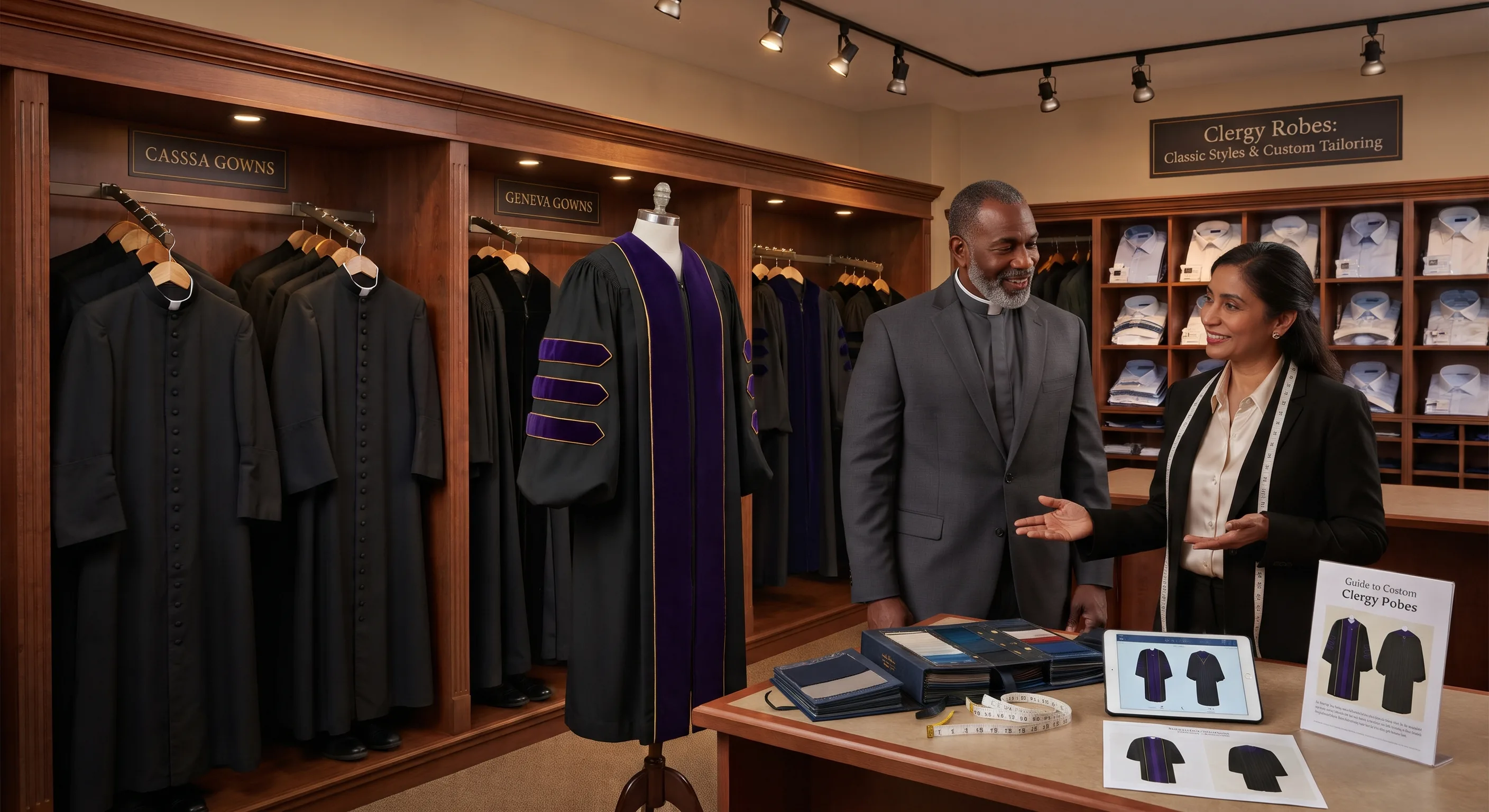
Have you ever found a clergy robe with the perfect design, only to discover that the available size does not match your measurements? Perhaps the shoulders feel too tight, the sleeves fall short, or the overall length is not what you expected. For pastors, priests, bishops, and other church leaders, these problems can make finding suitable ministry attire a frustrating experience.
Clergy garments are not ordinary everyday clothing. They are worn during sermons, worship services, religious ceremonies, and important church gatherings. A robe should therefore meet your measurements, suit your responsibilities, and reflect the traditions of your church. Settling for an uncomfortable fit or a design that does not meet your requirements should not be your only option.
This is where custom clergy robes become a practical alternative. Instead of limiting your choice to standard sizes, made-to-measure options allow you to explore individual measurements, fabric preferences, garment lengths, and selected design features. Whether you need a traditional preaching robe, a formal cassock, or a bishop's chimere, understanding the customization process can help you make a more suitable choice.

Why Your Regular Clothing Size May Not Work for a Clergy Robe
One of the most common mistakes when buying formal garments online is assuming that your usual clothing size will provide the same fit across different designs.
Clergy robes often have different construction requirements from regular shirts, jackets, and suits. Their longer length, sleeve design, shoulder structure, and overall shape can affect how they fit.
For example, a minister with a broad chest may need more room in the upper body without requiring a larger overall garment. Someone with longer arms may find that a standard-size robe has the correct chest measurement but unsuitable sleeves.
Other common fitting concerns include:
- Shoulder restrictions: The garment pulls when raising or moving your arms.
- Uneven sleeve length: The sleeves do not reach the preferred position.
- Excess fabric: The robe appears too loose around the body.
- Incorrect garment length: The hem does not fall at the desired level.
- Limited size availability: Your measurements fall between the supplier's standard sizes.
Understanding these differences before purchasing can help you decide whether a ready-made garment or a custom option is more appropriate.
What Can Be Adjusted When Ordering Custom Clergy Robes?
Custom sizing is not simply about choosing a bigger or smaller garment. It involves considering several measurements and design details that contribute to the final fit.
Depending on the supplier's customization options, the following areas may be adjusted.
Chest and Upper Body Measurements
The chest measurement helps determine how comfortably the robe sits around the upper body. A garment that is too narrow may restrict movement, while excessive room can change its intended shape.
Accurate chest measurements are particularly important for structured preaching robes and fitted clerical garments.
Shoulder Width and Sleeve Position
Shoulder construction affects how the garment hangs. If the shoulders are too narrow, the robe may pull across the back or upper arms.
Sleeve measurements should also be considered separately. Your preferred sleeve length should allow comfortable movement while maintaining the intended appearance of the garment.
Overall Length and Garment Proportions
A clergy robe should have a suitable length for the wearer's height and intended use. The same standard length will not necessarily work for everyone.
Before ordering, consider your height, footwear, preferred hem position, and the garment's design. If you require a specific length, confirm whether the supplier can accommodate it.
Room for Comfortable Movement
Ministers regularly stand, walk, preach, lead prayers, and participate in church activities. Their garments should provide enough room for these movements.
When discussing custom sizing, consider how frequently you will wear the robe and what activities you will perform while wearing it.
Which Clergy Garment Should You Have Made to Measure?
Not every clergy member requires the same type of garment. Your position, denomination, and church responsibilities should guide your selection.
Preaching Robes for Weekly Ministry
Pastors and ministers who regularly deliver sermons may prefer a traditional preaching robe. These garments often feature full-length designs, front closures, and formal details such as pleated panels or contrasting piping.
Custom options may help accommodate specific chest, shoulder, sleeve, and length measurements.
Cassocks for Traditional Clerical Dress
A cassock is a long clerical garment commonly featuring a fitted shape and front button closure. It is worn by certain clergy members according to their church traditions.
Because of its distinctive construction, accurate measurements are important when selecting a cassock. Collar placement, button arrangement, sleeve length, and overall garment length should be reviewed before production.
Chimeres for Formal Ecclesiastical Occasions
A chimere is a formal outer garment associated with certain Anglican traditions, particularly for bishops. It may feature distinctive colors, stripes, and traditional design elements.
When considering a custom chimere, check its compatibility with the rochet or other garment worn underneath. Shoulder fit, sleeve design, and overall proportions are also important.
Albs and Surplices for Liturgical Services
Albs and surplices are traditional white garments used in different Christian denominations.
An alb is generally a long garment, while a surplice is typically shorter and has a loose-fitting design. Their measurements and construction should reflect the intended use and the church's requirements.
Choosing Fabric: What Should You Consider Before Customizing?
A garment's material influences how it looks, hangs, and performs during regular use. Selecting fabric based only on its appearance may lead to an unsuitable choice for your local climate or ministry schedule.
Here are some considerations when comparing clergy robe fabrics.
Tropical suiting: Often used in formal clergy garments, tropical suiting can provide a structured appearance. It may be suitable for preaching robes and other traditional designs.
Polyester blends: These materials are available in different weights and finishes. Their comfort, durability, and cleaning requirements depend on the specific fabric composition.
Cotton blends: Cotton-blend fabrics offer another option for certain clerical garments. Check the material composition and care instructions before selecting one.
Before confirming a fabric, ask about its weight, texture, available colors, and cleaning requirements. Also consider whether the garment will be worn regularly or reserved for occasional formal services.
From Plain to Detailed: Personalizing Your Clergy Robe Design
A suitable fit is only one part of the decision. The garment's appearance should also meet your preferences and church requirements.
Depending on the available customization service, you may be able to discuss the following features:
- Collar design: Select an appropriate collar style for the garment.
- Front arrangement: Consider a zipper, buttons, or another available closure.
- Pleated panels: Choose a design with or without front pleats.
- Sleeve finishing: Review cuff construction and decorative details.
- Color combinations: Confirm available fabric colors and contrasting accents.
- Piping and trim: Discuss the placement and color of decorative lines.
- Pocket placement: Check whether front or inside pockets are available.
For example, a pastor may prefer a simple black preaching robe, while another minister may request contrasting piping or a particular pleated design.
However, not every feature is available for every garment. Always confirm the actual customization choices before approving production.
How to Get Your Measurements Right Before Placing an Order
Incorrect measurements can create problems even when ordering a custom garment. Taking time to measure properly is therefore one of the most important steps.
Use a flexible measuring tape and follow the supplier's instructions. If possible, ask another person to assist so that the measurements are recorded accurately.
Here are some basic measurements commonly requested for clergy apparel:
MeasurementWhat to measureChestAround the fullest part of your chestShouldersAcross the shoulder pointsSleeveFrom the shoulder point to the wristNeckAround the base of the neck, if requiredWaistAround your natural waist, if requiredGarment lengthFrom the designated shoulder or neck point to the preferred hemDo not add extra fabric allowance or make adjustments unless the supplier specifically instructs you to do so. Some manufacturers account for wearing ease during production.
If you are unsure about a measurement, request clarification before submitting your order.
Six Things to Check Before Confirming Your Custom Order
Ordering a made-to-measure robe involves more than submitting your measurements. Reviewing the complete order can help prevent misunderstandings.
1. Confirm the garment type. Make sure you have selected the correct robe, cassock, chimere, alb, or other clerical garment.
2. Review every measurement. Double-check the recorded numbers and measurement units.
3. Approve the design details. Confirm the color, collar, sleeves, closure, pleats, and decorative features.
4. Ask about fabric availability. Make sure your preferred material is available for the selected design.
5. Understand production timelines. Custom garments may require additional preparation compared with ready-made products.
6. Read the order policy. Check the supplier's alteration, cancellation, return, and shipping conditions before payment.
These checks are especially important when purchasing online because you cannot inspect the finished garment before production begins.

What to Look for When Choosing a Custom Clergy Apparel Supplier
Not every supplier offers the same level of customization. Some provide only standard size variations, while others accept individual measurements and selected design requests.
Before choosing where to order, examine the supplier's product information and ordering process.
Look for clear measurement instructions, detailed product photographs, fabric descriptions, and transparent customization options. A supplier should also explain how custom orders are confirmed and provide realistic production and shipping estimates.
For churches purchasing garments for multiple ministers, it is helpful to ask whether group orders can accommodate different measurements and design requirements.
At eClergys, you can explore traditional clergy apparel for different ministry needs, including preaching robes and other clerical garments. Review the available product specifications and customization information to determine which options match your requirements.
Whether you need a single garment or are arranging attire for several church leaders, checking the details before ordering can make the purchasing process more straightforward.
Frequently Asked Questions About Custom Clergy Robes
1. What are custom clergy robes?
Custom clergy robes are clerical garments made according to individual measurements and selected design requirements, subject to the supplier's available customization options.
2. Are custom clergy robes better than standard-size robes?
They can be a better option when standard sizes do not accommodate your measurements or design preferences. However, standard sizes may be suitable when they already provide the required fit.
3. Can I order a custom preaching robe for my body measurements?
Some suppliers offer made-to-measure preaching robes. You may be asked to provide chest, shoulder, sleeve, and garment-length measurements.
4. Can I choose the color and style of a custom clergy robe?
Customization options vary by garment and supplier. Some may offer different fabric colors, collar styles, closures, pleats, and decorative details.
5. How do I measure myself for a clergy robe?
Use a flexible measuring tape and follow the supplier's measurement guide. Common measurements include chest, shoulders, sleeve length, and overall garment length.
6. How long does custom clergy clothing take to make?
Production time depends on the garment design, customization requirements, and the supplier's workload. Shipping time is additional, so request an estimated delivery schedule before ordering.
7. Can churches purchase custom robes for several ministers?
Yes, some suppliers accept group or bulk orders. Churches should prepare individual measurements and confirm the selected designs and production schedule before placing the order.
Conclusion: Stop Compromising on Fit and Choose a Robe That Meets Your Needs
Your clergy attire should accommodate your measurements, suit your ministry, and reflect the traditions you represent. If standard garments repeatedly create problems with chest size, shoulder fit, sleeve length, or overall design, exploring made-to-measure options may be a practical next step.
Custom clergy robes provide an opportunity to consider individual measurements, fabric preferences, and selected design details rather than relying entirely on standard sizing.
Take accurate measurements, compare available fabrics, review customization choices, and confirm every detail before placing an order.
Explore the clergy apparel collection at eClergys to discover traditional garments and available custom options for your ministry.