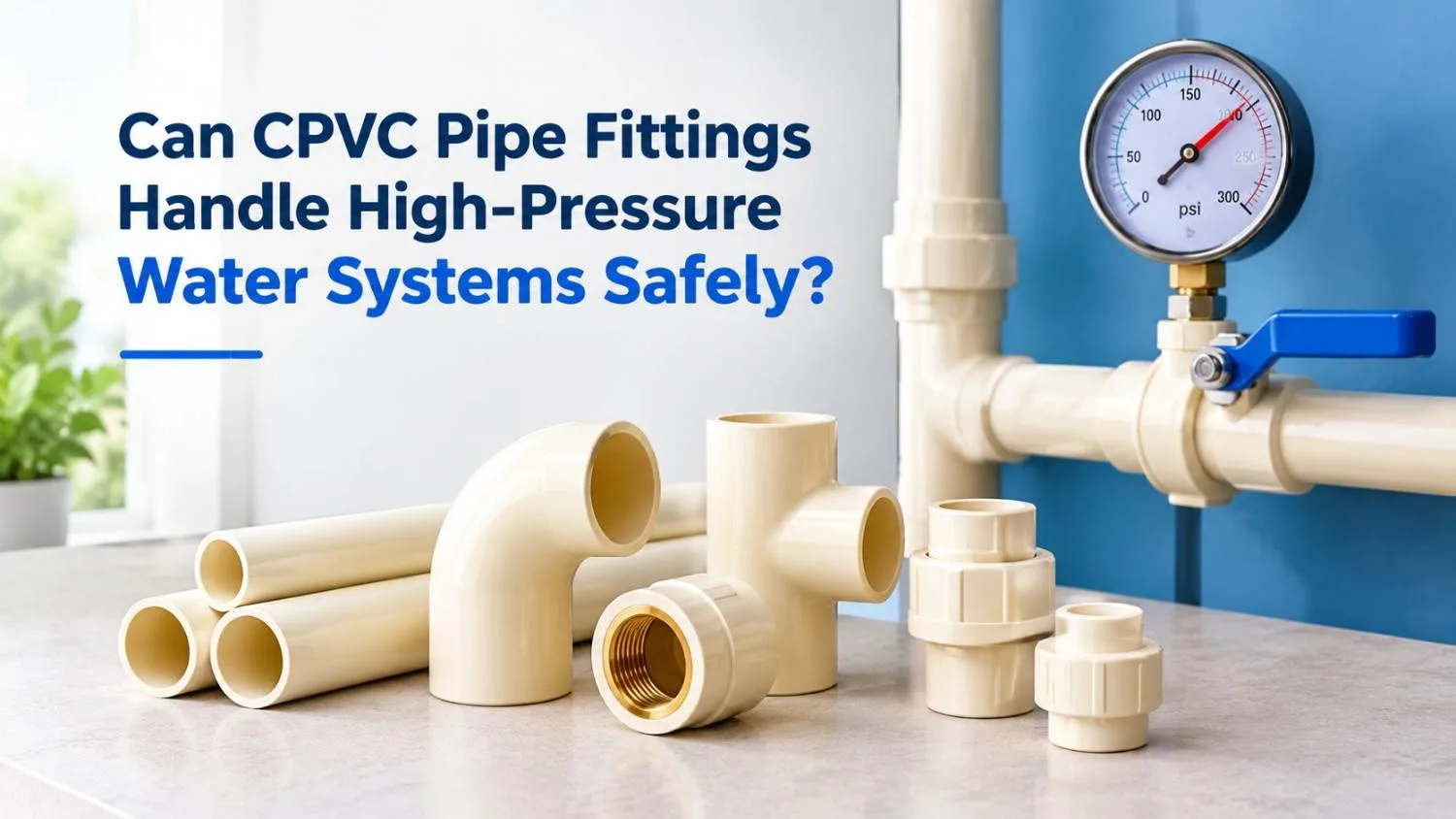
When you plan a plumbing system for a home, factory, or commercial building, one question comes up again and again: will the pipes hold up under pressure? Water pressure is not a small detail. If your pipes and joints are weak, you can face leaks, bursts, water damage, and costly repairs. So let us look at whether CPVC pipe fittings can really handle high-pressure water systems safely.
What Is CPVC and Why Is It Popular?
CPVC stands for chlorinated polyvinyl chloride. It is made by adding extra chlorine to regular PVC, which gives the material better strength and heat resistance. Because of this, CPVC works well for both hot and cold water supply.
Over the years, CPVC has become a trusted choice in homes, hotels, hospitals, and industrial plants. It does not rust, it does not corrode, and it does not react badly with most water types. These qualities make CPVC pipe fittings a practical option for long-term plumbing.
How Much Pressure Can CPVC Handle?
CPVC systems are rated by pressure class and temperature. Most CPVC pipes are designed to work at pressures around 100 psi at 82°C (180°F), and they can handle higher pressure at lower temperatures. At normal room temperature, many CPVC pipes handle even more, depending on the pipe schedule and wall thickness.
This matters because pressure ratings drop as water temperature goes up. A pipe that works perfectly with cold water at high pressure may need a thicker wall or a different class when carrying very hot water. Always check the manufacturer's rating chart before you choose a pipe for your project.
Why Fittings Matter as Much as Pipes
Many people focus only on the pipe and forget that joints are often the weakest point of any plumbing line. Good Cpvc Pipe Fittings are designed to match the pipe in strength, wall thickness, and pressure rating. When a fitting is made well, it forms a strong, leak-proof bond with the pipe through solvent cement welding.
Poorly made fittings, on the other hand, can crack under pressure or fail at the joint. This is why choosing quality products from a reliable manufacturer is so important. Brands like StarmaX Pipes and Fittings focus on accurate dimensions and consistent material quality, which helps joints stay secure even when system pressure rises.
Key Safety Features of CPVC
Here are the main reasons CPVC performs well in pressurized systems:
- Strong material structure: CPVC has high tensile strength and resists cracking under steady pressure.
- Corrosion resistance: Metal pipes weaken over time from rust and scaling. CPVC stays smooth inside and keeps its strength for years.
- Heat tolerance: CPVC can carry hot water without softening the way ordinary PVC might.
- Chemical resistance: It handles chlorinated water, mild acids, and many industrial fluids well.
- Smooth interior walls: Water flows easily, which reduces friction loss and pressure drops.
Factors That Affect Safety in High-Pressure Systems
Even the strongest material can fail if it is installed badly. Keep these points in mind:
1. Correct pipe schedule. Schedule 80 CPVC has thicker walls than Schedule 40 and is better suited for higher pressure. Match the schedule to your system needs.
2. Proper solvent cementing. Clean the pipe ends, apply primer if required, use the right CPVC cement, and allow enough curing time before pressurizing the line. Rushing this step is one of the most common causes of joint failure.
3. Pressure surges. Sudden valve closing can create water hammer, a spike in pressure that stresses pipes and joints. Using slow-closing valves or surge arrestors helps protect the system.
4. Temperature control. Remember that higher water temperature lowers the pressure rating. Design your system with this in mind.
5. Support and alignment. Pipes should be supported at proper intervals, and fittings should not carry unnecessary stress from bending or misalignment.
How to Choose the Best CPVC Pipes
For a long-lasting system, know what to look for when buying. The best CPVC pipes share a few clear traits:
- They carry proper certification and meet recognized standards such as ASTM or IS specifications.
- They have uniform wall thickness and a smooth, clean finish.
- They come with clear markings showing size, pressure rating, and batch details.
- They are produced by a manufacturer with a proven track record and good technical support.
Buying a complete matching set of Cpvc Pipes and Fittings from the same brand is also a smart move. When the pipe and fittings are designed to work together, the fit is tighter, the bond is stronger, and the whole system performs more predictably. StarmaX Pipes and Fittings offers a range built with this kind of compatibility in mind, making it easier for plumbers and builders to complete installations with confidence.
Where CPVC Works Best
CPVC is widely used in residential hot- and cold-water lines, apartment buildings, hotels and hospitals, industrial process lines, fire sprinkler systems, and commercial water distribution. In all of these places, steady pressure and reliable performance are essential, and CPVC has shown it can deliver when properly selected and installed.
Final Thoughts
So, can CPVC pipe fittings handle high-pressure water systems safely? Yes, they can, as long as you choose the right pressure class, use quality products, and follow correct installation steps. CPVC is strong, corrosion-free, and heat-resistant, which makes it a dependable choice for demanding water systems.
The key is not to cut corners. Check pressure ratings, match the pipe schedule to your needs, install carefully, and buy from a trusted source. With a reliable brand like StarmaX Pipes and Fittings and proper workmanship, your plumbing system can stay safe, leak-free, and efficient for many years.