
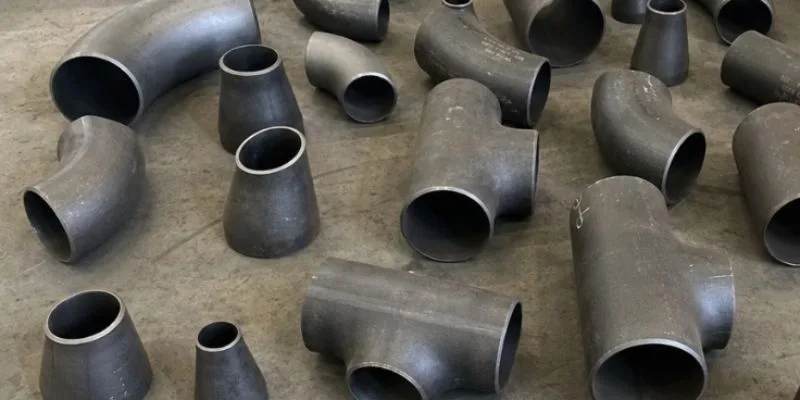
Accurate weight data for faster, cleaner piping estimates
When every kilogram matters, you need a weight guide you can trust. Our downloadable, project-ready buttweld pipe fittings weight chart helps buyers, fabricators, estimators, engineers, and procurement teams check fitting weights fast before quoting, buying, packing, shipping, or planning work.
Instead of using scattered files, old catalog pages, or mixed supplier data, this pipe fittings chart gives your team one place to compare common buttweld fittings by type, size range, schedule, and material group. It supports daily choices on piping jobs where weight affects cost, shipping, handling, and records.
Whether you are making a material takeoff, checking freight needs, building a purchase request, or reviewing a supplier offer, this pipe fittings chart gives you a cleaner path from spec to delivery.
Buttweld Pipe Fitting Weight Chart in mm
DNSchedule 10SSchedule 40SSchedule 80SCon reducerEcc reducerReducing teeCon reducerEcc reducerReducing teeCon reducerEcc reducerReducing tee40x.250.190.190.600.260.260.760.340.340.9050x250.280.280.730.400.401.100.540.541.3750x400.310.310.760.450.451.150.590.591.4380x.500.550.551.561.001.002.911.791.793.91100x500.780.782.941.501.504.481.951.956.55100x800.870.873.041.741.744.642.332.336.79150x801.821.826.863.953.959.685.515.5111.57150x1001.961.967.104.074.0711.945.965.9611.97200x1003.013.0113.466.556.5517.989.239.2324.18200x1503.193.1914.086.746.7418.8210.1210.1225.31Welded ButtWeld Fittings – ASTM A403M & ASME B16.9 in kg
Product range and theoretical weights (kg)DNSchedule 10SSchedule 40S900Elbow450
ElbowEqual teeStub end type BEnd cap900
Elbow450
ElbowEqual teeStub end type BEnd cap150.060.030.090.070.030.080.040.100.080.04200.070.030.130.090.050.080.040.170.110.07250.140.080.280.160.080.150.110.290.170.10320.230.110.490.220.100.260.170.590.250.18400.300.170.680.250.110.400.230.860.310.20500.500.250.850.430.130.700.401.280.610.23650.850.481.410.570.191.400.772.190.800.27801.250.631.770.720.252.201.083.311.130.421002.101.083.461.090.684.471.475.271.871.141253.651.825.441.471.116.802.849.632.792.131505.452.728.032.151.4210.895.4410.993.573.2320010.205.3315.653.222.3821.5410.7720.916.075.1925018.159.7526.765.134.4538.5619.2735.3810.079.0030025.8013.6239.468.167.5059.4229.7162.1414.2915.0035036.2918.3748.5310.888.1779.3835.1579.3117.1416.0040047.6323.8158.9712.7010.6799.7945.8199.7920.4121.0045059.8729.9479.6517.2313.00129.7359.40129.7327.2126.0050099.8049.90103.4221.7717.00162.3874.84162.3929.9434.00600140.6170.31155.5827.2126.00225.89105.23225.9038.5552.00
Welded ButtWeld Pipe Fittings – ASTM A403M & ASME B16.9 in kg
Product range and theoretical weights (kg)DNSchedule 10SSchedule 40SCon reducerEcc reducerReducing teeCon reducerEcc reducerReducing tee20x150.100.100.110.140.140.1525x150.120.120.250.150.150.2625x200.130.130.250.160.160.2732x200.180.180.440.220.220.5232x250.180.180.450.220.220.5340x200.180.180.580.240.240.7440x250.190.190.600.260.260.7640x320.210.240.610.280.280.7750x250.280.280.730.400.401.1050x320.300.300.740.440.441.1350x400.310.310.760.450.451.1565x400.440.441.240.760.761.9465x500.470.471.250.800.801.9880x400.510.511.520.940.942.8580x500.550.551.561.001.002.9180x650.590.591.591.081.082.98100x400.680.682.901.361.364.53100x500.780.782.941.571.574.48100x650.830.832.971.661.664.54100x800.870.873.041.741.744.64125x1001.491.495.492.982.988.47150x801.821.826.863.983.9811.94150x1001.961.967.104.074.079.68150x1252.002.007.274.074.079.99200x1003.013.0113.466.556.5517.98200x1503.193.1914.086.946.9418.82250x1004.734.7322.7510.5210.5230.07250x1505.005.0023.5511.1211.1231.13250x2005.205.2024.0811.5611.5631.84300x2007.677.6734.7315.9815.9854.43300x2507.987.9835.5216.6316.6355.79350x30015.2915.2943.9630.5830.5871.21400x20016.7016.7049.9033.4033.4084.82400x25017.2217.2250.8035.4335.4385.73400x30018.3518.3551.7136.7036.7087.54Seamless Butt Welding Fittings – ASTM A403M & ASME B16.9
Product range and theoretical weights (kg)DNSchedule 10SSchedule 40SSchedule 80S900 Elbow450 ElbowEqual tee900 Elbow450 ElbowEqual tee900 Elbow450 ElbowEqual tee80.020.010.030.030.020.060.040.030.07100.030.020.050.030.020.030.060.040.09150.060.030.090.080.040.100.100.050.14200.070.030.130.080.040.170.110.050.20250.140.080.280.150.110.290.220.140.38320.230.110.490.260.170.590.400.230.68400.300.170.680.400.230.860.510.291.02500.500.250.850.700.41.280.910.591.59650.850.481.411.400.772.191.810.993.13801.250.631.772.201.083.312.971.504.45901.700.752.672.831.424.084.002.005.441002.101.083.464.472.095.276.182.817.711505.452.728.0710.895.4410.9916.328.1613.6120010.205.3315.6521.5410.7720.9133.1116.5628.1225018.159.7526.4638.5619.2735.3851.7125.8649.9030025.8013.6239.4659.4229.7162.1479.3839.6983.91Seamless Butt Welding Fittings – ASTM A403 & ASME B16.9
Product range and theoretical weights (kg)DNSchedule 10SSchedule 40SSchedule 80SCon reducerEcc reducerReducing teeCon reducerEcc reducerReducing teeCon reducerEcc reducerReducing tee40x.250.190.190.600.260.260.760.340.340.9050x250.280.280.730.400.401.100.540.541.3750x400.310.310.760.450.451.150.590.591.4380x.500.550.551.561.001.002.911.791.793.91100x500.780.782.941.501.504.481.951.956.55100x800.870.873.041.741.744.642.332.336.79150x801.821.826.863.953.959.685.515.5111.57150x1001.961.967.104.074.0711.945.965.9611.97200x1003.013.0113.466.556.5517.989.239.2324.18200x1503.193.1914.086.746.7418.8210.1210.1225.31Seamless Butt Welding Fittings – ASTM A403 & ASME B16.9
Product range and theoretical weights (kg)DNSchedule 10SSchedule 40SSchedule 80SCon reducerEcc reducerReducing teeCon reducerEcc reducerReducing teeCon reducerEcc reducerReducing tee40x.250.190.190.600.260.260.760.340.340.9050x250.280.280.730.400.401.100.540.541.3750x400.310.310.760.450.451.150.590.591.4380x.500.550.551.561.001.002.911.791.793.91100x500.780.782.941.501.504.481.951.956.55100x800.870.873.041.741.744.642.332.336.79150x801.821.826.863.953.959.685.515.5111.57150x1001.961.967.104.074.0711.945.965.9611.97200x1003.013.0113.466.556.5517.989.239.2324.18200x1503.193.1914.086.746.7418.8210.1210.1225.31Forged Fitting ASME B16.11 Weight Chart
Pipe SizeABQTYWeight Chart¼0.810.881600.20⁄0.971.001300.26½1.121.311000.57¾1.311.5750.7111.51.81401.081 ¼1.752.19251.681 ½2.002.44182.3822.382.97103.552 ½3.003.6246.2233.384.31210.3644.195.75123.91ASME B16.11 Threaded Fittings Size Chart
NPSMinimum Lengthof ThreadOD
of Band
DCenter to End
AMinimum
Wall Thick.1/210.913.633283.183/412.713.938333.18114.717.346383.681 ¼171856443.891 ½17.818.462514.0121919.275604.272 ½23.628.992765.61325.930.5109865.99427.7331461066.55
Built for piping teams that need a clear reference
Piping jobs move fast. A missing fitting weight can slow quotes, delay tech checks, or lead to extra back-and-forth between engineering, buying, and logistics teams. This chart is built to cut that friction.
Use it when you need to:
- Estimate total project weight before an order
- Compare fitting types during bill of materials work
- Support freight, packing, pallet use, and container loading
- Review weight impact across elbows, tees, reducers, caps, and related parts
- Match buying documents with common pipe fitting specifications
- Make supplier talks clearer
- Prepare faster estimates without guesswork
The chart is useful for carbon steel, stainless steel, alloy steel, and other common piping materials where weight changes with size, wall thickness, build standard, and fitting shape.
What this product includes
This product is a practical weight reference for buttweld fittings. It does not replace certified project drawings, maker data sheets, or final engineering approval. Still, it gives your team a strong working guide for early planning and commercial work.
Depending on your package, the chart may be delivered in a digital format for internal use, quote help, and project records.
Included content may cover:
- Buttweld elbow weight references
- Long radius and short radius elbow types where needed
- Equal tee and reducing tee references
- Concentric reducer and eccentric reducer types
- End cap weight references
- Common nominal pipe size groups
- Schedule or wall thickness notes where needed
- General material and size notes
- Tips for using the chart in buying and estimating work
Because actual product weights can change by standard, tolerance, material grade, and maker, final weights should always be checked against the supplier's certified papers for the exact fitting you buy.
Why fitting weight matters
The weight of buttweld fittings affects more than the line item on a quote. It shapes cost, tech review, and logistics through the whole project.
A reliable buttweld fittings weight reference can help with:
More accurate quotes
Estimators can build faster cost checks when they know the rough weight of each fitting type. This helps on projects with many elbows, tees, reducers, and caps.
Better freight planning
Shipping costs often depend on gross weight, packing method, pallet use, and container loading. A clear pipe weight chart helps logistics teams judge handling needs earlier.
Cleaner buying documents
When weight data is available, purchase requests and supplier comparisons are easier to review. Buyers can spot odd gaps between quotes and ask better tech questions.
Fewer project delays
Missing or mixed fitting data can slow approvals. One reference chart helps teams move faster during early planning, quote review, and project coordination.
Better team communication
Engineering, buying, quality, and warehouse teams can all use the same reference. That cuts confusion and helps stop errors from mixed assumptions.
Designed for common buttweld fitting types
The chart is organized for the fitting groups most often used in welded piping systems. These fittings are common in industrial, commercial, energy, water, chemical, mechanical, and infrastructure work.
Common fitting groups include:
- 90-degree buttweld elbows
- 45-degree buttweld elbows
- 180-degree return bends where needed
- Equal tees
- Reducing tees
- Concentric reducers
- Eccentric reducers
- Buttweld caps
- Stub ends where requested or offered
- Cross fittings where needed
Each fitting type can have a different weight because of shape and wall thickness. For example, a tee usually weighs more than an elbow of the same nominal size and schedule, while reducers vary with both the large end and small end sizes. A structured pipe fittings chart makes these checks easier.
Supports common spec workflows
Piping teams often need weight data along with size standards, material grades, wall schedules, and pressure or service needs. This chart is made to fit those workflows.
It can support talks about common pipe fitting specifications such as:
- Nominal pipe size
- Outside diameter
- Wall thickness or schedule
- Fitting type and shape
- Material group
- End connection type
- Applicable size standard
- Approximate unit weight
- Estimated total quantity weight
Final spec needs should always be checked against the project standard, purchase spec, and certified maker papers. The chart is best used as a practical planning and estimating tool before final release.
Key benefits
Fast reference during estimating
Save time when preparing quote requests, tenders, and early material takeoffs. Instead of calculating each fitting from scratch, your team can use quick weight checks and move ahead with more confidence.
Easier supplier comparison
When two quotes show different shipping weights or packing ideas, the chart gives you a base for asking the right questions. It helps you see whether the gap may come from size, schedule, material, quantity, or data method.
Better project planning
Weight affects lifting, storage, pallet choice, shipping mode, and install planning. A reliable pipe weight chart helps your team plan these needs earlier.
Useful for many teams
The chart is useful for sales, buying, engineering, fabrication, inspection, warehouse, and logistics teams. Everyone can use the same reference instead of keeping separate files.
Simple to use
The content is set up to make daily lookups easier. You do not need complex software to use the chart. It is made for fast work, not only for technical archives.
Helps reduce costly guesses
Wrong weight guesses can affect freight budgets, packing plans, quote accuracy, and project timing. A clear reference helps reduce avoidable errors before they get costly.
Product features
This buttweld fitting weight reference is made with ease of use and business value in mind.
Features may include:
- Organized fitting groups for quick browsing
- Weight references for common buttweld fittings
- Size-based structure for easy lookup
- Support for common schedules or wall thickness groups where needed
- Clear notes to help users read the weights
- Digital-friendly format for sales and buying use
- Suitable for quote, planning, and internal reference work
- Easy sharing across project teams where allowed
- Helpful for bulk fitting orders and mixed-material takeoffs
If you need a certain format, such as a spreadsheet, PDF, branded reference sheet, or project-specific version, contact us to check what is available.
Who should use this chart?
This product is a good fit for people who work with welded piping systems and need weight data for planning, buying, selling, or handling.
It is a strong match for:
- Piping engineers
- Mechanical contractors
- Fabrication shops
- Procurement managers
- Estimation teams
- EPC companies
- Industrial project buyers
- Stockists and distributors
- Warehouse and logistics teams
- Quality documentation teams
- Sales teams preparing quotes
If your work includes selecting, quoting, buying, or moving buttweld fittings, this chart can make your process faster and more steady.
How to use the chart
Using the chart is simple. Start with the fitting type, then match the nominal size and schedule or wall thickness group where available. Review the rough unit weight and multiply by the needed quantity to estimate total fitting weight.
For best results:
- Confirm the fitting type, such as elbow, tee, reducer, or cap.
- Check the nominal pipe size needed for the line.
- Confirm the schedule or wall thickness group.
- Review the listed approximate weight.
- Multiply by quantity for estimated total weight.
- Add room for packing, pallets, crates, or papers where needed.
- Check final weights with the maker or supplier before shipment.
This process helps your team turn a basic bill of materials into a more useful buying and logistics plan.
Important accuracy note
Fitting weights are affected by several things, including manufacturing standard, material density, wall thickness, size tolerance, forming method, and supplier design. Because of this, weight references should be treated as rough unless they come as certified data for the exact product.
This chart is meant to support planning, estimating, and buying review. For final tech files, inspection records, shipping papers, or legal needs, always ask for the approved maker data sheet or certified weight statement.
Pricing and package options
Because teams use weight charts in different ways, pricing may depend on the format, scope, custom needs, and license terms.
Available options may include:
- Standard reference chart for general internal use
- Project-specific chart based on chosen fitting types and size ranges
- Custom branded chart for distributors or sales teams
- Spreadsheet-style reference for estimating work
- Bulk document package for repeat buying use
For the best price, request a quote with your preferred format, fitting types, size range, material group, and intended use. We will recommend the best option based on your needs.
Custom options available
Need a version matched to your own product range or client document style? Custom options may be available.
Custom chart options can include:
- Selected fitting groups only
- Specific size ranges
- Schedule-focused layout
- Material-specific notes
- Company branding
- Internal reference labels
- Project number or document reference
- Extra buying notes
- Export-friendly file format
Custom charts are especially useful for suppliers, distributors, EPC teams, and contractors who quote the same product ranges again and again.
Built to support better buying decisions
A buttweld fitting is not chosen by weight alone. Material grade, standard, size, pressure class, service environment, test needs, and end-user specs all matter. Even so, weight is often one of the first values needed to judge cost, shipping, and handling.
This chart helps you link technical choice with commercial planning. It gives your team a practical reference point while still allowing final engineering and supplier checks before purchase.
Use it to improve:
- Early project budgeting
- Bulk order planning
- Freight estimates
- Warehouse prep
- Supplier review
- Bid consistency
- Internal records
- Customer quote speed
Why choose this weight chart?
Many online references are incomplete, hard to read, or cut off from real buying work. This chart is made for practical use by teams that need information fast and clearly.
Choose this chart if you want:
- A focused buttweld fitting reference
- Better order than scattered notes or old PDFs
- A useful match to your bill of materials
- A tool that supports estimating and buying
- Clearer talk between departments
- A starting point for custom fitting documents
The result is a smoother path from inquiry to quote, from quote to purchase, and from purchase to delivery planning.
Request your chart today
Get a practical buttweld pipe fittings weight chart built for real-world piping work. Share your needed fitting types, size range, preferred format, and any custom needs, and we will help you choose the right option.
Use this reference to quote faster, plan smarter, and cut uncertainty in your next piping project.
Ready to improve your fitting weight estimates? Request a quote or contact our team to get started.