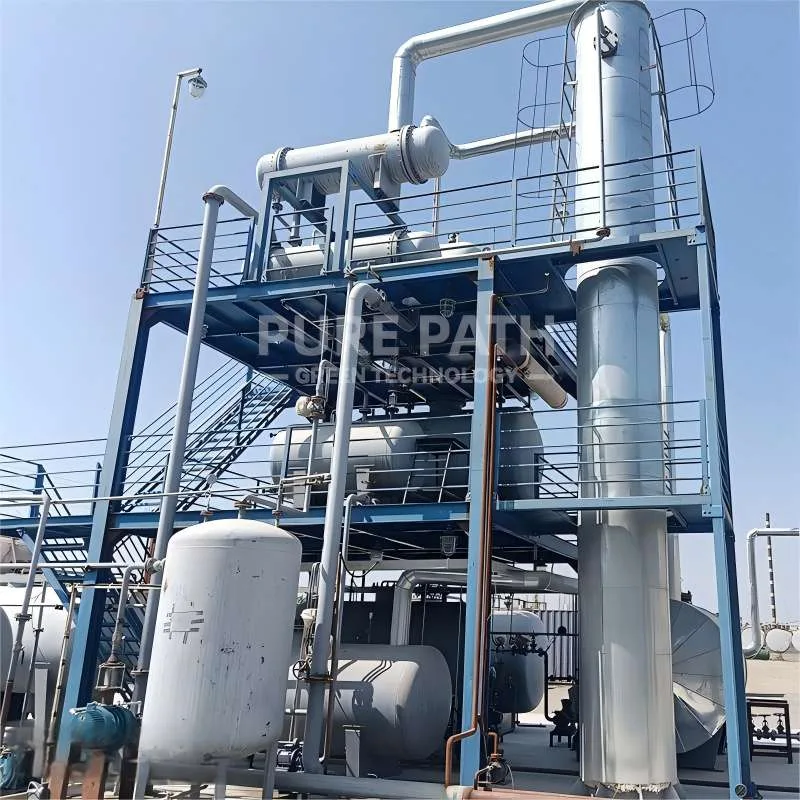
Equipment selection gets the slide decks. Feedstock discipline is what keeps the tanks turning in year two. A used oil recycling plant is a throughput machine, and throughput is only as dependable as the gathering system feeding it. PurePath's sourcing framework is unusually explicit that the mistake most first-time developers make is optimizing purchase price per liter while ignoring delivered cost, supplier concentration, haul geometry, and contractual fallback .
Start with where volume actually pools. Automotive workshops, quick-lube centers, and single-site fleets matter for coverage, but the tonnage that underwrites a commercial line usually comes from fleet depots with scheduled oil changes, factories shedding hydraulic, gear, turbine, and compressor lubricants at a single node, miners and port equipment with heavy-change cycles, and licensed collectors who aggregate dozens of micro-generators into one loaded trailer . The procurement question is never "how much does one garage make" — it is "how many nodes can be tied into one routed pickup before the tanker returns half-empty" .
That logic pushes the operator toward a layered book rather than a single hero supplier:
Core supply — multi-year commitments with high-volume generators and vetted collection firms; this anchors the baseline.
Regional supply — mid-size workshops, regional fleets, and second-tier industrials adding geographic spread.
Backup supply — pre-qualified accounts that do not ship daily but can be called on when a core counterparty trips.
Spot supply — tolerated for gaps only, never promoted to the backbone .
Every layer has to clear the same receiving gate. A how to test waste engine oil standard belongs inside the supply agreement: required paperwork, sampling point, non-conforming-load handling, dispute route, and the lab panel that decides acceptance . Too many plants sign tonnage and discover at the weighbridge that the "used 15W-40" is actually emulsified coolant with a chlorine spike and three unknown solvents — exactly the kind of load that chews through a waste oil distillation unit or contaminates a base oil solvent extraction plant solvent loop .
Delivery economics should be quoted honestly. Delivered cost equals purchase price plus transport, container handling, and loading time divided by tons landed — not the broker's per-barrel whisper . A supplier 50 km out at a modest quote is frequently cheaper than a 480 km seller offering a few cents less at the dock. Track the KPIs that expose drift before it becomes a shutdown: contracted-versus-actual tons, supplier concentration ratio, on-time delivery, average delivered cost per ton, transport cost per ton, and share of feed sourced outside contracts .
The discipline compounds. A plant that knows its true waste oil feedstock cost by lane, by supplier class, and by contamination tier can choose when to blend, when to reject, when to lean on backup tonnage, and when to hold a tank for extra dehydration instead of gambling on a marginal batch. That is the difference between a recycling asset and a very expensive storage tank with a permit.
Building a Waste Oil Feedstock Network That Survives Its First Supply Shock