
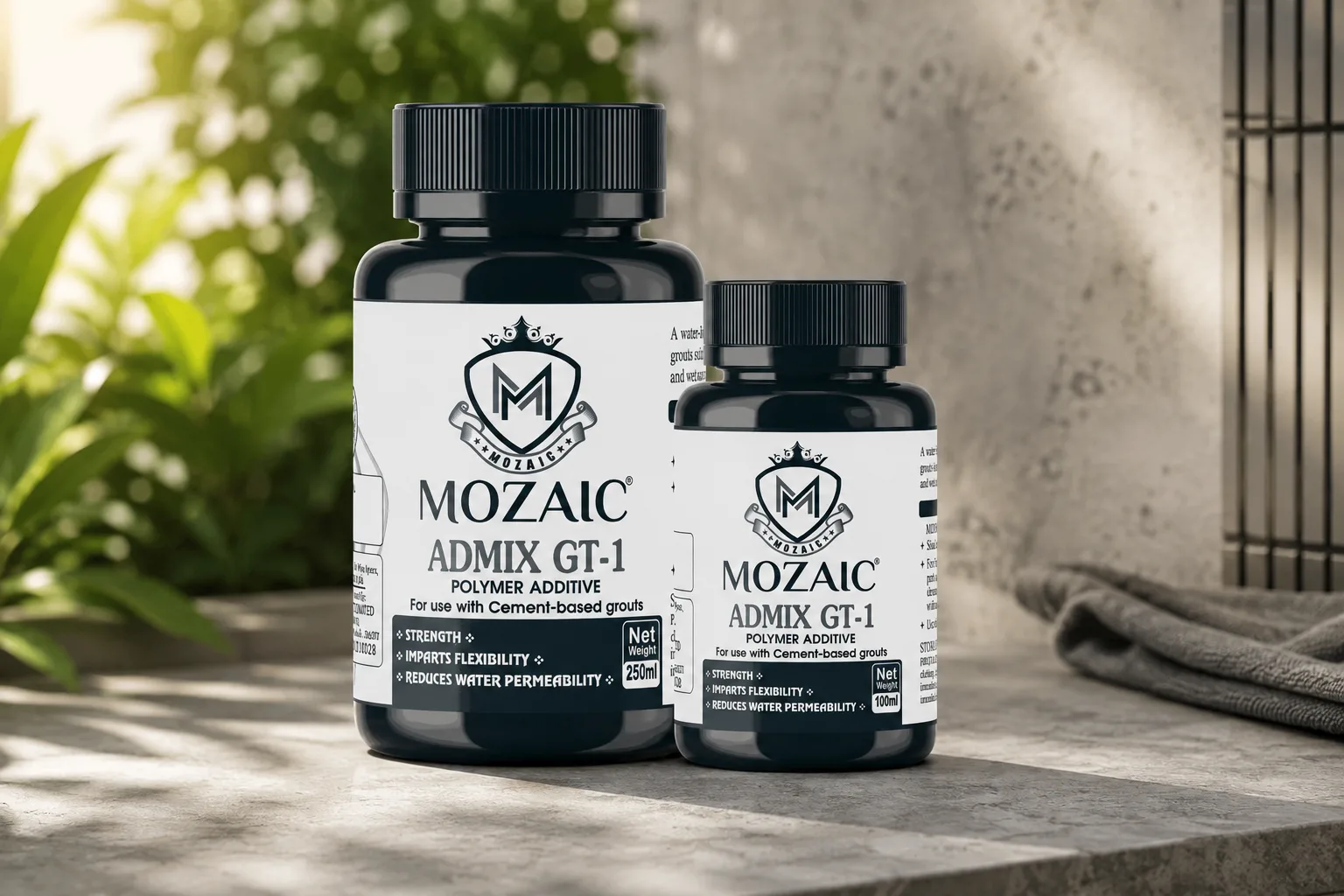
Standard cement grout can develop cracks, shrinkage, and water absorption over time, especially when tiles face moisture, temperature changes, or repeated movement. Adding a suitable liquid polymer admixture can improve grout performance and help protect tile joints for longer service life.
For contractors and homeowners looking to improve cement-based grout, Mozaic Chemical provides a practical solution designed to improve strength, flexibility, and resistance to water penetration. Its formulation makes it a strong choice when selecting the best grout admixture for demanding tile applications.
What Is a Grout Admixture?
A grout admixture is a liquid additive mixed with cement-based grout to modify its physical performance. Instead of relying only on water during mixing, a polymer-based additive can help create a denser and more cohesive grout structure.
This type of grout modifier can improve adhesion, flexibility, and resistance to water absorption. The result is grout that is better suited to areas where rigid cement-based joints may experience movement or moisture exposure.
Why Mozaic Chemical Offers the Best Grout Admixture
Choosing the best grout admixture depends on more than simply making grout easier to mix. The additive should address common causes of grout failure while maintaining the required performance of the finished joint.
Mozaic Chemical's grout admixture offers several technical benefits:
- Improved bond strength: Helps cement-based grout develop stronger adhesion and reduces the risk of cracking and shrinkage-related defects.
- Lower water absorption: Reduces the amount of water that can penetrate the grout, helping limit moisture-related deterioration and conditions that support mold growth.
- Greater flexibility: Helps grout accommodate minor structural movement and temperature-related expansion and contraction.
- Better color retention: Supports more consistent grout appearance and helps reduce premature fading caused by moisture and environmental exposure.
For product information, specifications, and application guidance, see Mozaic Chemical Grout Admixture.
High-Performance Application Zones
Not every tile installation faces the same conditions. In areas exposed to continuous moisture, heavy traffic, or temperature variation, using the best grout admixture becomes particularly important.
Exterior Balconies and Terraces
Outdoor tiled surfaces experience rain, temperature fluctuations, and repeated expansion and contraction. A polymer-modified grout can provide better flexibility and moisture resistance than standard cement grout alone.
Commercial Lobbies and High-Traffic Floors
Commercial floors experience constant foot traffic, cleaning, and mechanical stress. Improved bond strength and flexibility can help reduce premature joint deterioration and maintenance requirements.
Bathrooms and Wet Areas
Bathrooms are regularly exposed to water and humidity. A suitable admixture can reduce water absorption and help maintain more durable grout joints around floor and wall tiles.
Swimming Pools
Pool areas require grout that can tolerate persistent moisture and environmental stress. A quality polymer additive can improve grout performance where water resistance and tile installation durability are major concerns.
Conclusion
A small addition to the mixing process can make a significant difference in how cement-based grout performs after installation. By improving bond strength, flexibility, and resistance to water penetration, a quality admixture can help reduce the risk of premature grout failure and costly tile repairs.
For projects that demand better flexibility and bond strength, consider Mozaic Chemical when selecting the best grout admixture for your next tile installation. Contractors and homeowners should follow the manufacturer's mixing and application instructions to achieve the intended performance.