How Digital Oilfields, Smart Automation, and Advanced Artificial Lift Technologies Are Reshaping Oil & Gas Production
The global oil and gas industry is entering a new era of production optimization. As reservoirs mature, operational costs rise, and sustainability targets become increasingly important, operators are under pressure to maximize hydrocarbon recovery while maintaining profitability.
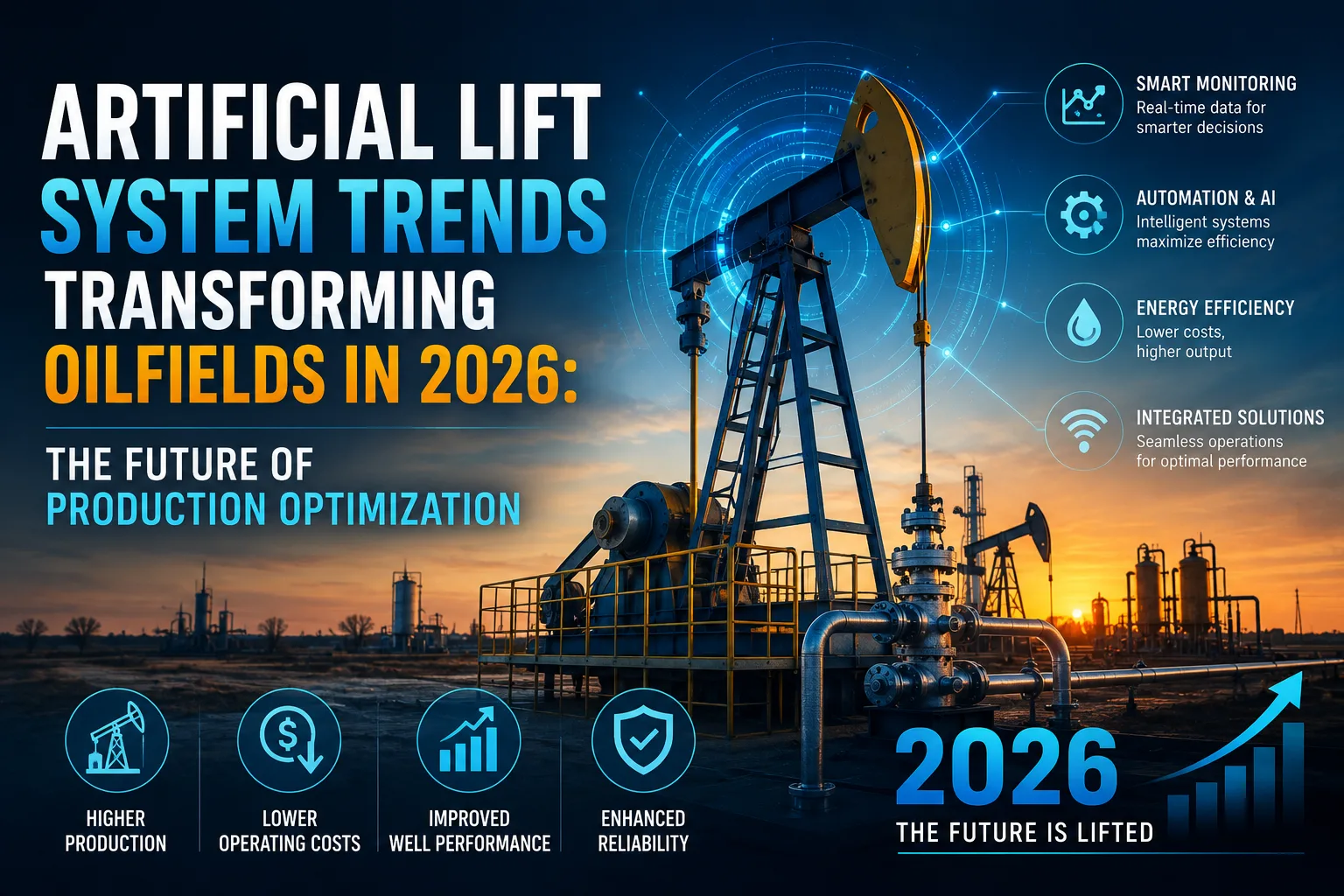
In 2026, artificial lift systems are no longer viewed simply as production enhancement tools—they have become strategic assets that drive operational efficiency, improve well performance, and extend field life.
Advancements in Plunger Lift Systems, Gas Lift Technologies, Digital Oilfield Solutions, Smart Completion Equipment, and Automated Production Optimization Platforms are helping operators unlock additional value from existing assets while reducing operating expenses and intervention frequency.
For mature oilfields, unconventional reservoirs, and aging gas wells, these innovations are transforming the way production is managed and optimized.
Why Artificial Lift Systems Are Driving the Next Phase of Oilfield Productivity
Industry studies indicate that more than 90% of producing oil wells and a significant percentage of gas wells eventually require some form of artificial lift to sustain economic production.
As reservoir pressure declines, operators face several challenges:
- Reduced production rates
- Liquid loading in gas wells
- Increased water production
- Higher operating costs
- More frequent interventions
- Reduced recovery factors
Artificial lift systems provide the energy required to overcome these challenges and maintain profitable production. However, the focus in 2026 has shifted beyond simply lifting fluids to the surface.
Today's operators are demanding systems that can:
✔ Maximize production efficiency
✔ Reduce operating expenditure (OPEX)
✔ Minimize carbon footprint
✔ Enable remote monitoring and automation
✔ Improve equipment reliability
✔ Extend asset life
This shift is driving rapid innovation across the artificial lift sector.
Digital Oilfields and Intelligent Artificial Lift Systems
Perhaps the most significant trend in 2026 is the integration of artificial lift equipment into connected digital oilfield ecosystems.
Modern production systems now utilize:
- Internet of Things (IoT) Sensors
- Edge Computing
- Artificial Intelligence (AI)
- Machine Learning Algorithms
- Cloud-Based Analytics Platforms
- Remote Surveillance Systems
These technologies continuously monitor well performance and equipment health, enabling operators to make proactive decisions rather than reactive ones.
Real-Time Production Optimization
Smart artificial lift systems can automatically analyse:
- Tubing pressure
- Casing pressure
- Production rates
- Flowing temperatures
- Fluid levels
- Equipment performance indicators
This data enables engineers to identify production bottlenecks before they impact output.
Benefits of Intelligent Monitoring
- Reduced unplanned downtime
- Predictive maintenance capabilities
- Lower intervention costs
- Extended equipment life
- Improved production forecasting
- Enhanced operational safety
The result is a more reliable and efficient production system capable of delivering higher returns from existing wells.
Gas Lift Technology Continues to Evolve
Gas lift remains one of the most versatile and widely used artificial lift methods in the world. In 2026, advances in Gas Lift Valves, Gas Lift Mandrels, and flow-control technologies are improving production efficiency across a wide range of reservoir conditions. Modern gas lift systems provide operators with greater control over gas injection rates, resulting in optimized lifting performance and lower gas consumption.
Key Innovations in Modern Gas Lift Systems
Advanced Gas Lift Valves
Designed for improved injection accuracy and enhanced reliability under challenging operating conditions.
High-Performance Gas Lift Mandrels
Manufactured using advanced materials and precision machining techniques to ensure longer service life and reduced maintenance requirements.
Corrosion-Resistant Materials
Improved metallurgy enables equipment to withstand harsh environments containing CO₂, H₂S, and produced water.
Digital Gas Lift Optimization
Automated systems continuously adjust injection parameters to maximize production efficiency.
Benefits for Operators
InnovationOperational Benefit Smart Gas Lift Valves Improved injection control Precision Mandrels Enhanced reliability Digital Optimization Increased production Advanced Materials Longer equipment life Automated Monitoring Reduced intervention costsThese advancements are enabling operators to achieve higher production rates while lowering overall lifting costs.
Plunger Lift Systems Are Becoming the Preferred Low-Cost Production Solution
One of the fastest-growing artificial lift technologies in 2026 is the Plunger Lift System. As operators seek energy-efficient alternatives to conventional lift methods, plunger lift technology is gaining widespread adoption in both mature gas wells and unconventional reservoirs.
Unlike many lift systems that require continuous external energy input, plunger lift systems utilize the well's own pressure energy to remove accumulated liquids from the production tubing. This makes them one of the most economical and environmentally friendly artificial lift methods available today.
Why Operators Are Investing in Plunger Lift Technology
Lower Operating Costs
Minimal power requirements result in significantly reduced operating expenses.
Improved Gas Well Deliquification
Efficient liquid removal helps restore gas flow and improve well productivity.
Increased Production Rates
Many operators report substantial production gains following plunger lift installation.
Reduced Liquid Fallback
Modern plunger designs improve lifting efficiency and minimize fallback losses.
Enhanced Sustainability
Lower energy consumption contributes to reduced greenhouse gas emissions.
As energy efficiency becomes a greater priority, plunger lift systems are expected to play an increasingly important role in future production strategies.
Completion Technologies Are Becoming More Integrated with Artificial Lift Systems
Successful artificial lift performance begins with effective completion design.
In 2026, operators are increasingly integrating advanced Completion Accessories, Downhole Flow Control Devices, and Well Completion Technologies with artificial lift systems to create fully optimized production environments.
Modern completion designs focus on:
- Improving reservoir connectivity
- Enhancing flow efficiency
- Reducing pressure losses
- Improving artificial lift performance
- Extending equipment life
This integrated approach enables operators to maximize production throughout the entire life cycle of the well.
Cased Hole Completion Solutions Supporting Long-Term Production Reliability
The growing adoption of advanced Cased Hole Completion technologies is also contributing to artificial lift success.
Modern completion systems help operators:
- Maintain well integrity
- Improve zonal isolation
- Control production profiles
- Minimize intervention frequency
- Enhance artificial lift effectiveness
By creating a more stable and controlled production environment, cased hole completion technologies support higher production rates and improved operational reliability.
Sustainability Is Now Influencing Artificial Lift Selection
Environmental performance is becoming an important factor when selecting artificial lift systems.
Operators are increasingly evaluating technologies based on:
- Energy efficiency
- Carbon intensity
- Equipment longevity
- Operational footprint
- Emissions reduction potential
Technologies such as Plunger Lift Systems, optimized Gas Lift Systems, and intelligent automation platforms are helping operators align production objectives with sustainability goals.
This trend is expected to accelerate as regulatory requirements and ESG expectations continue to evolve.
The Future of Artificial Lift Systems Beyond 2026
The next generation of artificial lift technologies will likely be defined by automation, artificial intelligence, and autonomous production optimization.
Future developments may include:
AI-Driven Well Optimization
Systems capable of automatically adjusting lift parameters based on changing reservoir conditions.
Predictive Failure Analytics
Machine learning models that identify equipment issues before failures occur.
Autonomous Production Management
Fully integrated systems capable of optimizing production without manual intervention.
Digital Twin Technology
Virtual well models enabling operators to simulate production scenarios and improve decision-making. The convergence of artificial lift technologies and digital oilfield solutions will fundamentally transform how oil and gas assets are managed in the years ahead.
Conclusion
Artificial lift systems are at the centre of the oil and gas industry's transformation in 2026. Innovations in digital monitoring, automation, gas lift technologies, plunger lift systems, completion equipment, and production optimization are enabling operators to achieve higher recovery rates while reducing operating costs and improving sustainability. As mature fields continue to dominate global production, the ability to optimize well performance efficiently and economically will become increasingly important.
Companies that embrace intelligent artificial lift technologies today will be better positioned to maximize asset value, improve operational efficiency, and maintain a competitive advantage in the evolving energy landscape. The future of oilfield production is not simply about lifting fluids—it is about lifting performance, profitability, and reliability to entirely new levels.