Voice control inside cars is not new. Drivers have been able to ask vehicles to play music, make phone calls or enter navigation destinations for years.
What is changing is the intelligence behind those conversations.
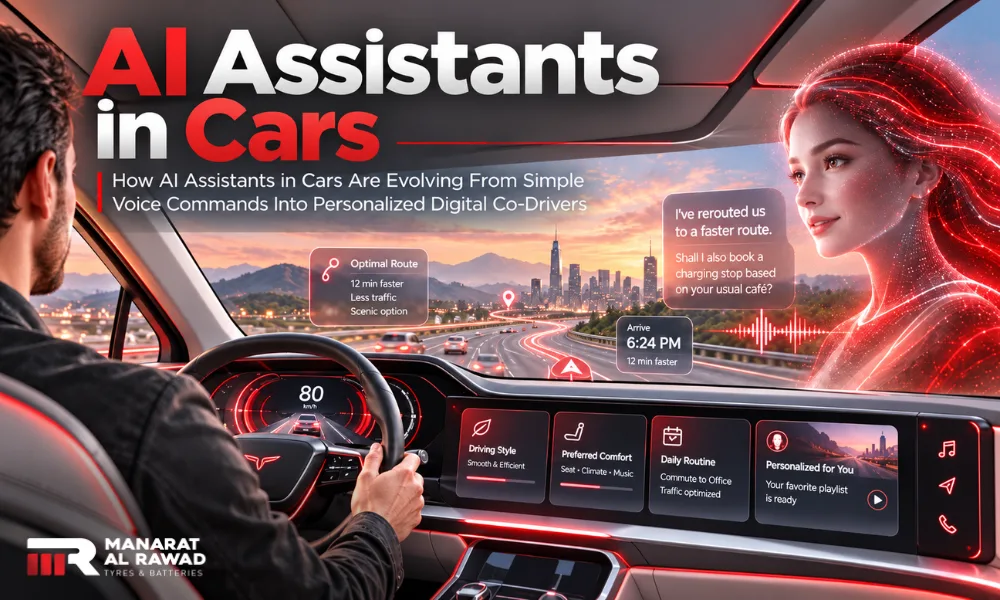
Instead of requiring carefully structured commands, the latest automotive systems are beginning to understand natural language, vehicle data and personal context. This shift is turning AI Assistants in Cars from basic voice-control tools into something closer to digital co-drivers.
Two developments announced in October 2026 show how quickly this transition is happening. General Motors revealed an AI-powered transformation of its OnStar service, while Google announced deeper personalization for Gemini across Android Auto and vehicles using Google built-in.
What Can the New Generation of In-Car AI Actually Do?
Traditional vehicle voice assistants usually depend on predefined commands.
A driver might say, “Set temperature to 22 degrees” or “Navigate home.”
Modern generative AI systems are designed to handle more conversational requests.
General Motors' upcoming OnStar AI Assistant, for example, is designed to understand statements such as “It's getting warm in here” and respond by adjusting the cabin temperature.
Drivers will also be able to ask questions about their exact vehicle, such as what a dashboard warning means or whether the remaining battery charge is sufficient to reach a destination.
Cars Are Beginning to Understand Context
Context is what separates these systems from older voice assistants.
Instead of treating each command independently, an AI system can potentially consider information about the vehicle, destination and driver's request together.
For example, asking:
“Do I have enough charge to get there?”
requires several pieces of information.
The system needs to know the destination, current battery level, expected energy consumption and potentially where charging stations are located.
Rather than forcing the driver to open multiple screens, the AI can combine this information into one response.
Google's Gemini Is Becoming More Personal in Cars
Google is approaching the same idea from a slightly different direction.
On October 20, the company announced that Gemini's Personal Intelligence capabilities are coming to vehicles through Android Auto, with Google built-in support expected to follow.
When users choose to enable the feature, Gemini can draw information from connected Google services such as Gmail, Calendar, Maps, Photos, YouTube and Search history.
That could significantly change how drivers interact with navigation.
Your Car Could Understand Why You Are Travelling
Imagine driving to an airport.
Instead of manually searching for the terminal, a driver could ask about an upcoming flight.
The AI could potentially identify the flight information from connected services and help navigate toward the appropriate destination.
Similarly, a driver travelling to a meeting could ask for directions without remembering the exact address if the location already appears in a calendar appointment.
The technology is moving from answering isolated questions toward understanding what the driver is trying to accomplish.
AI Could Explain the Car Itself
Modern cars are becoming increasingly complicated.
Vehicles may contain multiple driving modes, advanced safety features, regenerative braking settings, connected applications and dozens of dashboard indicators.
Many owners never fully understand every available feature.
An integrated AI assistant could change that.
Instead of searching through a digital owner's manual, a driver could simply ask:
“What does this warning symbol mean?”
or:
“How does lane keeping work in this car?”
GM says its new assistant will be trained using authoritative vehicle-specific information, allowing answers to be tailored to the exact model rather than providing generic automotive advice.
This Could Make Owner's Manuals More Interactive
The traditional owner's manual is effectively a reference database.
AI can turn that database into a conversation.
Rather than knowing where to search, the driver only needs to describe the problem.
This could be particularly useful when warning lights appear unexpectedly or a driver is unfamiliar with a recently purchased vehicle.
AI Will Not Replace Basic Vehicle Diagnostics
Intelligent software can explain information generated by the vehicle, but it cannot automatically confirm every physical fault.
A warning message may indicate an electrical problem, but determining whether the actual cause is a weak battery, charging-system fault, loose connection or another component can still require physical testing.
Modern cars also depend heavily on stable low-voltage electrical power to operate computers, communication modules, sensors and security systems.
For drivers looking for practical information about these everyday electrical problems, a resource covering mobile car battery service in the UAE can complement increasingly sophisticated digital vehicle guidance with information about testing, battery condition and roadside electrical issues.
This distinction is important: AI may help interpret symptoms, while actual diagnosis still depends on verifying what is happening inside the vehicle.
Privacy Will Become a Bigger Question
A more personalized vehicle assistant requires more information.
If an AI can use calendar appointments, travel history, vehicle data and personal preferences, drivers will reasonably want to understand how that information is handled.
Google says its Personal Intelligence feature is optional and must be enabled by the user. GM has also emphasized privacy controls as part of its updated OnStar strategy.
Drivers Will Need Meaningful Control
Convenience and privacy will have to develop together.
Drivers may appreciate an assistant that remembers destinations and preferences but feel differently about information being stored or shared more widely.
The most successful systems will therefore need clear controls explaining which data is being used and allowing users to disable personalized features when they prefer.
AI Could Eventually Become Proactive
Today's vehicle assistants generally wait for the driver to ask something.
Future systems may increasingly make recommendations before being prompted.
A car could potentially notice that battery charge is lower than usual before a long journey and suggest a charging stop.
It could recognize unusual tire pressure and explain the warning.
It might notice a calendar appointment and recommend leaving earlier because of traffic.
GM describes its broader OnStar strategy as moving toward proactive and personalized assistance across both the vehicle and mobile app.
The difference is subtle but important.
Instead of operating like a search box inside the dashboard, AI begins functioning more like an assistant that continuously understands the driving context.
Will Screens Become Less Important?
Ironically, increasingly sophisticated vehicle technology could eventually reduce the need to interact with large touchscreens while driving.
Many modern cars place climate control, navigation and entertainment functions inside display menus.
Voice-based AI offers another possibility.
If drivers can simply describe what they want, fewer actions may require navigating through several screen layers.
Natural conversation could therefore become one of the most important automotive interfaces.
The Car Is Becoming Part of the Personal Technology Ecosystem
The broader trend extends beyond individual vehicles.
Phones, smart homes, calendars, navigation systems and cars are becoming increasingly connected.
A driver may begin planning a journey on a phone, continue it inside the vehicle and receive related information later through another device.
GM plans to launch a new OnStar mobile application in 2027 that will extend its connected intelligence beyond the vehicle itself.
This shows how automakers increasingly view the vehicle as part of a larger digital ecosystem rather than an isolated machine.
Conclusion
AI Assistants in Cars are rapidly moving beyond simple voice commands.
The latest systems can understand natural conversations, interpret vehicle-specific information, connect with personal services and potentially provide assistance before the driver actively asks for it.
Recent announcements from General Motors and Google indicate that this transformation is already moving into production vehicles rather than remaining a distant concept.
The biggest change may not be that cars become dramatically more intelligent overnight.
Instead, interaction with vehicles may gradually become more natural.
Drivers will spend less time learning complicated menus and more time simply explaining what they need.
The dashboard of the future may therefore feel less like a collection of buttons and screens—and more like a conversation with the car itself.