In regulated industries such as pharmaceuticals, biotech, and life sciences, maintaining consistent product quality is a critical requirement enforced by global regulatory authorities. The Annual Product Quality Review (APQR) process plays a key role in evaluating manufacturing performance, product consistency, and compliance adherence over time.
However, traditional APQR execution methods often rely on manual data collection, spreadsheets, and fragmented systems, making the process time-consuming and error-prone. To address these challenges, organisations are adopting annual product quality review software to automate reporting, improve data integrity, and enhance regulatory compliance.
AmpleLogic provides a modern APQR solution designed to streamline quality review processes and enable data-driven decision-making across pharmaceutical manufacturing operations.
Understanding Annual Product Quality Review Software
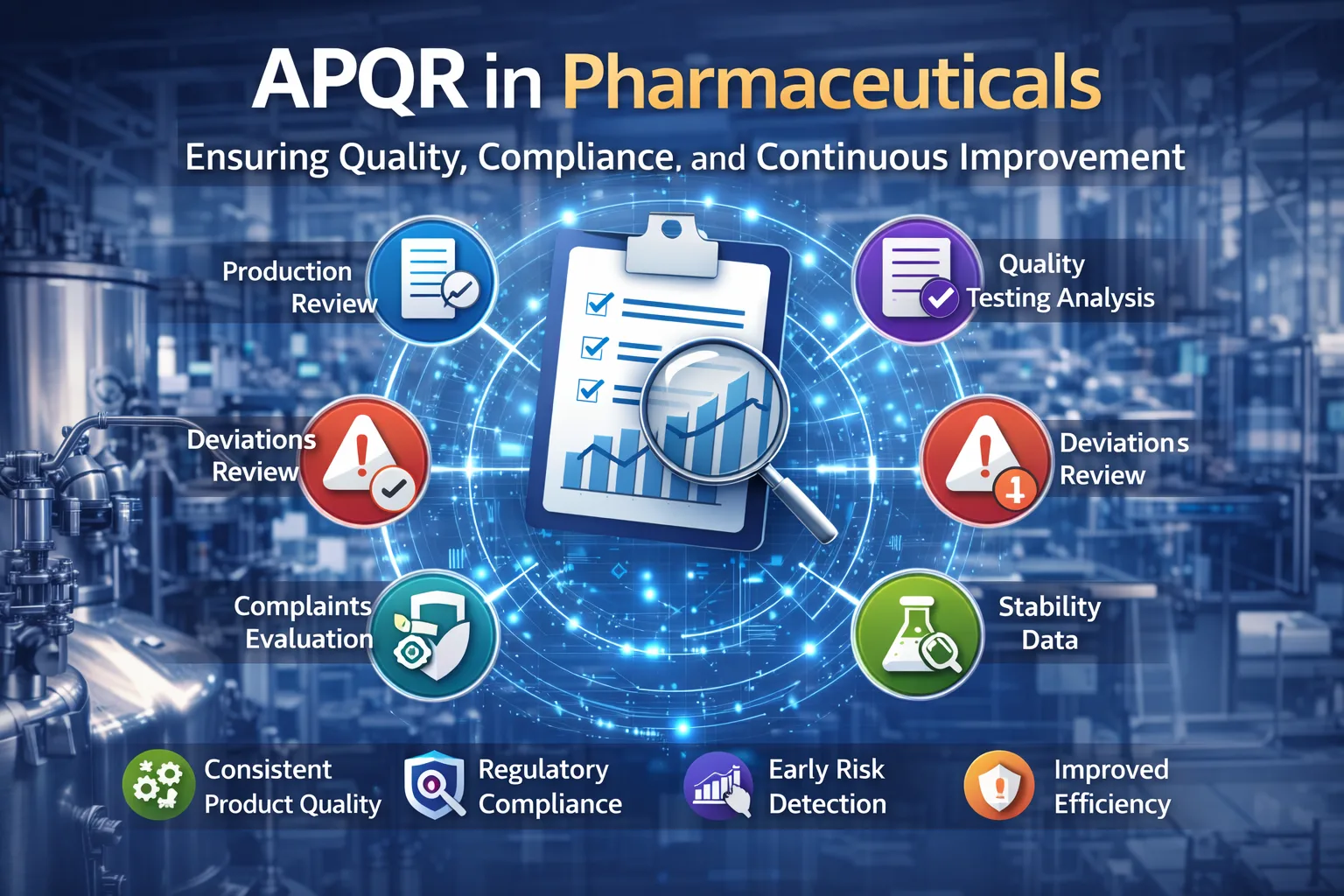
Annual Product Quality Review Software is a digital system designed to automate and standardize the review of pharmaceutical product quality data collected throughout the year. It consolidates data from multiple sources, including production systems, laboratories, stability studies, deviations, complaints, and CAPA records.
Instead of manually compiling reports, organisations can use software to automatically generate structured APQR reports that support regulatory compliance and quality oversight.
This approach improves efficiency, reduces human error, and ensures consistent quality evaluation across all manufacturing batches and products.
Importance of APQR in Pharmaceutical Manufacturing
The APQR process ensures that pharmaceutical products consistently meet predefined quality standards throughout their lifecycle. It enables manufacturers to evaluate:
- Batch manufacturing performance trends
- Deviations and corrective actions
- Stability study outcomes
- Complaint and recall data
- Process variability and capability
- Overall product quality performance
- Compliance with GMP regulations
APQR serves as a critical foundation for continuous improvement and regulatory inspection readiness.
Limitations of Traditional APQR Processes
Despite its importance, many organisations still rely on manual APQR systems that introduce inefficiencies and compliance risks.
Fragmented Data Sources
Quality information is distributed across multiple systems, making data collection complex and time-consuming.
High Manual Effort
Teams spend significant time gathering, validating, and formatting data for reporting purposes.
Lack of Real-Time Visibility
Manual processes limit the ability to detect trends or quality issues as they emerge.
Increased Compliance Risk
Spreadsheet-based reporting increases the possibility of errors, missing data, and inconsistent audit trails.
How Annual Product Quality Review Software Transforms APQR
Modern annual product quality review software eliminates manual inefficiencies by automating data management, analysis, and reporting.
Centralised Quality Data Management
The software integrates with ERP, LIMS, MES, and eQMS systems to create a single source of truth for all quality-related data.
Automated Reporting Workflows
APQR reports are generated automatically using predefined templates, reducing preparation time and ensuring consistency.
Advanced Analytics and Trend Analysis
Built-in statistical tools help organisations analyse process capability, monitor trends, and identify recurring quality issues.
Compliance and Audit Readiness
Electronic signatures, audit trails, and controlled workflows ensure compliance with FDA, GMP, and 21 CFR Part 11 requirements.
Real-Time Quality Monitoring
Dashboards provide continuous visibility into key quality indicators, enabling proactive decision-making.
Key Features of AmpleLogic APQR Software
AmpleLogic Annual Product Quality Review Software is designed for pharmaceutical and life sciences organisations that require robust compliance and quality management capabilities.
- Automated APQR and PQR report generation
- Real-time dashboards and quality analytics
- Integration with enterprise manufacturing systems
- AI-powered trend detection and risk identification
- Statistical process control and capability analysis
- Audit-ready documentation and traceability
- Workflow automation and approval management
- Multi-site quality data consolidation
These features enable organisations to manage APQR processes more efficiently and accurately.
Benefits of Digital APQR Implementation
Faster Reporting Cycles
Automation significantly reduces the time required to prepare annual product quality reviews.
Improved Compliance Confidence
Structured digital workflows ensure adherence to global regulatory standards.
Enhanced Data Accuracy
Centralised systems eliminate inconsistencies caused by manual data entry.
Better Quality Insights
Advanced analytics provide a deeper understanding of manufacturing performance and risks.
Reduced Operational Burden
Quality teams can focus on analysis and improvement instead of repetitive reporting tasks.
Why Choose AmpleLogic?
AmpleLogic offers a comprehensive APQR solution built specifically for pharmaceutical, biotech, and regulated manufacturing industries. The platform integrates automation, analytics, compliance management, and enterprise connectivity into a unified system.
It enables organisations to transition from manual, spreadsheet-based reporting to a fully digital, intelligent quality review process.
By leveraging automation and real-time insights, AmpleLogic helps companies improve product quality, reduce compliance risks, and enhance operational efficiency.
As pharmaceutical manufacturing becomes increasingly data-driven and compliance-focused, manual APQR processes are no longer sufficient. Organisations need smarter, automated solutions to ensure accurate and efficient quality reporting.
Implementing annual product quality review software allows pharmaceutical companies to streamline APQR workflows, improve data integrity, and strengthen regulatory compliance.
With AmpleLogic’s advanced APQR platform, organisations can transform annual product quality reviews into a continuous, intelligent, and highly efficient quality management process that supports long-term operational excellence.